6.5 Creedmoor ammunition, in stock. Loaded in house, listed with real bullet weights and real availability. 6.5 Creedmoor became the default precision cartridge for a reason: it fires long, high ballistic coefficient .264 bullets at moderate velocity, which means it fights the wind well, recoils mildly and does not burn barrels the way faster magnums do.
The guide below covers bullet weight and what it changes, why ballistic coefficient matters more here than in any other cartridge we load, and where 6.5 Creedmoor genuinely beats .308 rather than just sounding newer.
Pairing it with a can? See our 6.5 Creedmoor suppressors. Compare with .308 Win and .260 Rem, or browse the caliber index.
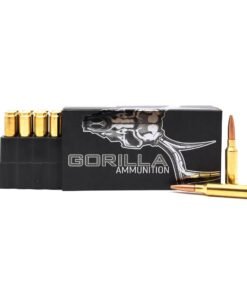
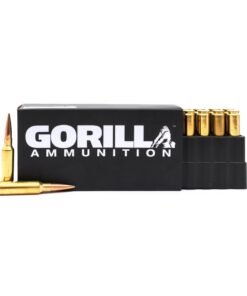
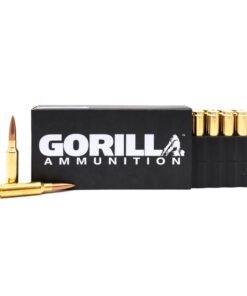
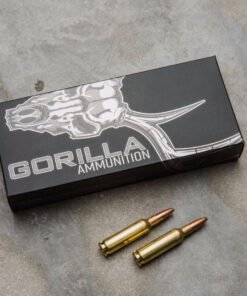
Why 6.5 Creedmoor works
The cartridge is not fast and it does not carry huge energy. It wins on efficiency, and that comes down to bullet shape.
A .264 inch bullet at 140 grains is long and slender for its weight, which gives it a high ballistic coefficient. High BC means it sheds velocity slowly and drifts less in wind. So while a .308 might leave the muzzle faster, the 6.5 catches it downrange and beats it comfortably past 600 yards, with noticeably less recoil while doing it.
The case was designed around that, short enough for a short action, with a sharp shoulder and a long neck that seats those bullets without intruding into powder space. Nothing about it is exotic. It is simply well proportioned for the job.
Bullet weight, and what to choose
| Weight | Typical velocity | Best for |
|---|---|---|
| 120 to 130gr | roughly 2,900 to 3,000 fps | flatter trajectory, lighter game, faster follow up |
| 140gr | roughly 2,690 to 2,750 fps | the all round standard, best balance of BC and speed |
| 147gr and up | roughly 2,600 to 2,700 fps | maximum BC, long range and wind |
140 grain is where most shooters should start and where most stay. It is the weight the cartridge was effectively designed around, and it stabilises in every common twist rate.
Heavier 147 grain and similar loads buy you the best wind performance available from the cartridge, at the cost of a little velocity and a slightly flatter trajectory sacrificed. If your shooting lives past 800 yards, that trade is worth making. Inside 400 it changes nothing you will notice.
Twist rate
Most 6.5 Creedmoor barrels are cut 1:8, which stabilises everything from 120 to 147 grains without complaint. Some are 1:7.5 or 1:7, which is if anything more forgiving with the heaviest bullets.
This is one of the easier cartridges in that respect. Unlike the Blackouts, where twist rate is the single most important specification, 6.5 Creedmoor barrels are essentially all fast enough for the ammunition sold for them. Confirm if you are shooting the very heaviest match bullets, otherwise it is not a decision you need to make.
Hunting with 6.5 Creedmoor
It is a capable and popular hunting cartridge, and the reason is not energy. A 140 grain load carries roughly 2,300 ft lbs at the muzzle, comparable to .308 and well short of a magnum. What it offers is precision at distance with light recoil, which means shooters place their shots better.
Bullet construction is what matters. Match bullets are built to be accurate, not to expand, and a match projectile through game will often pass straight through. Choose a controlled expansion hunting bullet rather than assuming the most accurate load is the best one for the field.
Deer sized game is comfortably within its capability at normal ranges. Elk are possible with the right bullet and shot placement, and plenty of people argue about it, which is usually a sign that a larger cartridge would be the easier answer.
6.5 Creedmoor against .308
The argument everyone has, settled by distance.
| 6.5 Creedmoor | .308 Winchester | |
|---|---|---|
| Bullet | .264, high BC | .308, moderate BC |
| Recoil | lighter | heavier |
| Wind drift | less | more |
| Past 600 yards | clearly better | falling behind |
| Inside 300 yards | no real advantage | equal, and cheaper |
| Barrel life | shorter | longer |
| Ammunition cost | higher | lower |
Inside 300 yards there is no practical difference and .308 is cheaper to feed. Past 600 the 6.5 is meaningfully better. If your shooting lives at woods ranges, .308 is the honest answer and there is no shame in it.
Barrel life, and the one real drawback
6.5 Creedmoor pushes a fair powder charge through a relatively small bore, and that erodes throats faster than .308. Expect a shorter accurate barrel life, particularly if you shoot long strings in matches.
For hunting and normal range use this is not something you will ever notice. For competitive shooters running thousands of rounds a year it is a real running cost, and it is worth knowing before you commit to the cartridge.
Suppressing it adds a little to the heat load, which is one more reason to let a barrel cool between stages rather than a reason not to suppress. Our 6.5 Creedmoor suppressor page covers that side.
Shipping and compliance
We ship within the USA to lawful destinations only, and orders over $300 ship free. Ammunition rules vary by state and by city and remain the buyer's responsibility. See our shipping and delivery page, and SAAMI for cartridge specifications.
Frequently asked questions about 6.5 Creedmoor ammunition
What bullet weight should I buy?
140 grain for almost everyone. It is the weight the cartridge was designed around, stabilises in every common twist, and balances ballistic coefficient against velocity better than anything else in the range.
Is 6.5 Creedmoor better than .308?
Past 600 yards, clearly. Inside 300, not meaningfully, and .308 is cheaper to shoot. Choose by the distance you actually shoot rather than by reputation.
What twist rate do I need?
1:8 is standard and handles everything from 120 to 147 grains. Faster twists like 1:7.5 are slightly more forgiving with the heaviest match bullets. This is rarely a decision you need to make.
Can I hunt deer with 6.5 Creedmoor?
Yes, comfortably, with a controlled expansion hunting bullet rather than a match projectile. Match bullets are built for accuracy and often pass through without expanding.
Does 6.5 Creedmoor wear out barrels?
Faster than .308, because it pushes a decent powder charge through a smaller bore. Hunters will never notice. High volume competition shooters treat it as a running cost.
Is subsonic 6.5 Creedmoor available?
Rarely, and it is not what the cartridge is for. The bullets are built for high velocity performance, and slowing them removes the entire advantage. For quiet shooting, 300 Blackout or 8.6 Blackout are the cartridges designed for it.
Why is ballistic coefficient such a big deal here?
Because it is where the cartridge wins. A high BC bullet holds velocity and resists wind, which is what lets a mild 6.5 outperform faster cartridges at distance without punishing recoil.
Will 147 grain loads shoot better than 140?
Better in wind at long range, yes. Not meaningfully different inside 400 yards, where the extra BC has nothing to prove and you have given up a little velocity to get it.