8.6 Blackout Uppers: Complete Upper Receivers
A complete 8.6 Blackout upper is the fastest route into the cartridge if you already own an AR-10 pattern lower. Headspace, gas system and barrel extension arrive matched from the factory, which removes the failure modes that cause most home build problems. This page covers what to check, what the specifications mean, and where an upper makes more sense than a complete rifle.
What a complete upper includes
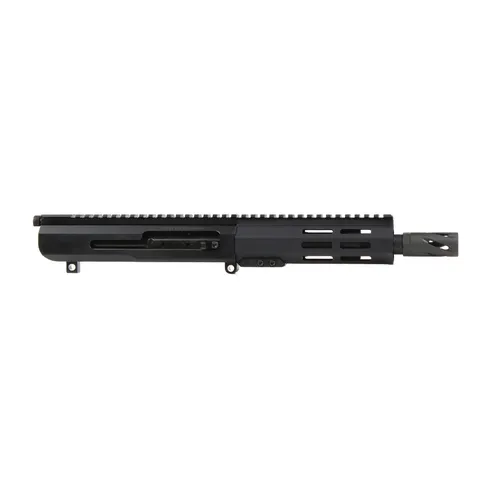
A complete upper is normally the receiver, barrel, gas system, handguard and muzzle device, with the bolt carrier group and charging handle sometimes included and sometimes not. That last point is where most buying mistakes happen, because the bolt is not a generic part on this cartridge.
8.6 Blackout uses the .473 inch case head inherited from 6.5 Creedmoor, the same head as .308 Winchester. The bolt must be cut for it. Confirm explicitly whether a bolt carrier group is included and, if not, that the one you own is correct for the case head rather than assuming an AR-10 bolt is an AR-10 bolt.
Your lower has to be AR-10 pattern
This is the constraint that catches people out. 8.6 Blackout will not work on an AR-15 lower under any circumstances, because the case head is far too large for the magazine well and bolt. If you own an AR-15 and want .338 subsonic performance, 338 ARC is the cartridge designed for that platform, and we compare the two in 8.6 Blackout vs 338 ARC.
Worse, AR-10 pattern is not a standardised specification the way AR-15 is. Receiver dimensions, takedown pin spacing and magazine well geometry vary between manufacturers. An upper built for one pattern may not mate correctly to a lower built for another. Confirm the pattern your lower follows before ordering.
Barrel length and gas system
Short uppers are not a compromise on this cartridge. Subsonic velocity is effectively flat across the barrel lengths anyone would sensibly choose, so an eight inch upper and a sixteen inch upper shoot subsonics at nearly the same speed. The difference shows only on supersonic loads, where the longer barrel earns a useful margin. Figures are in the main 8.6 Blackout guide.
Gas system length must suit the barrel length, and this is precisely what a complete upper takes off your hands. Buying a barrel and a gas block separately means matching them yourself, and getting it wrong produces a rifle that short strokes or beats itself to pieces.
| Upper configuration | Typical use | Suppressed length | Notes |
|---|---|---|---|
| 8 inch | Dedicated suppressed subsonic | Shortest overall | NFA considerations apply to short barrels |
| 10 to 12 inch | Balanced suppressed build | Manageable | Most popular compromise |
| 16 inch | Supersonic hunting | Long once suppressed | Rifle length, no NFA barrel issue |
Note that barrels under sixteen inches on a rifle raise NFA considerations depending on your configuration and state. Confirm your own position before ordering a short upper.
Twist rate: check it, do not assume it
Every genuine 8.6 Blackout barrel should be 1:3. On an assembled upper this is the specification most likely to be glossed over in a product listing, because it is invisible from a photograph and every upper looks the same from the outside. Spin, not speed, is what opens a subsonic bullet on this cartridge.
An upper with a slower twist will stabilise the bullet and produce groups while failing at the cartridge’s actual purpose. Ask for the twist rate in writing before ordering. Our twist rate guide explains why it matters, and the barrels page covers the component route.
Adjustable gas is close to essential
Subsonic and supersonic 8.6 loads generate very different pressures. An upper tuned to cycle heavy subsonics reliably will usually be over gassed with supersonics, and one tuned for supersonics may not cycle subsonics at all, particularly suppressed.
If the upper does not ship with an adjustable gas block, budget for one. This is not an optimisation, it is what makes a single rifle work with both halves of the cartridge. Bolt actions avoid the issue entirely, which is one reason many 8.6 owners end up with one alongside. See our 8.6 Blackout rifles page.
Muzzle thread and suppressor fit
Almost every 8.6 upper is bought to be suppressed. Confirm the muzzle thread pitch matches a can you own or intend to buy, and check thread length and shoulder as well as pitch, because a suppressor that does not sit square is how baffle strikes happen.
The can must be rated for .338. A .30 calibre unit will not accept the bullet at all, which surprises people swapping an upper onto a lower that previously wore a .308 barrel and a .30 can. That suppressor does not carry across. Note too that it is an NFA regulated item with a long approval, so order early. Browse 8.6 Blackout rated suppressors.
Handguard, rail and accessories
Most complete uppers ship with a free floated handguard, which is worth having because it stops sling and bipod pressure from loading the barrel and shifting point of impact. Check the attachment standard, since M-LOK and KeyMod accessories are not interchangeable and choosing one is effectively a long term commitment.
Inner diameter matters if you intend to run a suppressor partly inside the rail, and a large diameter .338 can needs more clearance than a .30 calibre one. Measure rather than assume.
Upper or complete rifle?
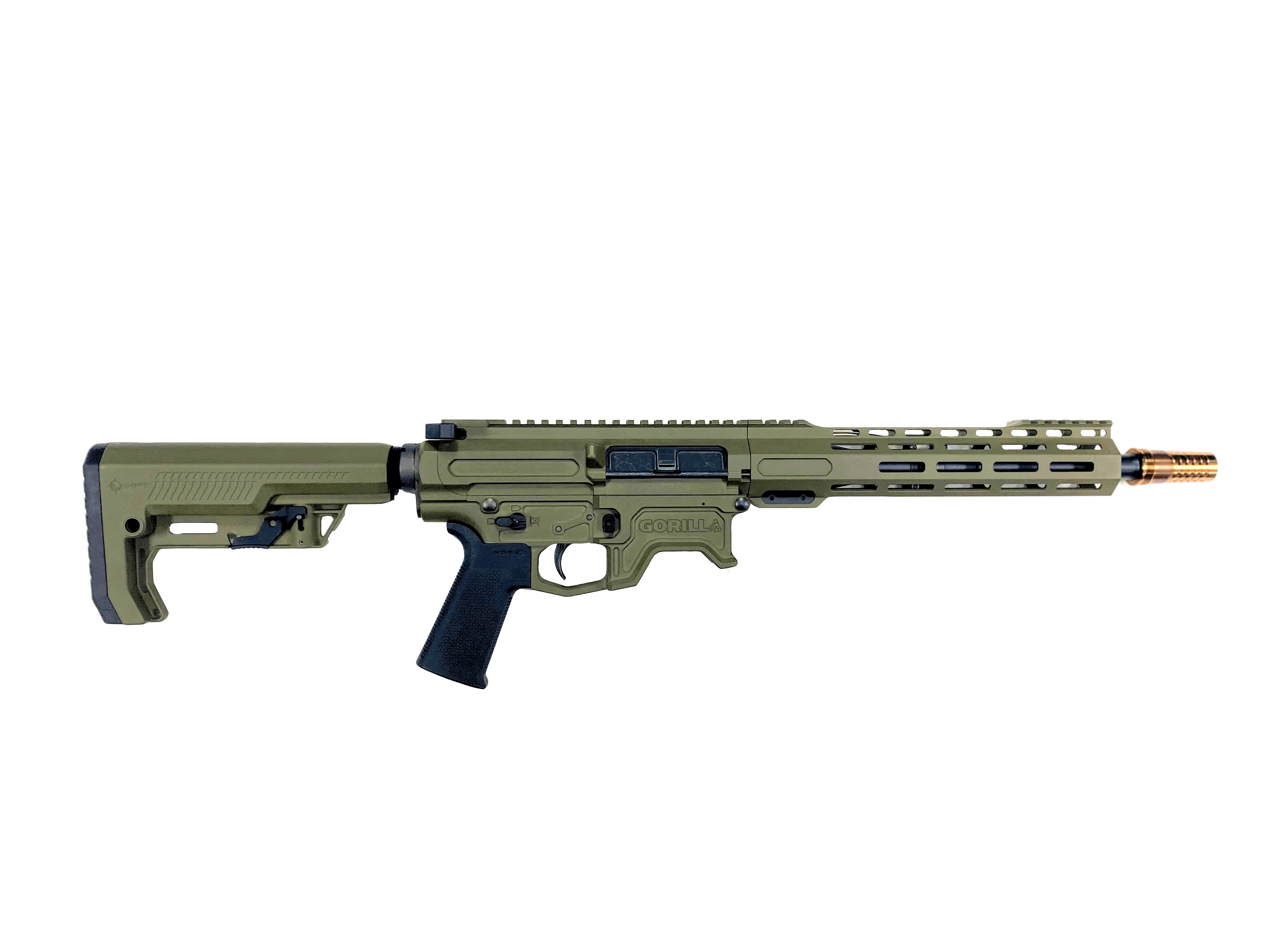
An upper makes sense when you already own an AR-10 pattern lower you are happy with, because you are buying only the half that defines the cartridge. It ships without the FFL transfer requirement that a complete firearm carries, which also makes it simpler to buy.
A complete rifle makes more sense when you do not already own a suitable lower, or when the pattern compatibility question is uncertain. Buying an upper that will not mate to your lower is an expensive way to learn that AR-10 is not standardised.
Browse complete 8.6 Blackout rifles, 8.6 Blackout uppers and our conversions guide if you are considering rebarrelling instead.
What to verify before ordering
Twist rate 1:3, in writing. Bolt carrier group included or confirmed correct for the .473 inch case head. Receiver pattern matches your lower. Gas system length suits the barrel and ideally adjustable. Muzzle thread matches your suppressor. Magazine compatibility, since fat bullets on short cases feed differently.
Get these six confirmed and the build is straightforward. Skip any of them and you are troubleshooting later.
After fitting
Confirm headspace with the bolt you will actually use, then chronograph rather than trusting published figures. Subsonic loads need to sit comfortably below the sound barrier in your barrel, and a load running 1,080 fps in one rifle can creep transonic in another.
Zero subsonic and supersonic separately and record both, since they will not share a zero and the gap can be several inches at fifty yards. Check figures against our 8.6 Blackout ballistics chart or run your setup through the ballistics calculator, then feed it from our 8.6 Blackout ammunition range.
Cartridge specifications follow published SAAMI standards.
Building around an upper you already own
If you own an AR-10 in .308 or 6.5 Creedmoor, an 8.6 Blackout upper is a genuinely cheap way into the cartridge, because the lower, the magazines in some cases, and the optic all carry across. The bolt face is already correct on those chamberings, which removes the most awkward compatibility question.
Swapping uppers rather than owning two complete rifles also keeps one registered firearm rather than two, which simplifies storage and transport considerably. Many owners settle on exactly this arrangement: one lower, a .308 upper for general use and an 8.6 upper for suppressed hunting.
The practical caveat is zero. Each upper carries its own zero, and swapping back and forth means confirming rather than assuming. Keep a record for each and check on paper after any swap that matters.
Weight and balance once suppressed
An 8.6 upper with a .338 rated can on the end is front heavy, and noticeably so on a short barrel where the suppressor represents a large fraction of the total length. That weight steadies the rifle prone and works against you carrying it.
If the rifle is a hunting tool, favour a lighter barrel contour and a titanium can. If it lives on a bipod, the extra weight is doing useful work. It is worth deciding which before choosing a contour, because it is the one part of the build that is awkward to change later.
Handguard length interacts with this too. A longer rail lets you move your support hand forward for control, and adds weight exactly where you already have too much of it.
Common build mistakes
The three that come up most often, in order of expense. First, buying an upper for an AR-15 lower, which cannot work at all and is the most costly misunderstanding available on this cartridge. Second, assuming a bolt carrier group from another AR-10 chambering will do, when the case head demands a bolt cut for .473 inches. Third, running a fixed gas system and then discovering it will not cycle both load types.
All three are avoidable with questions asked before ordering rather than after delivery. None of them are the sort of thing you can correct with a spring change or a different lubricant.
A fourth, less expensive but more annoying, is thread pitch. Confirm it against your suppressor rather than assuming an industry default, because rethreading a barrel means removing it from the upper you just bought assembled.
A note on charging handles and small parts
AR-10 pattern charging handles are not universal either, and an upper that arrives without one is easy to overlook in the excitement of the barrel specification. Check what is included before ordering rather than discovering the gap on build day.
The same applies to the gas tube and gas block if the upper ships partly assembled. None of these are expensive parts, but each one that is missing turns a fifteen minute assembly into a week waiting on post.
Frequently asked questions about 8.6 Blackout uppers
Will an 8.6 Blackout upper fit my AR-15 lower?
No. The case head is .473 inches, far too large for an AR-15 magazine well and bolt. You need an AR-10 pattern lower. For .338 subsonic performance in an AR-15 sized rifle, look at 338 ARC.
Will it fit any AR-10 lower?
Not necessarily. AR-10 pattern is not standardised the way AR-15 is, and receiver dimensions vary between manufacturers. Confirm the pattern your lower follows before ordering.
Does the upper include a bolt carrier group?
Sometimes, sometimes not, and it matters more here than usual. The bolt must be cut for the .473 inch case head. Confirm explicitly rather than assuming an AR-10 bolt will work.
What twist rate should the barrel be?
1:3. It is what makes expanding subsonic bullets open at roughly 1,050 fps. A slower twist will group acceptably and fail at the cartridge’s actual purpose.
Do I need an FFL to buy an upper?
An upper receiver is not a firearm under federal law, so it does not require an FFL transfer the way a complete rifle does. State rules vary, so check your own position.
What barrel length should I choose?
For a suppressed subsonic upper, short. You are not giving up meaningful velocity and you gain a rifle that handles. Longer uppers only pay off if supersonic loads are a real part of how you shoot.
Do I need an adjustable gas block?
Effectively yes if you intend to shoot both subsonic and supersonic. The pressure difference is large enough that a fixed system tuned for one will be poorly tuned for the other.
Will my magazines work?
Confirm before ordering. A fat .338 bullet on a short case feeds differently from the cartridge your magazines were designed around, and feeding problems are a common complaint.
Can I reuse the suppressor from my .308 upper?
No. The bullet is .338 and will not pass a .30 calibre bore. This is the most common oversight when swapping uppers on a shared lower, and forcing it wrecks the can.
Is an upper cheaper than a complete rifle?
Usually, if you already own a suitable lower, because you are only buying the half that defines the cartridge. If you do not own one, a complete rifle avoids the pattern compatibility risk.