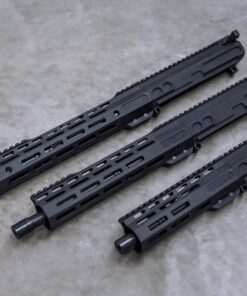
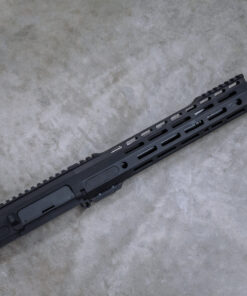
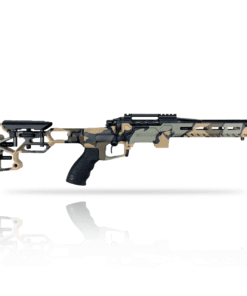
Everything 8.6 Blackout, in one place. This is the hub for the whole cartridge rather than one shelf of it: ammunition, barrels, uppers, complete rifles, suppressors and the components to load your own. If you are building an 8.6 from scratch, start here and work through the pieces in order.
Looking for a specific part of it? Loaded ammunition lives on the 8.6 Blackout ammo shelf, cans on the 8.6 Blackout suppressors page, and heavy .338 projectiles under projectiles and bullets.
New to the cartridge? Read what 8.6 Blackout actually is first, or go straight to the ballistics chart.
8.6 Blackout (ALL)
8.6 Blackout (ALL)
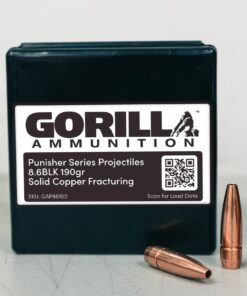
8.6 Blackout 190gr Solid Copper Fracturing Projectiles (Qty 50)

8.6 Blackout (ALL)
8.6 Blackout 342gr Solid Copper Subsonic Expanding Projectiles (Qty 50)
8.6 Blackout (ALL)
8.6 Blackout (ALL)
8.6 Blackout (ALL)
8.6 Blackout (ALL)
8.6 Blackout (ALL)
8.6 Blackout (ALL)
8.6 Blackout (ALL)
8.6 Blackout (ALL)
The cartridge in one paragraph
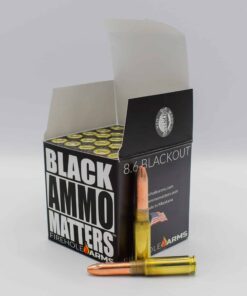
8.6 Blackout, also written 8.6x43mm, takes a 6.5 Creedmoor case, shortens it to 43mm and necks it up to accept a .338 inch bullet. It was designed by the team behind 300 Blackout to answer one question: how much bullet can you push at 1,000 fps from a rifle people will actually carry? The answer turned out to be 285 to 342 grains, carrying 700 to 840 ft lbs while staying under the sound barrier. That is roughly 60 percent more subsonic energy than 300 Blackout, and it is the entire reason the cartridge exists.
What you need to build one
An 8.6 build has five decisions in it, and they have to be made in this order because each one constrains the next.
| Step | Decision | The rule |
|---|---|---|
| 1 | Platform | AR-10 sized, short action bolt, or lever action. Not an AR-15. |
| 2 | Barrel twist | 1:3. This is not optional and cannot be corrected later. |
| 3 | Barrel length | 12 to 16 inches. The powder burn finishes around 8. |
| 4 | Suppressor | .338 rated only. A .30 caliber can will not clear the bullet. |
| 5 | Ammunition | Subsonic for quiet, supersonic for reach. They will not share a zero. |
Steps 2 and 4 are the ones that cost money to get wrong. Everything else can be changed later.
Platform: AR-10, bolt or lever
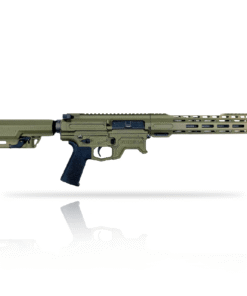
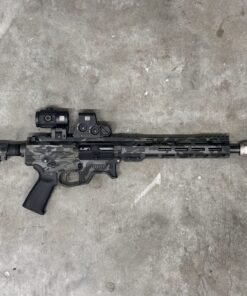
8.6 Blackout will not fit an AR-15. The case is based on 6.5 Creedmoor and needs an AR-10 sized receiver running SR-25 pattern magazines, or a short action bolt rifle, or a lever gun.
AR-10 pattern was the original home and gives you semi automatic fire and magazine capacity. The cost is gas tuning, which becomes genuinely fiddly when the same rifle has to cycle heavy subsonics and supersonics with a can fitted. An adjustable gas block is close to mandatory.
Short action bolt rifles are popular with hunters. Nothing cycles, so there is no gas system to tune and any load works every time. They are the quietest and simplest setups available.
Lever actions arrived in 2026 and suit the cartridge better than they have any right to. Short, fast handling, no buffer tube behind the action so the suppressed rifle stays sane in length, and legal for hunting in places where a semi automatic is not. Our lever action guide covers them properly.
The 1:3 twist, and why it defines the cartridge
Most .338 barrels run around 1:10. 8.6 Blackout runs 1:3, roughly three times faster, and it does two jobs at once.
It stabilises very long, very heavy bullets at low velocity, which slower twists cannot reliably manage. And it stores enormous rotational energy in the projectile: a 342 grain bullet leaving a 1:3 barrel at 1,050 fps spins past 250,000 rpm.
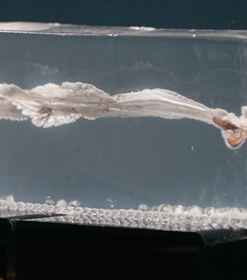
That spin is what makes expanding and fracturing bullets open at subsonic speed. Conventional projectiles frequently pass straight through at 1,000 fps because there is not enough velocity to drive upset. Spin them hard enough and they come apart anyway. It is why real world 8.6 performance reads better than its energy figure suggests, and why a slower twist barrel quietly removes the reason to own the cartridge. Our twist rate guide goes deeper.
The suppressor rule
8.6 Blackout fires a .338 inch bullet, which is larger than the .308 bore of every .30 caliber suppressor. Firing 8.6 through a .30 caliber can causes a baffle strike, destroys the suppressor and can injure the shooter.
You need a .338 rated can. The compensation is that a .338 suppressor also runs .308, .30-06, 300 Blackout, 6.5 Creedmoor, 6mm ARC, .223 and 5.56, so one purchase covers the safe. Full detail on our 8.6 Blackout suppressors page.
Running subsonic and supersonic together
Most owners shoot both, and swapping is a matter of changing magazines. Subsonic loads of 285gr to 342gr are the quiet option, delivering energy through mass and frontal area inside about 150 yards. Supersonic loads of 160gr to 210gr run 1,900 to 2,400 fps for roughly 2,000 ft lbs, which is legitimate hog, deer and black bear performance out to 300 yards.
The catch is that the two will not share a zero, and the difference can be several inches even at 50 yards. Record both, mark your magazines clearly, and confirm on paper before hunting with either. Model your exact load in our ballistics calculator.
Is it the right cartridge for you?
Yes, if you shoot suppressed, you hunt game larger than a 300 Blackout comfortably handles, and you want the most authority available per quiet shot. Nothing else in production delivers that combination.
No, if your shooting is mostly range volume, your budget is tight, or your shots live past 300 yards. Ammunition and rifles both cost more than common calibers, and subsonic trajectory is a rainbow past 150 yards. Buying 8.6 for long range work is how the cartridge earns unfair bad reviews. For a lighter and cheaper route to quiet, 300 Blackout uses a standard AR-15 and carries roughly 500 ft lbs subsonic.
Frequently asked questions about 8.6 Blackout
Can I build 8.6 Blackout on an AR-15?
No. The case is based on 6.5 Creedmoor and needs an AR-10 sized receiver with SR-25 magazines, a short action bolt rifle, or a lever action.
What twist rate does 8.6 Blackout need?
1:3, and it is the specification that matters most. It stabilises heavy subsonic bullets and generates the spin that makes fracturing projectiles work at 1,050 fps.
Can I use a .30 caliber suppressor?
No. 8.6 fires a .338 bullet, larger than a .30 caliber bore. It will strike the baffles, destroy the can and endanger you. Only a .338 rated suppressor is safe.
How much energy does 8.6 Blackout carry?
Roughly 700 to 840 ft lbs subsonic and roughly 2,000 ft lbs supersonic. Compare that with 300 Blackout at about 500 ft lbs subsonic.
What barrel length should I use?
12 to 16 inches. The powder burn finishes around 8 inches, so extra length adds roughly 30 fps subsonic and simply makes a suppressed rifle unwieldy.
How far will it shoot?
Subsonic loads are effective inside about 150 yards, limited by trajectory rather than energy, dropping roughly 33 inches at 200 yards from a 100 yard zero. Supersonic loads reach 300 yards comfortably.
Is 8.6 Blackout the same as 338 ARC?
No. Both fire .338 bullets and chase a similar goal, but they use different cases, chambers and pressures and are not interchangeable. 338 ARC fits an AR-15 and carries less energy.
Can I reload 8.6 Blackout?
Yes, and many owners do because factory subsonic ammunition is expensive. Brass is formed from 6.5 Creedmoor, though purpose made 8.6 brass is the practical route. Components are on our projectiles and brass shelf.