.380 ACP suppressors, in stock. .380 is the quiet little cartridge nobody thinks to suppress, and that is a shame, because it suppresses beautifully. It is subsonic in almost every factory loading, it produces very little gas for a can to deal with, and the result is one of the softest shooting suppressed setups available.
The catch is the host. Very few .380 pistols leave the factory with a threaded barrel, so the real work is finding a gun to put the can on. The guide below covers that, plus why many .380 pistols do not need a booster at all.
Browse the wider pistol suppressor range, or our 9mm and .380 ammunition.
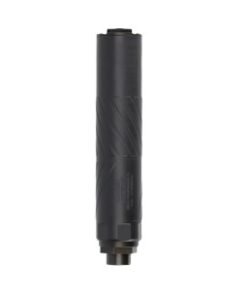
.300 Blackout
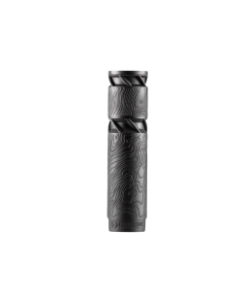
.30 Cal
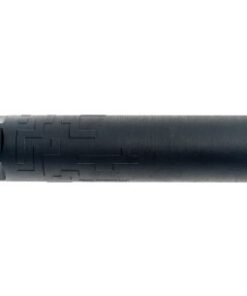
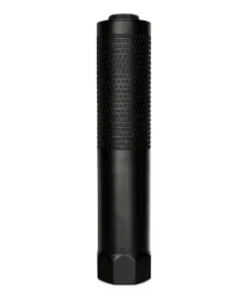
.30 Cal
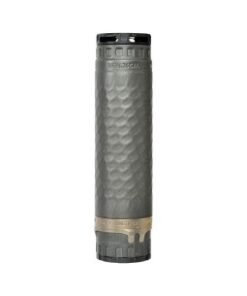
.30 Cal
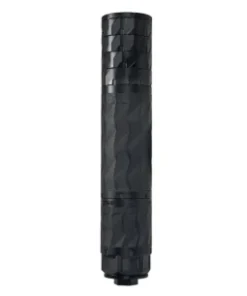
.300 Blackout
.300 Blackout
.30 Cal
Why .380 suppresses so well
Three things work in your favour, and they all come from the same place: .380 ACP is a small, mild cartridge.
It is subsonic. Standard 90 to 100 grain loads run roughly 900 to 1,000 fps, comfortably under the sound barrier. There is no sonic crack, so the suppressor only has to deal with muzzle blast, which is the part it is genuinely good at.
It produces very little gas. The case is small and the powder charge is modest, so there is far less to slow down and cool than in 9mm, let alone a rifle round. A relatively small can gets excellent results.
It recoils softly to begin with. Add the weight of a suppressor and a .380 becomes almost recoilless, which makes it one of the easiest suppressed guns to shoot well.
The trade is that .380 carries modest energy, so this is a range, training and small pest setup rather than a serious field cartridge.
The host problem
This is the real obstacle and it is worth understanding before you buy a can.
Most .380 pistols are designed as small, light carry guns with short barrels, and a threaded muzzle is the opposite of what that market wants. As a result the factory threaded .380 is uncommon, and buyers usually end up in one of three places:
| Route | What it involves | Notes |
|---|---|---|
| Factory threaded model | buy a pistol sold with a threaded barrel | simplest, limited choice |
| Aftermarket barrel | drop in a threaded replacement | availability varies sharply by model |
| Gunsmith threading | have the existing barrel cut | needs enough barrel length and wall thickness |
Check the host route before you commit to a suppressor, not after. It is the most common way a .380 suppressor purchase stalls.
Blowback, and why many .380s need no booster
Larger semi automatic pistols use a tilting barrel that must move to unlock, which is why they need a booster in the suppressor to work at all.
Many .380 pistols are different. Because the cartridge is mild, a good number use a simple blowback action with a fixed barrel. Nothing tilts, nothing has to move, and the suppressor can be mounted solid.
That is genuinely useful. A fixed mount is simpler, shorter, lighter and has one less moving part to go wrong. If your can came with a booster piston, most manufacturers supply a solid spacer that swaps in for it.
Some .380 pistols do use a locked breech, particularly the more modern compact designs, and those need the booster like any other tilting barrel gun. Check which action your pistol uses before setting the can up.
Which suppressor to buy
.380 fires a .355 inch bullet, exactly the same diameter as 9mm. That means any 9mm suppressor will run .380, and so will a .45 rated can.
For most people the sensible purchase is not a .380 specific suppressor at all. It is a 9mm can, or a .45 rated one, which covers .380 alongside every other pistol you own on a single tax stamp. A dedicated small .380 can only makes sense if you want the lightest possible package on a small pistol and already own something else for the rest of the collection.
The oversized bore costs you very little here. Because .380 gas volume is low and velocity is modest, the difference between a snug bore and a generous one is smaller than it would be on a fast rifle cartridge.
Sights and practicalities
A suppressor sits directly in front of the sights, and on a small .380 the proportions are dramatic: the can can be nearly as long as the pistol. Standard sights will be blocked, so plan on suppressor height sights or a red dot.
Be realistic about balance too. A ten ounce can on a fourteen ounce pistol handles very differently from the gun you bought. It is not a carry configuration, it is a range and small pest setup, and it is a pleasant one.
Cleaning
.380 fouls like every pistol caliber, with lead and carbon that steadily accumulates rather than reaching an equilibrium the way centerfire rifle fouling does. Pistol cans are built to be taken apart for exactly this reason, so strip and clean at the manufacturer's interval.
Keep rimfire out unless the suppressor is explicitly rated for it. .22 LR fouls far worse again, and cleaning a seized baffle stack is a job nobody enjoys twice.
Frequently asked questions about .380 ACP suppressors
Can I use a 9mm suppressor on .380?
Yes. Both fire a .355 inch bullet, so any 9mm rated can handles .380 safely. For most buyers a 9mm or .45 can is the better purchase, since it covers .380 plus every other pistol caliber on one stamp.
Is .380 subsonic?
Almost always. Standard 90 to 100 grain loads run roughly 900 to 1,000 fps, well under the sound barrier, so there is no sonic crack for the suppressor to fight.
Do I need a booster for a .380 suppressor?
Often not. Many .380 pistols use a fixed barrel blowback action, so the barrel does not move and a solid spacer works better than a piston. Locked breech .380 pistols do need the booster, so check which action yours uses.
Where do I find a threaded .380 barrel?
Either buy a pistol sold with one, fit an aftermarket threaded barrel where available for your model, or have a gunsmith thread the existing barrel if it has the length and wall thickness. Sort the host out before buying the can.
How quiet is a suppressed .380?
Very. Low gas volume plus subsonic velocity is close to the ideal case for a suppressor, and the result is among the softest and quietest handgun setups you can put together.
Is a dedicated .380 suppressor worth it?
Only for a lightest possible package on a small pistol. Otherwise a 9mm or .45 rated can gives you .380 performance plus every other handgun caliber you own.
Can I carry a suppressed .380?
Practically, no. The suppressor can be nearly as long as the pistol and it blocks the sights, so this is a range and pest control configuration rather than a carry one.
How often should I clean it?
At the manufacturer's interval, and more often than any rifle can. Pistol calibers deposit lead and carbon continuously, which is why pistol suppressors are designed to come apart.