338 ARC suppressors, in stock. 338 ARC is the newest way to get a .338 subsonic bullet out of a standard AR-15, and like every .338 cartridge it needs a .338 rated suppressor. A .30 caliber can will not clear the bullet, and fitting one causes a baffle strike.
The cartridge sits deliberately between 300 Blackout and 8.6 Blackout: more subsonic energy than the first, a lighter rifle than the second. The guide below covers where that leaves it, and what to look for in a can when the whole point of the platform is staying light.
Compare it with 8.6 Blackout suppressors and 300 Blackout suppressors, or read our 8.6 Blackout vs 338 ARC comparison.
.30 Cal
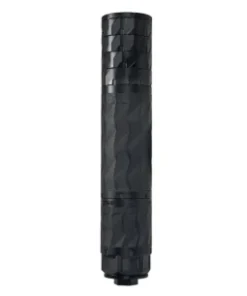
.300 Blackout
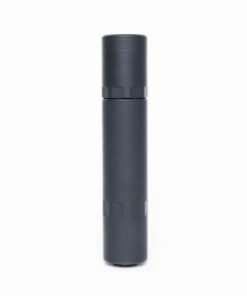
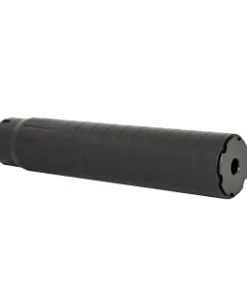
.30 Cal
The .338 rule applies here too
338 ARC fires a .338 inch bullet. Every suppressor you fit to it must have a bore of .338 or larger. A .30 caliber can has a .308 bore, which is smaller than the bullet, and firing through one will strike the baffles, wreck the suppressor and endanger the shooter.
The good news is that a .338 rated can is a flexible purchase. It will also run .308, .30-06, 300 Blackout, 6.5 Creedmoor, 6mm ARC, .223 and 5.56, and it will run 8.6 Blackout provided the barrel length and pressure ratings match. One .338 can can cover an entire safe.
| Suppressor | Runs 338 ARC? |
|---|---|
| .338 rated | yes |
| .338 Lapua rated | yes, check minimum barrel length |
| 8.6 Blackout rated | yes, same bore |
| .30 caliber or 7.62 | NO, bullet is too large |
Where 338 ARC actually sits
The cartridge exists to answer a specific complaint: 300 Blackout subsonic tops out around 500 ft lbs, which is marginal for larger game, while 8.6 Blackout needs an AR-10 sized rifle. 338 ARC puts a .338 bullet into an AR-15 sized package.
| 300 Blackout | 338 ARC | 8.6 Blackout | |
|---|---|---|---|
| Bullet | .308 | .338 | .338 |
| Subsonic weight | 190 to 220gr | 250 to 307gr | 285 to 342gr |
| Subsonic energy | roughly 500 ft lbs | roughly 570 to 700 ft lbs | roughly 700 to 840 ft lbs |
| Twist | 1:7 or 1:8 | 1:5 | 1:3 |
| Platform | AR-15 | AR-15 | AR-10, bolt, lever |
| Suppressor bore | .30 caliber | .338 | .338 |
Read that table as a straight trade. Against 300 Blackout you gain meaningful subsonic energy and lose the cheapest, most available ammunition on the market. Against 8.6 Blackout you lose energy and gain a rifle that is lighter and handier. Nothing here is strictly better than the others, which is why all three exist.
Weight, because that is the whole point
If you chose 338 ARC, you chose it to keep an AR-15 sized rifle. Hanging a large .338 can off the muzzle undoes that.
.338 suppressors are physically larger than .30 caliber equivalents, because the bore is bigger and the tube has to be sized around it. On an AR-15 that changes the balance noticeably. Titanium and compact designs are worth the money here in a way they are not on a heavy bolt gun, since the reason you are on this page at all is to keep the rifle light.
Check the minimum barrel length in the specification. 338 ARC is usually built short, and not every .338 can, particularly the magnum rated ones, is approved for short barrels.
Gas tuning on an AR-15 running subsonics
Two forces pull in opposite directions and you have to balance them.
Subsonic ammunition produces less gas, so the rifle has less energy available to cycle. Fitting a suppressor raises back pressure, which pushes more gas back through the system. Get it wrong in one direction and the rifle short strokes on subsonics. Get it wrong in the other and it is violently over gassed with supersonics and vents in your face.
The standard answer is an adjustable gas block, set to cycle subsonics reliably with the can fitted, plus a buffer weight matched to it. Most owners tune for suppressed subsonic use and accept that the rifle is over gassed with supersonic ammunition, since that is the easier direction to live with.
The 1:5 twist
338 ARC runs a 1:5 twist barrel, much faster than a conventional .338 and slower than 8.6 Blackout's 1:3. The reason is the same in both cases: heavy subsonic bullets need aggressive spin both to stabilise at low velocity and to drive expansion in projectiles that have very little speed to work with.
Confirm your barrel is the correct twist before buying heavy subsonics in quantity. A slower twist barrel will fire the ammunition and stay quiet, and it will quietly remove the terminal performance you bought the cartridge for.
Frequently asked questions about 338 ARC suppressors
Can I use a .30 caliber suppressor on 338 ARC?
No. 338 ARC fires a .338 inch bullet, larger than a .30 caliber bore. It will strike the baffles, destroy the suppressor and endanger the shooter. A .338 rated can is required.
Can I use my 8.6 Blackout suppressor on 338 ARC?
Yes. Both fire .338 bullets, so the bore is correct. Check the minimum barrel length, since 338 ARC rifles are often short.
Is 338 ARC quieter than 300 Blackout?
Broadly comparable, since both are subsonic by design and both remove the sonic crack. 338 ARC carries more energy for that same quiet, roughly 570 to 700 ft lbs against 500.
Is 338 ARC better than 8.6 Blackout?
Different, not better. 8.6 Blackout carries more energy, 700 to 840 ft lbs, and needs an AR-10 sized rifle. 338 ARC carries less and fits an AR-15. Choose by the platform you want to carry.
Will 338 ARC work in my AR-15?
It is designed to, using a standard AR-15 lower with the correct barrel and bolt. Expect to tune the gas system, particularly if you run subsonic loads suppressed.
What twist rate does 338 ARC need?
1:5. It is what stabilises heavy subsonic .338 bullets at low velocity and drives their expansion. A slower twist will still fire the ammunition without delivering the terminal performance.
Do I need an adjustable gas block?
Effectively yes if you shoot subsonic ammunition suppressed. Subsonics give the rifle less gas to cycle on while the suppressor adds back pressure, and metering the gas is the only clean way to balance the two.
Can I hunt with 338 ARC?
Yes, inside about 150 yards with an expanding subsonic load built to open at low velocity. Past that, trajectory rather than energy is the limit, exactly as with every subsonic cartridge.