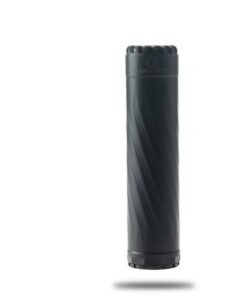
8.6 Blackout suppressors, in stock. 8.6 Blackout fires a .338 inch bullet, which means it needs a .338 rated suppressor and nothing smaller. This is the one compatibility rule on this site that carries real consequences, and it is worth stating before anything else: a .30 caliber can will not clear a .338 bullet, and firing 8.6 through one will destroy the suppressor and can injure the shooter.
Every suppressor on this shelf is sized and rated for 8.6 Blackout. Because the cartridge was designed around suppressed shooting from the start, the pairing is unusually good: heavy subsonic bullets, a short powder burn, and a can that is doing the job it was engineered for rather than compensating for a cartridge that was never meant to be quiet.
Pair it with our 8.6 Blackout ammunition, or check the numbers in the 8.6 Blackout ballistics chart.
.30 Cal
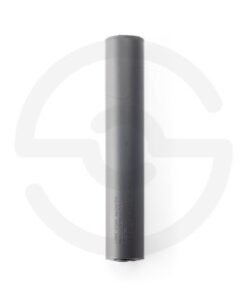
.30 Cal
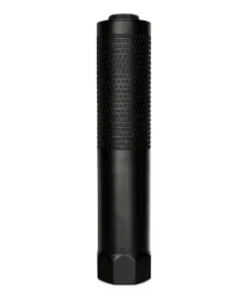
.30 Cal
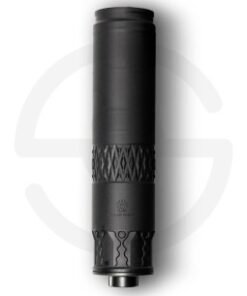
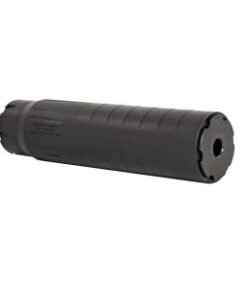
.30 Cal
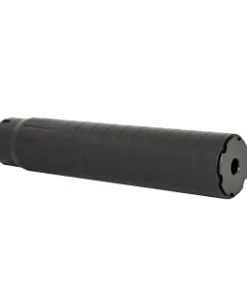
.30 Cal
The .338 rule, and why it is not negotiable
A suppressor is a tube of baffles with a hole through the middle, and the bullet has to pass through that hole without touching anything. The bore must therefore be larger than the bullet, always.
8.6 Blackout uses a .338 inch bullet. That is larger than .308, which is the bore of every .30 caliber suppressor on the market. There is no margin, no exception and no manufacturer that permits it.
| Suppressor bore | 8.6 Blackout (.338) | Also covers |
|---|---|---|
| .338 or larger | YES, correct choice | .308, .30-06, 300 BLK, 6.5, .223, 5.56 |
| .30 caliber | NO, bullet is too large | .308 and everything smaller |
| 7.62 / .308 rated | NO, same bore as above | .308 and everything smaller |
| 5.56 dedicated | NO | .224 and smaller |
A baffle strike at these bullet weights is not a minor event. A 342 grain projectile clipping a baffle can split the tube, and the shooter is holding the rifle it is attached to. If you own both an 8.6 and a .30 caliber rifle, mark the cans clearly and never assume in low light.
The upside of buying .338 is that it works the other way round without any problem. A .338 rated suppressor will run .308, .30-06, 300 Blackout, 6.5 Creedmoor, 6mm ARC, .223 and 5.56, exactly like the .30 caliber cans do, just with a little more gas slipping past the smaller bullets. Buy for the largest cartridge in the safe and everything below it is covered.
Why 8.6 Blackout suppresses so well
Most cartridges are suppressed as an afterthought. 8.6 Blackout was built for it, and three design decisions show up as real performance on this page.
Subsonic by design. A suppressor removes muzzle blast but cannot touch the sonic crack of a supersonic bullet. 8.6 Blackout has a deep factory subsonic range, 285gr to 342gr at roughly 1,000 to 1,080 fps, so there is no crack to remove in the first place. This is the difference between a quieter rifle and a genuinely quiet one.
A short powder burn. The cartridge finishes burning in roughly 8 inches of barrel. Less unburnt powder arriving at the muzzle means less gas for the suppressor to deal with, which is why 8.6 stays quiet on short barrels where other cartridges get loud.
Mass instead of speed. Because the energy is carried by a heavy .338 bullet rather than velocity, you get 700 to 840 ft lbs while staying subsonic. A 300 Blackout subsonic carries roughly 500. That gap is the entire reason to buy the cartridge, and the suppressor is what makes it usable.
What the 1:3 twist means for your can
8.6 Blackout runs a 1:3 twist barrel, three times faster than a typical .338, which spins a 342 grain bullet past 250,000 rpm. That spin is what makes expanding and fracturing bullets open at subsonic speed.
For suppressor selection it has one practical consequence: bullet stability off the muzzle is excellent, but the projectiles are long, heavy and moving slowly. Alignment matters. Use a quality mount that indexes concentrically, check the muzzle threads are cut true, and do not run an 8.6 can on an adapter stack of questionable provenance. Slow heavy bullets are unforgiving of a can that is not sitting straight.
Size, weight and barrel length
8.6 Blackout is most often built on 12 to 16 inch barrels, because the powder burn is finished by 8 inches and extra length buys almost nothing. Subsonic velocity gains roughly 30 fps across eight extra inches of barrel, which is nothing at all.
That short barrel is what makes a full size suppressor practical here. A 12 inch barrel with an 8 inch can is about the overall length of a bare 20 inch hunting rifle, so you can run a large, quiet suppressor without ending up with something unmanageable. On most cartridges you are choosing between quiet and handy. On 8.6 you can usually have both.
Weight is the real consideration. .338 cans are larger than .30 caliber equivalents, and 8.6 rifles are AR-10 sized or bolt actions that are not light to begin with. Titanium is worth the money if you carry the rifle hunting.
Gas guns, bolt guns and lever actions
On a bolt action or a lever action, the suppressor only has to be quiet and durable. Nothing cycles, so back pressure is irrelevant and a direct thread mount is entirely reasonable. This is the quietest and simplest setup available.
On an AR-10 pattern rifle, adding a suppressor raises back pressure and the rifle cycles harder, dirtier and hotter, with gas venting back at the shooter. Running heavy subsonic loads makes gas tuning more delicate still, because subsonics produce less gas to begin with and the rifle has to be set up to cycle them reliably while not being over gassed with a can fitted. An adjustable gas block is close to mandatory on a suppressed 8.6 gas gun that runs both subsonic and supersonic ammunition.
Zeroing subsonic and supersonic
Most 8.6 owners run both, swapping magazines between a 342gr subsonic and a 210gr supersonic. Those two will not share a zero, and the difference can be several inches even at 50 yards.
Record both zeroes, mark your magazines, and confirm on paper before hunting with either. Fitting the suppressor will move point of impact again, which is why a mount that repeats matters more than a mount that is light. Model your specific load, barrel and zero in our ballistics calculator rather than working from a generic chart.
Frequently asked questions about 8.6 Blackout suppressors
Can I use a .30 caliber suppressor on 8.6 Blackout?
No. 8.6 Blackout fires a .338 inch bullet, which is larger than a .30 caliber bore. It will strike the baffles. This will destroy the suppressor and can injure the shooter. 8.6 requires a .338 rated can.
Will a .338 suppressor work on my other rifles?
Yes. A .338 rated can runs .308, .30-06, 300 Blackout, 6.5 Creedmoor, 6mm ARC, .223 and 5.56 safely. You lose a few decibels on the smaller calibers because more gas escapes past the bullet, which is the standard trade for an oversized bore.
Can I use a 338 Lapua suppressor on 8.6 Blackout?
Generally yes, since both are .338 bore and a Lapua rated can is built for far higher pressure. Confirm the minimum barrel length, because 8.6 rifles are frequently short and magnum rated cans sometimes specify longer barrels.
How quiet is a suppressed 8.6 Blackout?
With subsonic ammunition, genuinely quiet, because there is no sonic crack for the suppressor to fight. Supersonic 8.6 through the same can is hearing safe and comfortable but obviously not silent, since the bullet cracks downrange.
What barrel length should I run?
Between 12 and 16 inches suits the cartridge and the suppressor best. The powder burn finishes around 8 inches, so longer barrels add roughly 30 fps subsonic and simply make the suppressed rifle unwieldy.
Do I need an adjustable gas block on a suppressed 8.6?
On an AR-10 pattern rifle, effectively yes, particularly if you run both subsonic and supersonic ammunition. Bolt actions and lever actions need nothing, since they do not cycle on gas.
Is 8.6 Blackout quieter than 300 Blackout?
Roughly comparable, with 300 Blackout usually a shade quieter because it moves a smaller bullet and less gas. The point of 8.6 is not more quiet, it is far more energy for the same amount of quiet: 700 to 840 ft lbs against roughly 500.
Direct thread or quick detach for 8.6?
Direct thread is fine on a bolt gun that keeps the can permanently, and it is the shortest and lightest option. Quick detach makes sense if the suppressor moves between rifles, and on 8.6 it is worth spending on the mount, because heavy slow bullets are unforgiving of poor alignment.