.357 SIG suppressors, in stock. .357 SIG is the odd one out among pistol calibers. It is a bottleneck cartridge that necks a .40 case down to a 9mm bullet and drives it fast, which makes it flat shooting, sharp sounding and comfortably supersonic. A suppressor will make it far more pleasant to shoot. It will not make it quiet.
.357 SIG fires a .355 inch bullet, the same diameter as 9mm, so any 9mm rated can and any larger pistol can will run it. The guide below covers the pressure question, which is the part that catches people out, and what to expect from a supersonic pistol round.
Browse the wider pistol suppressor range or our 9mm suppressors.
.300 Blackout
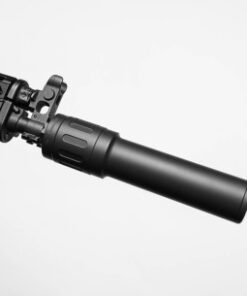
.300 Blackout
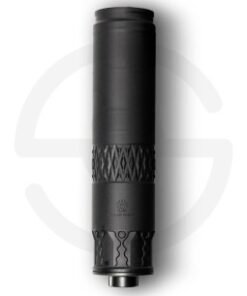
Bore is not the only question, pressure is
.357 SIG uses a .355 inch bullet, exactly the same as 9mm, so bore compatibility is straightforward. Any 9mm can clears it, and so does anything larger.
Pressure is where you have to read carefully. .357 SIG runs around 40,000 psi, meaningfully higher than standard 9mm, and it drives a lighter bullet considerably faster. A suppressor rated only for standard pressure 9mm is not automatically approved for it.
| Suppressor | Runs .357 SIG? |
|---|---|
| 9mm rated, .357 SIG listed | yes |
| 9mm rated, no .357 SIG listed | check with the maker first |
| .45 rated multi caliber | usually yes, confirm the rating |
| Rimfire can | NO, centerfire pressure |
Look for .357 SIG named explicitly in the maximum cartridge list. Most quality modern pistol cans include it, but it is a five second check that prevents an expensive mistake.
Supersonic, and what that costs you
This is the honest part. .357 SIG launches a 125 grain bullet at roughly 1,350 to 1,400 fps, well above the roughly 1,125 fps sound barrier. The bullet generates a sonic crack along its entire flight path, and no suppressor can do anything about noise that is created downrange.
So a suppressed .357 SIG is hearing safe and much more civilised than a bare one. It is not quiet in the way a suppressed .45 or a heavy 9mm is quiet. If you came to this page expecting a silent pistol, the cartridge is the obstacle, not the can.
Subsonic .357 SIG is not a practical answer either. Downloading a bottleneck cartridge designed around velocity produces a round that gives up the very thing you bought it for, and reliable cycling becomes a problem. If quiet is the priority, run a 147 grain 9mm load or a .45 ACP instead, both of which are naturally subsonic.
What you do gain
Plenty, and it is worth stating because the silence question tends to dominate.
.357 SIG produces a sharp, high pressure muzzle blast that is genuinely unpleasant, particularly indoors or under a covered range. A suppressor removes most of that concussion, which is the part that makes shooters flinch.
The added weight at the muzzle also damps the snappy recoil impulse the cartridge is known for, so follow up shots come faster and sights settle sooner. Many people find their groups improve simply because they have stopped bracing for the noise.
Boosters and hosts
.357 SIG is almost always chambered in tilting barrel service pistols, which means you need a booster, sometimes called a Nielsen device. It is a spring loaded piston that lets the barrel unlock and tilt independently of the suppressor's weight. Without one the pistol will short stroke and fail to cycle.
Because .357 SIG shares a bullet diameter with 9mm, many owners run one can across both, plus .40 and .45 hosts if the bore is large enough, swapping the piston to match each thread pitch. Common pitches are 1/2x28 and 13.5x1 LH, so check which pistons the manufacturer offers before choosing a can.
Sights need thought too. A pistol suppressor sits directly in front of the front sight and will block a standard sight picture, so plan on suppressor height sights or a red dot.
Cleaning
.357 SIG is cleaner burning than most pistol calibers because it runs at higher pressure, but it is still a pistol round and it still deposits carbon steadily. Pistol suppressors are built to be disassembled for exactly this reason.
Strip and clean at the manufacturer's interval, and keep .22 LR out unless the can is explicitly rated for rimfire, since rimfire fouling accumulates far faster and does not stop.
Frequently asked questions about .357 SIG suppressors
Can I use my 9mm suppressor on .357 SIG?
Bore wise yes, since both fire a .355 inch bullet. Check the pressure rating, because .357 SIG runs meaningfully hotter than standard 9mm. Look for .357 SIG named in the maximum cartridge list.
Is a suppressed .357 SIG quiet?
No. The cartridge is comfortably supersonic at roughly 1,350 to 1,400 fps, so the bullet cracks all the way downrange. The suppressor makes it hearing safe and far less punishing, which is a real benefit, but not silence.
Does subsonic .357 SIG exist?
Not in any useful factory form. Slowing a bottleneck cartridge built around velocity removes its whole purpose and creates cycling problems. For quiet, use heavy 9mm or .45 ACP instead.
Do I need a booster?
Yes, on the tilting barrel service pistols that .357 SIG is normally chambered in. Without the piston the barrel cannot unlock properly against the suppressor's weight and the pistol will fail to cycle.
Can one can cover 9mm, .357 SIG and .45?
Yes, if you buy a .45 rated multi caliber suppressor and swap pistons to match each host's thread pitch. This is the usual reason people buy the larger bore.
Will it fit my standard sights?
Almost certainly not. Pistol cans block a standard sight picture, so budget for suppressor height sights or a red dot at the same time.
Is .357 SIG hard on a suppressor?
Harder than standard 9mm, because of the higher pressure and velocity, but well within the design range of any can rated for it. The rating is the thing to check, not the bore.
Why suppress .357 SIG at all?
For blast and recoil rather than silence. It is a sharp, loud cartridge, and removing the muzzle concussion makes it considerably more pleasant to shoot and usually improves the shooter's accuracy.