Pistol suppressors, in stock. Handgun cans are the most versatile suppressors you can own, because pistol calibers are slow and heavy by nature and one large bore can will usually cover your whole handgun collection. Buy for the biggest bullet you shoot and everything smaller comes free.
This is the parent shelf for every pistol caliber we carry. If you already know the caliber, jump to 9mm, .380 ACP, .357 Magnum or .357 SIG. If you are still choosing, the guide below covers bore sizing, boosters, hosts and what pistol calibers actually sound like suppressed.
Shop the matching ammunition in 9mm, .45 ACP and 9mm and .380.
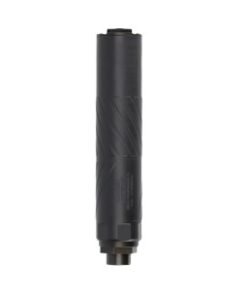
.300 Blackout
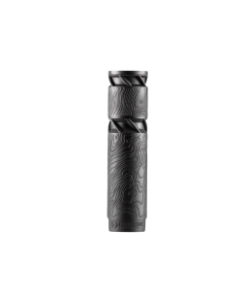
.30 Cal
.30 Cal
.30 Cal
.30 Cal
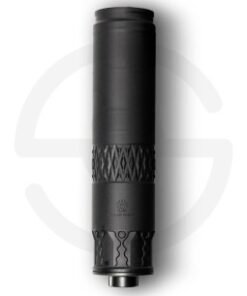
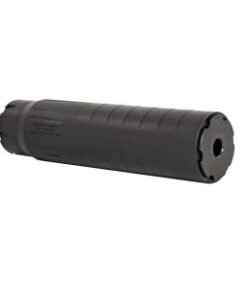
.30 Cal
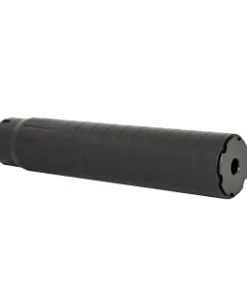
.30 Cal
Buy for the largest bullet, not the favourite one
A suppressor safely handles any bullet equal to or smaller than its bore. On rifles that logic pushes people toward a .30 caliber can. On pistols it pushes you toward .45, and the trade is smaller than you might expect, because pistol bullets are already slow and there is less gas velocity to lose past an oversized bore.
| Can bore | Covers | Does not cover |
|---|---|---|
| .45 rated | .45 ACP, 10mm, .40, .357 SIG, 9mm, .380 | nothing common in a handgun |
| 9mm rated | 9mm, .380, .357 SIG, and .38 or .357 in some cans | .45 ACP, 10mm, .40 in most |
| .22 rimfire | .22 LR, .22 WMR, .17 HMR | every centerfire pistol caliber |
The one exception to the buy big rule is rimfire. A 9mm or .45 can will suppress .22 LR, but rimfire fouling is soft, heavy and relentless, and a centerfire pistol can is not built around that much lead. If you shoot rimfire regularly, buy a dedicated .22 suppressor. It is the cheapest can on the shelf and it will save the expensive one.
Which pistol calibers are naturally quiet
Pistol shooters have an advantage rifle shooters do not: most handgun ammunition is already subsonic, so a suppressor delivers its full benefit without buying anything special.
.45 ACP has been subsonic since 1911. A 230 grain bullet at roughly 850 fps is heavy, slow and quiet, and it is arguably the best suppressor host cartridge ever made by accident.
9mm is subsonic in 147 grain, marginal in 124 grain, and usually supersonic in 115 grain. Load heavy and it is genuinely quiet.
.380 ACP is subsonic in most loadings, though the small case means there is less blast to suppress in the first place.
.357 Magnum and .357 SIG are the loud ones. Both are high velocity bottleneck or magnum rounds firing well over the sound barrier, so they crack no matter what you thread on the muzzle. A suppressor still helps enormously with blast and concussion, it just will not be quiet.
Boosters, and which hosts need one
Most modern semi automatic pistols use a tilting barrel that has to move to unlock the action. Hanging ten to fourteen ounces of suppressor on that barrel stops it moving properly and the pistol short strokes.
The fix is a booster, also called a Nielsen device: a spring loaded piston in the back of the can that lets the barrel move independently for the fraction of an inch it needs. Almost every pistol suppressor sold today includes one.
You do not need it on a fixed barrel host. Revolvers, fixed barrel pistols, and pistol caliber carbines all keep the barrel still, and for those the piston is replaced by a solid spacer that ships with most cans. Swapping takes a minute with a wrench.
Revolvers deserve a specific warning. Most revolvers cannot be suppressed usefully at all, because gas escapes from the cylinder gap regardless of what is on the muzzle. The exceptions are designs with a gas sealing cylinder, which are rare and specialised.
Thread pitches and hosts
The common United States pistol threads are 1/2x28 for 9mm, .578x28 for .45 ACP, and 13.5x1 LH on many imported and European pistols. Because the booster piston is a separate component, most manufacturers sell pistons in every pitch, so one suppressor can move between hosts by swapping a part rather than buying another can.
Check which pistons exist for a suppressor before buying it. That list, more than the sound figure, is what decides how many of your pistols it will actually serve.
Sights, and the cost nobody budgets for
A pistol suppressor is roughly one and a quarter inches across and sits directly in your line of sight. On a standard handgun it hides the front sight entirely.
Suppressor height sights are the straightforward fix, taller irons that see over the can. A red dot removes the problem altogether, which is why suppressed pistols and optics are so often bought together. Either way, add it to the budget at the start rather than discovering it when the stamp arrives.
Cleaning, because pistols foul
Unlike rifle cans, pistol suppressors are almost always user serviceable, and that is deliberate. Pistol calibers burn at lower pressure and throw lead and carbon that genuinely accumulates, to the point where a neglected baffle stack can seize solid.
Strip and clean at the manufacturer's interval. Keep rimfire out unless the can is rated for it. And if you use water or gel to boost suppression, which is legal and effective, dry the can properly afterwards because it accelerates corrosion.
How quiet does a suppressed pistol get?
A .45 ACP or heavy 9mm pistol with a good can is among the quietest firearms most people will ever shoot, quiet enough that the slide cycling is often the loudest part of the shot. That is not marketing, it is what happens when the bullet was already subsonic and the suppressor only has to deal with blast.
A pistol caliber carbine is quieter still, because the longer barrel burns more of the powder before the gas ever reaches the can and there is no action venting at your face.
Magnum and bottleneck pistol calibers are the exception, and they are worth suppressing anyway for the reduction in concussion, just not for silence. For genuinely quiet shooting with real rifle energy behind it, look at 300 Blackout or 8.6 Blackout in our subsonic ammunition and suppressor range.
Frequently asked questions about pistol suppressors
Can one suppressor cover all my handguns?
Usually, if you buy a .45 rated can. It will safely run .45 ACP, 10mm, .40, .357 SIG, 9mm and .380, and you swap the piston to match each host's thread pitch. Rimfire is the exception and deserves its own dedicated can.
Which pistol caliber is quietest suppressed?
.45 ACP, comfortably. A 230 grain bullet at roughly 850 fps is naturally subsonic, so there is no sonic crack for the suppressor to fight. Heavy 147 grain 9mm is a close second.
Do I need a booster?
On a tilting barrel semi automatic pistol, yes. Without one the suppressor's weight prevents the barrel unlocking and the pistol will fail to cycle. Fixed barrel pistols and pistol caliber carbines use a solid spacer instead.
Can I suppress a revolver?
Generally no. Gas escapes from the gap between the cylinder and the barrel, so the noise gets out regardless of what is on the muzzle. Only rare gas sealing designs make it worthwhile.
Will a suppressor fit my carry pistol?
The barrel has to be threaded, which usually means a threaded barrel upgrade or a model sold with one. Bear in mind a suppressed pistol is not a carry configuration, so most people treat this as a range and home setup.
Is .357 Magnum worth suppressing?
For blast and concussion, yes, it makes a punishing cartridge far more pleasant. For silence, no. .357 is comfortably supersonic and will crack downrange whatever you fit.
How often do pistol suppressors need cleaning?
Far more often than rifle cans, which is why they are built to come apart. Pistol calibers deposit lead and carbon steadily, and a neglected baffle stack can seize. Follow the maker's interval.
Can I shoot .22 LR through my 9mm can?
Only if it is rated for rimfire. The bore is large enough, but rimfire fouls heavily and keeps accumulating. A dedicated rimfire suppressor is inexpensive and protects the centerfire one.