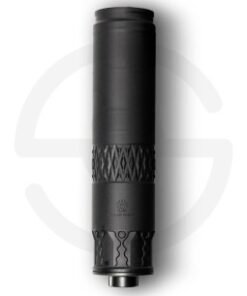
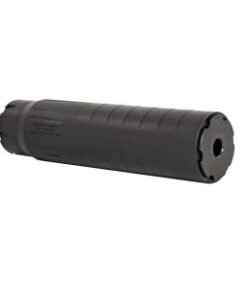
.357 Magnum suppressors, in stock. This is the caliber where you need to be clear about what you are buying. .357 Magnum is supersonic in nearly every factory loading, so a suppressor will not make it quiet. What it will do is remove a genuinely brutal amount of muzzle blast and concussion from one of the loudest handgun cartridges ever made.
There is a second problem specific to .357: most of the guns chambered for it are revolvers, and revolvers leak gas at the cylinder gap regardless of what is on the muzzle. The guide below covers which hosts actually work, and why a lever gun or a threaded barrel carbine is usually the right answer here.
Browse the wider pistol suppressor range or the rifle suppressors if your .357 is a carbine.
.30 Cal
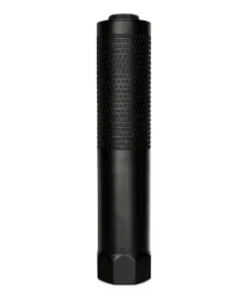
.30 Cal
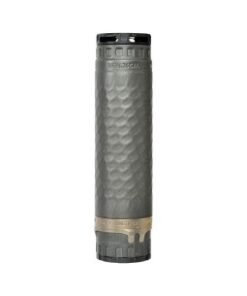
.30 Cal
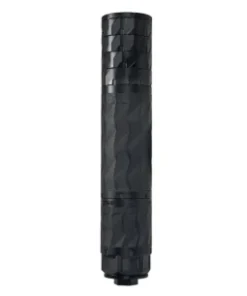
.300 Blackout
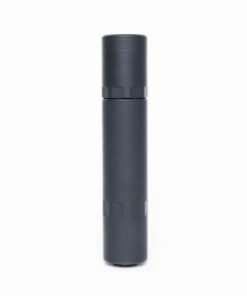
.30 Cal
.30 Cal
The revolver problem
Start here, because it decides whether a suppressor is worth buying at all.
A revolver has a deliberate gap between the front of the cylinder and the back of the barrel. When the round fires, high pressure gas escapes sideways through that gap, and it does so before the bullet has reached the muzzle. A suppressor sits at the muzzle. It cannot do anything about noise that has already left the gun somewhere else.
The practical consequence is that suppressing a conventional revolver achieves very little. You will hear a reduction, but the cylinder gap blast dominates and the can is doing perhaps a fraction of the job it would do on a closed system.
There are two exceptions. Rare gas sealing revolver designs push the cylinder forward to close the gap before firing, and those suppress properly. And .357 chambered carbines and lever actions, which have no gap at all, suppress like any other closed breech firearm. If you want a quiet .357, that is where to look.
| Host | Worth suppressing? | Why |
|---|---|---|
| Standard revolver | marginal | gas escapes at the cylinder gap |
| Gas sealing revolver | yes | the gap closes before firing |
| Lever action carbine | yes | closed breech, no gap |
| Semi automatic carbine | yes | closed breech, needs a threaded muzzle |
Supersonic, and what that means for you
.357 Magnum was designed to be fast. A 125 grain load runs roughly 1,400 to 1,500 fps from a revolver and considerably more from a carbine barrel, well above the roughly 1,125 fps sound barrier.
That means a sonic crack, generated along the whole flight path, which no suppressor can touch. Expect a suppressed .357 to be hearing safe and much more civilised, not quiet.
Heavy subsonic .357 loads do exist, generally 180 grains and up at reduced velocity, and in a carbine with a good can those are genuinely quiet. They are a specialist item rather than something you will find on every shelf, and in a revolver the cylinder gap still limits what you gain.
What a suppressor actually buys you on .357
Set silence aside and the case is still strong, because .357 Magnum is punishing to shoot.
The cartridge produces an unusually sharp, high pressure blast, and out of a short barrelled revolver a great deal of powder is still burning at the muzzle. That is the concussion that makes people flinch and makes .357 unpleasant next to shooters on either side.
A suppressor removes most of that muzzle blast and adds weight that damps muzzle rise. On a carbine the result is a cartridge that is genuinely comfortable to shoot for the first time, which usually shows up as better groups because the shooter has stopped anticipating the noise.
Bore size and what else the can will run
.357 Magnum fires a .357 inch bullet, marginally larger than the .355 of 9mm. Read suppressor ratings carefully here, because the two are close enough that people assume compatibility that does not exist.
Many pistol cans rated for .357 Magnum will also run .38 Special, .357 SIG, 9mm and .380, which makes them versatile. A can rated only for 9mm may not be approved for .357 Magnum, both on bore diameter and on pressure, since .357 runs far higher pressure than any standard pistol round. Check the maximum cartridge rating, not just the bore.
If your .357 is a carbine, a .30 caliber rifle can is not the answer either, since .357 is larger than .308. Match the can to the bullet.
Threads and hosts
Threaded .357 revolvers are unusual and generally purpose built. Threaded .357 carbines and lever guns are more common and growing, particularly as pistol caliber carbines have become popular.
Thread pitches vary more than in 9mm, so confirm the pitch on your specific barrel and check the suppressor manufacturer offers a matching mount or piston before ordering. On a fixed barrel carbine you want a solid mount rather than a booster piston, since nothing needs to move.
Frequently asked questions about .357 Magnum suppressors
Can you suppress a .357 revolver?
You can fit a can to a threaded one, but the benefit is limited. Gas escapes at the gap between the cylinder and the barrel before the bullet reaches the muzzle, and no suppressor can address noise that has already left the gun elsewhere.
Is a suppressed .357 Magnum quiet?
No. .357 is supersonic in nearly all factory loadings, so the bullet cracks downrange whatever you fit. It becomes hearing safe and far less punishing, which is a real benefit, but it is not silence.
What is the best host for a suppressed .357?
A carbine or lever action. There is no cylinder gap, the longer barrel burns more powder before the gas reaches the can, and with a heavy subsonic load it can be genuinely quiet.
Can I use my 9mm suppressor on .357 Magnum?
Only if the manufacturer rates it for .357. The bullet is .357 inch against 9mm's .355, and .357 Magnum runs far higher pressure than standard pistol rounds. Check the maximum cartridge rating rather than assuming the bore is close enough.
Does subsonic .357 ammunition exist?
Yes, generally heavy 180 grain and above at reduced velocity. In a suppressed carbine those loads work well. In a revolver the cylinder gap still limits what you gain.
Will a .357 can also run .38 Special?
Usually yes, since .38 Special uses the same bullet diameter at much lower pressure. Confirm with the manufacturer, and note that .38 Special is often subsonic, which makes it the quieter option in the same gun.
Why is .357 so loud to begin with?
High pressure, fast powder and short barrels. A large share of the propellant is still burning as the bullet leaves a revolver muzzle, which produces the sharp blast the cartridge is notorious for.
Is it worth suppressing .357 at all?
On a carbine, yes, particularly with heavy loads. On a standard revolver, the cylinder gap means you are paying a tax stamp for a modest improvement, and the money is usually better spent elsewhere.