Projectiles and bullets, sold as components. This shelf is about one decision: which bullet. Not which cartridge, not which powder, just the projectile itself, because in subsonic shooting the bullet does almost all of the work and almost every disappointing result traces back to the wrong one.
You will find heavy .338 and .308 projectiles here, including the solid copper subsonic designs our own factory loads are built on, alongside match and practice options. The guide below explains how to read a projectile specification and what actually changes downrange.
For brass, case forming and the loading side of things, see projectiles and brass. For loaded ammunition, start at the caliber index.
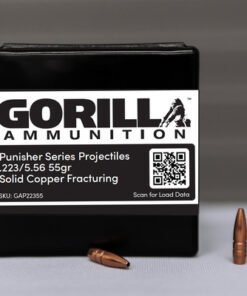
Projectiles & Brass
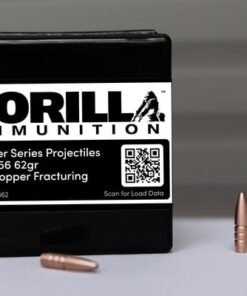
Projectiles & Brass
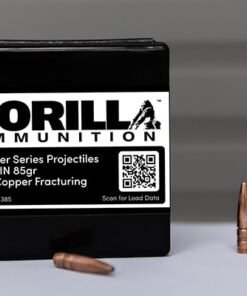
8.6 Blackout (ALL)
Projectiles & Brass
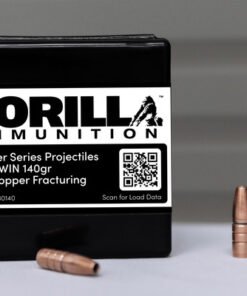
30-30 Win 140gr Solid Copper Fracturing Projectiles (Qty 50)
Projectiles & Brass
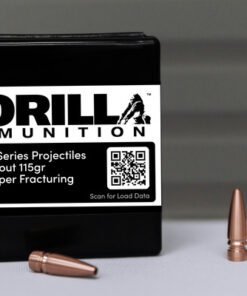
300 Blackout 115gr Solid Copper Fracturing Projectiles (Qty 50)
Projectiles & Brass
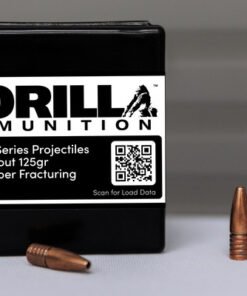
300 Blackout 125gr Solid Copper Fracturing Projectiles (Qty 50)
Projectiles & Brass
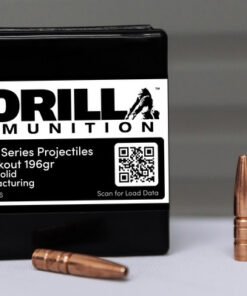
300 Blackout 196gr Solid Copper Subsonic Fracturing Projectiles (Qty 50)
Projectiles & Brass
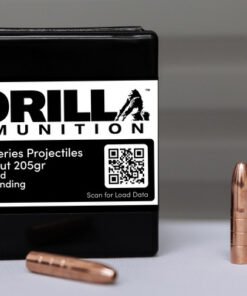
300 Blackout 205gr Solid Copper Subsonic Expanding Projectiles (Qty 50)
Projectiles & Brass
Projectiles & Brass
Projectiles & Brass
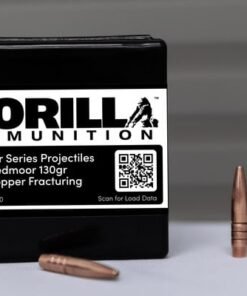
6.5 Creedmoor 130gr Solid Copper Fracturing Projectiles (Qty 50)
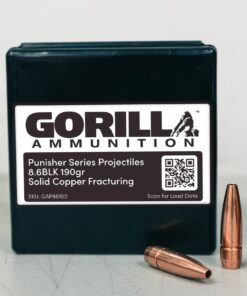
8.6 Blackout (ALL)
8.6 Blackout 190gr Solid Copper Fracturing Projectiles (Qty 50)
The rule that governs everything on this page
A subsonic bullet leaves the muzzle at roughly 1,050 fps. It arrives at the target at not much less. That is a fraction of the speed a conventional expanding bullet was designed around, and it changes what a projectile has to do.
Expansion in an ordinary cup and core bullet is driven by velocity. The bullet strikes, the soft core deforms under the force of impact, and the jacket peels back. Remove two thirds of the impact velocity and there is simply not enough force to make that happen. The bullet passes through intact, drills a caliber sized hole, and dumps most of its energy into the dirt beyond.
That is the failure mode. It is quiet, it is accurate, and it does not work. Everything below is about avoiding it.
The three families of subsonic projectile
| Type | How it works | Use it for |
|---|---|---|
| Match and FMJ | does not expand at all | load development, practice, paper |
| Low velocity expanding | soft alloy, deep hollow point, opens at 1,000 fps | hunting, general purpose |
| Solid copper fracturing | comes apart using rotational energy | hunting, maximum terminal effect |
Match and FMJ projectiles are the cheapest and often the most accurate on paper. They are the right choice for working up a load and for volume practice, and the wrong choice for anything living.
Low velocity expanding designs use softer alloys and deeper, wider hollow points so that 1,000 fps is enough to start the process. They are the straightforward, forgiving answer for most hunters.
Solid copper fracturing designs are the clever ones. Rather than relying on impact velocity they use spin, which the Blackout cartridges have in abundance. A 342 grain bullet leaving a 1:3 twist barrel is rotating past 250,000 rpm, and a projectile engineered for that will separate into segments on impact regardless of how slowly it is travelling. This is why 8.6 Blackout performs better in the field than its energy figure alone suggests.
Weight, and what it buys
Because subsonic velocity is fixed by physics, bullet weight is the only lever left for energy.
In .338, the common subsonic range runs 285gr to 342gr. Across that span you gain roughly 140 ft lbs, and the heavier bullets also present more frontal area, which matters as much as the energy number.
In .308, subsonic weights run 190gr to 220gr for roughly 500 ft lbs. That ceiling is exactly why 8.6 Blackout was designed: there is no more room in a .308 bullet at subsonic speed.
Supersonic projectiles work the opposite way round. Lighter is faster and flatter, heavier is more deliberate, and energy stays broadly similar across the range because you are trading speed for mass rather than adding either.
Twist rate decides what you can shoot
Before buying a quantity of heavy projectiles, confirm your barrel twist. Long heavy bullets at low velocity need aggressive spin to stabilise at all, which is why these cartridges use twist rates found nowhere else.
| Cartridge | Twist | Stabilises |
|---|---|---|
| 8.6 Blackout | 1:3 | up to 342gr .338 subsonic |
| 338 ARC | 1:5 | up to roughly 307gr .338 subsonic |
| 300 Blackout | 1:7 or 1:8 | up to 220gr .308 subsonic |
A slower twist barrel will fire heavy subsonics and stay quiet. What it will not reliably do is stabilise them or generate the spin that fracturing designs depend on, so you pay for a specialist projectile and receive none of its benefit. Our twist rate guide covers why the number matters more here than in any other cartridge.
Ballistic coefficient, and why it matters less than you think
BC describes how well a projectile resists drag, and in long range supersonic shooting it is close to the most important number on the box.
In subsonic shooting it is much less important, for a simple reason: drag scales with the square of velocity, and at 1,050 fps there is not much velocity to lose. A subsonic bullet sheds speed slowly, which is why subsonic loads retain their energy well out to the ranges anyone shoots them.
What limits subsonic range is not drag, it is gravity. A subsonic load drops roughly 33 inches at 200 yards from a 100 yard zero, which turns small range estimation errors into misses. Treat 150 yards as the practical ceiling and model your own load in our ballistics calculator.
Seating, feeding and the practical checks
Heavy subsonic projectiles are long, and length causes two practical problems worth knowing before you order.
They occupy case capacity, which is one of several reasons subsonic charges are small. And they can push overall cartridge length past what a magazine will accept, so check your magazine and chamber before committing to a quantity of a particular bullet.
If you are loading for a tube fed lever action, flat or round nosed projectiles only. A pointed tip resting on the primer of the round ahead of it under recoil is a genuinely bad idea. Most heavy subsonic designs are blunt anyway, since they are built to expand rather than fly flat, so this usually works out conveniently.
Frequently asked questions about projectiles and bullets
Which bullet should I use for subsonic hunting?
An expanding or fracturing design built to open at roughly 1,050 fps, in the heaviest weight your barrel will stabilise. Never a match or FMJ projectile, which will pass straight through without upsetting.
Why do solid copper fracturing bullets work at subsonic speed?
They use rotational energy rather than impact velocity. A 342 grain bullet from a 1:3 twist barrel spins past 250,000 rpm, and a projectile engineered for that spin separates on impact even when it is travelling slowly.
Does ballistic coefficient matter for subsonic loads?
Much less than for supersonic shooting. Drag scales with the square of velocity, so a slow bullet loses speed slowly. The real limit on subsonic range is trajectory, not drag.
What is the heaviest bullet I can shoot?
It depends on your twist rate, not your cartridge. 8.6 Blackout at 1:3 handles up to 342gr, 338 ARC at 1:5 up to roughly 307gr, and 300 Blackout at 1:7 or 1:8 up to 220gr.
Are match bullets more accurate?
Usually yes on paper, which is what they are made for. They are excellent for load development and practice, and they do not expand, so keep them away from game.
Will heavy projectiles fit my magazine?
Check before buying a quantity. Heavy subsonic bullets are long and can push overall cartridge length beyond what a magazine accepts, particularly if you seat them out for accuracy.
Can I use pointed bullets in a lever action?
No, not in a tube magazine. Use flat or round nosed projectiles only, since a pointed tip rests against the primer of the round ahead under recoil. Most heavy subsonic designs are blunt already.
How much energy do I gain going heavier?
In .338 subsonic, roughly 140 ft lbs from 285gr to 342gr, plus more frontal area. In .308 subsonic the ceiling is around 500 ft lbs at 220gr, which is precisely why the larger .338 cartridges exist.