8.6 Blackout (ALL)
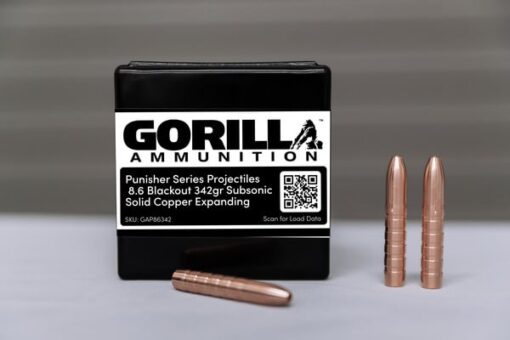
8.6 Blackout 342gr Solid Copper Subsonic Expanding Projectiles (Qty 50)
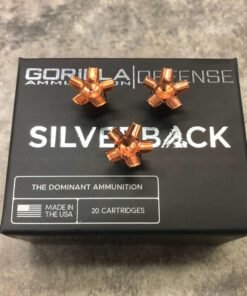
Projectiles & Brass
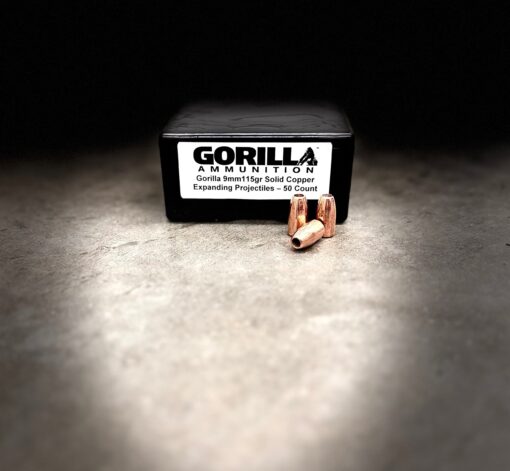
Projectiles & Brass
Silverback 9mm 115gr Solid Copper Expanding Projectiles (Qty 50)
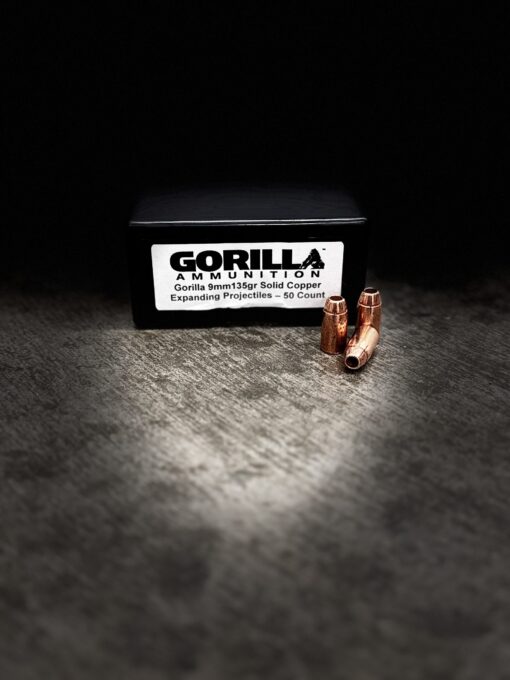
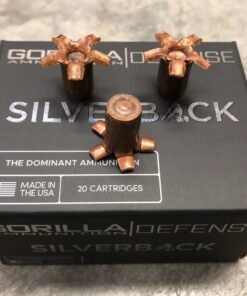
Projectiles & Brass
Silverback 9mm 135gr Solid Copper Subsonic Expanding Projectiles (Qty 50)
The rule that governs everything on this page
A subsonic bullet leaves the muzzle at roughly 1,050 fps. It arrives at the target at not much less. That is a fraction of the speed a conventional expanding bullet was designed around, and it changes what a projectile has to do.
Expansion in an ordinary cup and core bullet is driven by velocity. The bullet strikes, the soft core deforms under the force of impact, and the jacket peels back. Remove two thirds of the impact velocity and there is simply not enough force to make that happen. The bullet passes through intact, drills a caliber sized hole, and dumps most of its energy into the dirt beyond.
That is the failure mode. It is quiet, it is accurate, and it does not work. Everything below is about avoiding it.
The three families of subsonic projectile
| Type | How it works | Use it for |
|---|---|---|
| Match and FMJ | does not expand at all | load development, practice, paper |
| Low velocity expanding | soft alloy, deep hollow point, opens at 1,000 fps | hunting, general purpose |
| Solid copper fracturing | comes apart using rotational energy | hunting, maximum terminal effect |
Match and FMJ projectiles are the cheapest and often the most accurate on paper. They are the right choice for working up a load and for volume practice, and the wrong choice for anything living.
Low velocity expanding designs use softer alloys and deeper, wider hollow points so that 1,000 fps is enough to start the process. They are the straightforward, forgiving answer for most hunters.
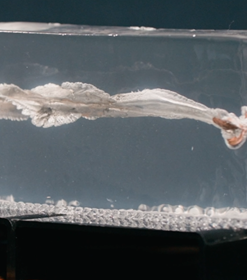
Solid copper fracturing designs are the clever ones. Rather than relying on impact velocity they use spin, which the Blackout cartridges have in abundance. A 342 grain bullet leaving a 1:3 twist barrel is rotating past 250,000 rpm, and a projectile engineered for that will separate into segments on impact regardless of how slowly it is travelling. This is why 8.6 Blackout performs better in the field than its energy figure alone suggests.
Twist rate decides what you can shoot
Before buying a quantity of heavy projectiles, confirm your barrel twist. Long heavy bullets at low velocity need aggressive spin to stabilise at all, which is why these cartridges use twist rates found nowhere else.
| Cartridge | Twist | Stabilises |
|---|---|---|
| 8.6 Blackout | 1:3 | up to 342gr .338 subsonic |
| 338 ARC | 1:5 | up to roughly 307gr .338 subsonic |
| 300 Blackout | 1:7 or 1:8 | up to 220gr .308 subsonic |
A slower twist barrel will fire heavy subsonics and stay quiet. What it will not reliably do is stabilise them or generate the spin that fracturing designs depend on, so you pay for a specialist projectile and receive none of its benefit. Our twist rate guide covers why the number matters more here than in any other cartridge.
Frequently asked questions
Which bullet should I use for subsonic hunting?
An expanding or fracturing design built to open at roughly 1,050 fps, in the heaviest weight your barrel will stabilise. Never a match or FMJ projectile, which will pass straight through without upsetting.
Why do solid copper fracturing bullets work at subsonic speed?
They use rotational energy rather than impact velocity. A 342 grain bullet from a 1:3 twist barrel spins past 250,000 rpm, and a projectile engineered for that spin separates on impact even when it is travelling slowly.
Does ballistic coefficient matter for subsonic loads?
Much less than for supersonic shooting. Drag scales with the square of velocity, so a slow bullet loses speed slowly. The real limit on subsonic range is trajectory, not drag.
What is the heaviest bullet I can shoot?
It depends on your twist rate, not your cartridge. 8.6 Blackout at 1:3 handles up to 342gr, 338 ARC at 1:5 up to roughly 307gr, and 300 Blackout at 1:7 or 1:8 up to 220gr.