.308 Winchester ammunition, in stock. If a cartridge can be called the default, this is it. .308 has been the benchmark for hunting, match shooting and general purpose rifle work for seventy years, and everything in the rifle world is measured against it, including suppressors.
The guide below covers bullet weight and what each is for, the .308 and 7.62×51 question that catches people out, and an honest comparison against 6.5 Creedmoor rather than a marketing one.
Suppressing it? See our 7.62 and .308 suppressors. Compare with 6.5 Creedmoor and .30-06, or browse the caliber index.
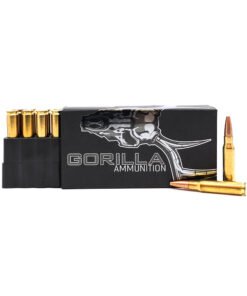
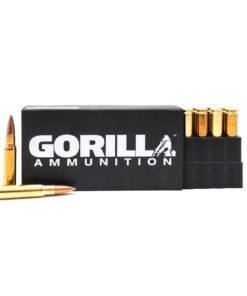
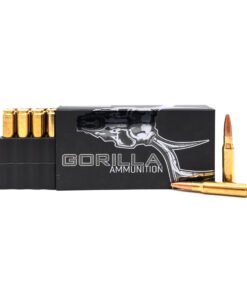
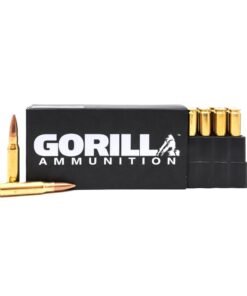
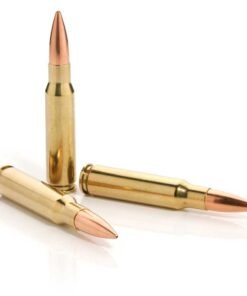
.308 Winchester and 7.62x51 NATO
The two are close relatives and the naming causes confusion, so here is the practical position.
They use the same .308 inch bullet and the same external case dimensions. .308 Winchester is loaded to slightly higher pressure than 7.62x51 NATO, but military chambers are usually cut with more generous headspace tolerances.
For almost every modern commercial rifle, .308 Winchester ammunition is what you want and what the rifle is chambered for. Running 7.62x51 in a .308 rifle is generally accepted as safe. The direction that occasionally causes discussion is .308 Winchester in older military surplus rifles with generous chambers, where the higher pressure combined with loose headspace is worth checking rather than assuming.
If your rifle is marked .308 Winchester, buy .308 Winchester and stop thinking about it.
Bullet weight, and what each does
| Weight | Typical velocity | Best for |
|---|---|---|
| 147 to 150gr | roughly 2,750 to 2,850 fps | practice, general purpose, flatter trajectory |
| 168gr | roughly 2,600 to 2,700 fps | the classic match weight, deer sized game |
| 175gr | roughly 2,550 to 2,650 fps | match at longer range, better wind performance |
| 180gr and up | roughly 2,450 to 2,600 fps | larger game, heavier bone, deep penetration |
168 grain is the weight the cartridge is best known for and a sensible default. 175 grain holds up better past 600 yards. 180 grain and heavier is what you choose when penetration matters more than trajectory.
Almost every .308 barrel is cut 1:10 or 1:12, both of which stabilise this entire range, so unlike the Blackouts twist rate is not a decision you have to make here.
Why .308 remains the benchmark
Three reasons, and none of them is that it is the best at anything.
Availability. Every maker loads it, every shop stocks it, and it is produced in enormous volume, which keeps the price down and the supply steady.
Rifle choice. More rifles are chambered in .308 than in any other centerfire rifle cartridge, across bolt, semi automatic and lever platforms.
It is genuinely good enough. Inside 600 yards .308 does everything most shooters need, on game up to elk with the right bullet, with recoil that experienced shooters manage comfortably.
It is also why suppressor manufacturers publish their sound figures on .308: it sits in the middle of the rifle world for gas volume and pressure, so a can proven here handles almost anything smaller.
Against 6.5 Creedmoor, honestly
The comparison is usually argued badly, so here it is by distance.
Inside 300 yards there is no meaningful difference in what either cartridge will do to a target or an animal. .308 is cheaper and more available. Choose it.
Past 600 yards, 6.5 Creedmoor is clearly better. Its longer, higher BC .264 bullets hold velocity and resist wind noticeably better, with less recoil while doing it. Choose the 6.5.
Between those, it depends on how much wind you shoot in and how much you value cheap practice ammunition. .308 also gives longer barrel life, which matters if you shoot a lot. Our 6.5 Creedmoor page covers the other side of this.
Hunting with .308
Bullet construction decides outcomes more than weight does. A match bullet is designed to be accurate, not to expand, and a match projectile through game frequently passes straight through without doing its job. Choose a controlled expansion hunting bullet.
For deer sized game at normal ranges, 150 to 168 grain expanding loads are ideal. For elk or heavier bone, 180 grain and a bonded or partition style bullet. Beyond 400 yards, expansion becomes the limit rather than energy, since impact velocity falls below what many bullets need to open reliably.
Suppressed .308, and expectations
Suppressing .308 is common and effective, and it is worth being clear about what it delivers. A suppressed .308 is hearing safe and far more comfortable, typically dropping from around 165 decibels to the low 130s at the ear.
It is not quiet, because the bullet is supersonic and cracks all the way downrange where no suppressor can reach. Factory subsonic .308 exists but the selection is thin, and the cartridge was not designed around it.
If genuine quiet is the goal, the cartridges built for it are 300 Blackout and 8.6 Blackout, and conveniently a .30 caliber can covers .308 and 300 Blackout both. See our subsonic ammunition and suppressor range.
Shipping and compliance
We ship within the USA to lawful destinations only, and orders over $300 ship free. Ammunition rules vary by state and by city and remain the buyer's responsibility. See our shipping and delivery page, and SAAMI for cartridge and pressure specifications.
Frequently asked questions about .308 Winchester ammunition
Is .308 the same as 7.62x51?
Nearly. Same bullet and case dimensions, with .308 Winchester loaded to slightly higher pressure and military chambers cut with more generous headspace. If your rifle is marked .308 Winchester, buy .308 Winchester.
What bullet weight should I buy?
168 grain as a default, which covers match shooting and deer sized game. 150 grain for practice and flatter trajectory, 175 for longer range, 180 and up for heavier game and deeper penetration.
What twist rate do I need?
Almost every .308 barrel is 1:10 or 1:12, and both stabilise the full range of common bullet weights. Unlike the Blackout cartridges, this is not something you need to check.
Is .308 good for elk?
Yes, with the right bullet and sensible range. Use a 180 grain bonded or partition style projectile built to hold together, and keep shots within a distance where impact velocity is still high enough to drive expansion.
Is .308 or 6.5 Creedmoor better?
Inside 300 yards there is no practical difference and .308 is cheaper. Past 600 yards 6.5 Creedmoor is clearly better in wind and recoil. Choose by the distance you actually shoot.
Can I use match ammunition for hunting?
It will group well and it is designed for accuracy rather than expansion, so it often passes straight through game. Use a controlled expansion hunting bullet instead.
Is subsonic .308 worth buying?
The factory selection is thin and the cartridge was not designed for it. For genuinely quiet suppressed shooting, 300 Blackout and 8.6 Blackout are the purpose built answers, and a .30 caliber can runs .308 and 300 Blackout both.
How quiet is a suppressed .308?
Hearing safe, typically the low 130s in decibels at the ear against roughly 165 unsuppressed. Comfortable and civilised, but not silent, because the supersonic bullet cracks downrange.