Guides
8.6 Blackout Ballistics: A Powerful Subsonic Guide (2026)
Jun
8.6 Blackout ballistics only make sense once you understand the cartridge’s mission: move the heaviest practical .338 bullet quietly through a short, suppressed barrel and still hit like a freight train. This is not a flat-shooting, long-range round, and it was never meant to be. Frame it that way and the numbers click into place. Below is a clear, honest look at 8.6 Blackout ballistics — velocity, muzzle energy, trajectory, effective range and terminal performance — so you know exactly what this .338 subsonic cartridge does downrange.
The basics of 8.6 Blackout
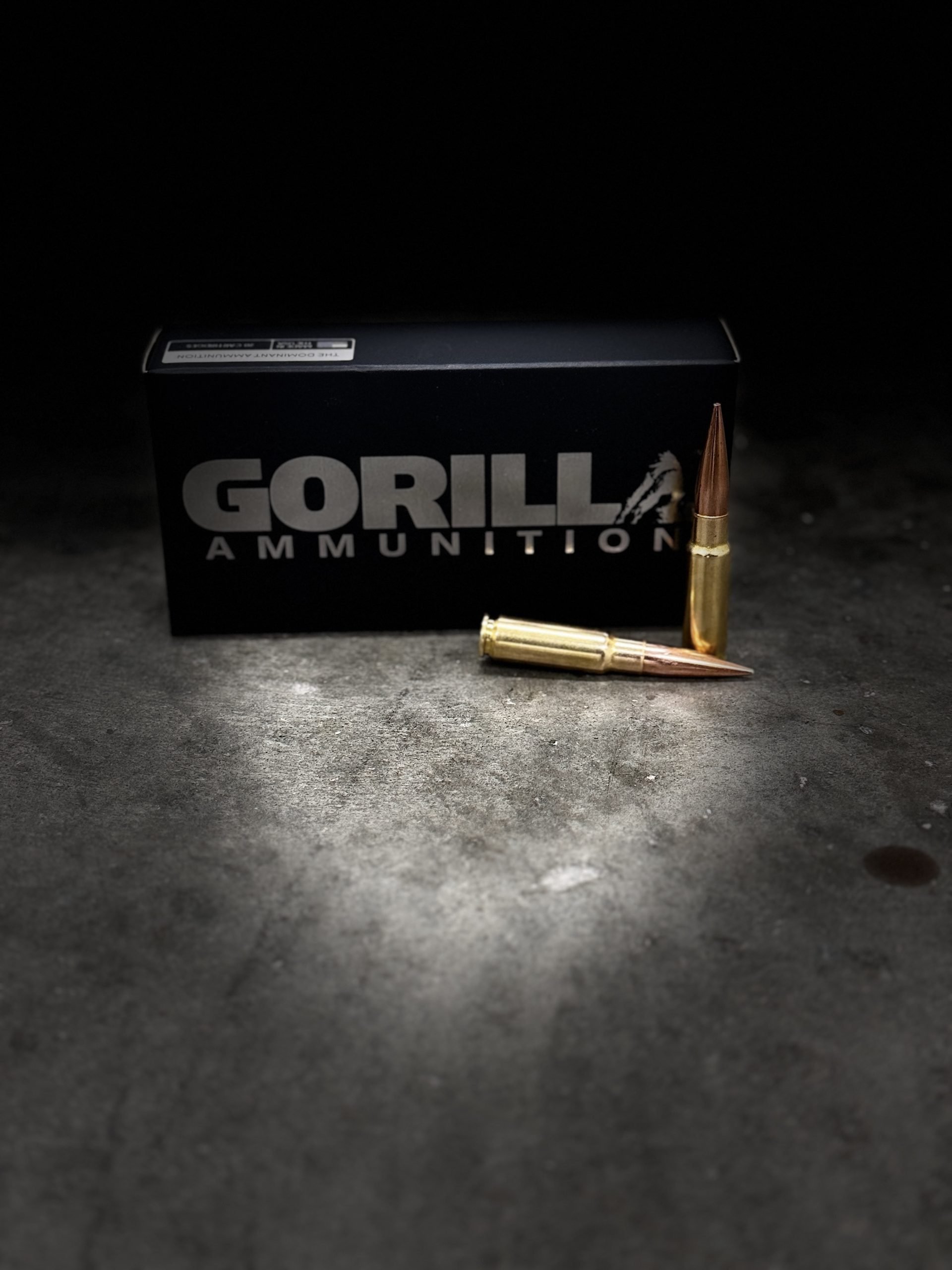
To make sense of 8.6 Blackout ballistics, start with the cartridge itself. 8.6 Blackout (8.6×43mm) fires a .338-diameter bullet from a shortened 6.5 Creedmoor case, feeding from standard .308/AR-10 magazines. Designed by Kevin Brittingham at Q — the same mind behind 300 Blackout — it exists to do for the .338 bore and the AR-10 what 300 BLK did for .308 and the AR-15. Factory ammunition falls into two camps:
- Subsonic: heavy 285–342gr bullets traveling around 1,000 FPS, deliberately below the speed of sound so a suppressor does its best work.
- Supersonic: lighter ~210gr bullets pushed well past the sound barrier for more velocity and a flatter trajectory.
Everything about 8.6 Blackout ballistics flows from that subsonic-first design. Browse both load types in our 8.6 Blackout ammo collection.
8.6 Blackout velocity
Velocity is the first pillar of 8.6 Blackout ballistics. Subsonic 8.6 loads are kept just under the sound barrier — figure roughly 950–1,050 FPS depending on bullet weight and barrel length. That’s intentional: stay subsonic so there’s no supersonic “crack,” and let bullet mass do the work. Supersonic 8.6 loads (around 210gr) leave the muzzle considerably faster, often in the 1,800–2,000+ FPS range from a suitable barrel, trading quietness for reach. Because 8.6 was built for short barrels, it reaches design velocity without a long tube — a major advantage for compact, suppressed rifles.
8.6 Blackout muzzle energy
This is where 8.6 Blackout ballistics separate from other subsonic options. A heavy subsonic .338 bullet carries real momentum. Typical subsonic 8.6 loads generate roughly 600–730 ft-lbs at the muzzle, and premium supersonic loads (such as a 210gr Barnes TSX) can exceed 1,500 ft-lbs. For comparison, subsonic 300 Blackout (220gr at ~1,000 FPS) lands closer to ~500 ft-lbs. The bigger, heavier .338 bullet is precisely why 8.6 hits noticeably harder subsonic.
8.6 Blackout ballistics chart
Here are typical figures by load type. Velocities and energies vary with barrel length and specific load — always confirm against your ammunition’s spec sheet:
| Load | Bullet weight | Muzzle velocity | Muzzle energy (approx.) | Best use |
|---|---|---|---|---|
| Subsonic hunting | 285–300gr | ~1,000 FPS | ~635–665 ft-lbs | Suppressed hog/deer |
| Heavy subsonic | 342gr | ~975 FPS | ~720 ft-lbs | Max subsonic penetration |
| Supersonic | ~210gr | ~1,900 FPS | ~1,680 ft-lbs | Flatter shooting, more reach |
Trajectory and bullet drop
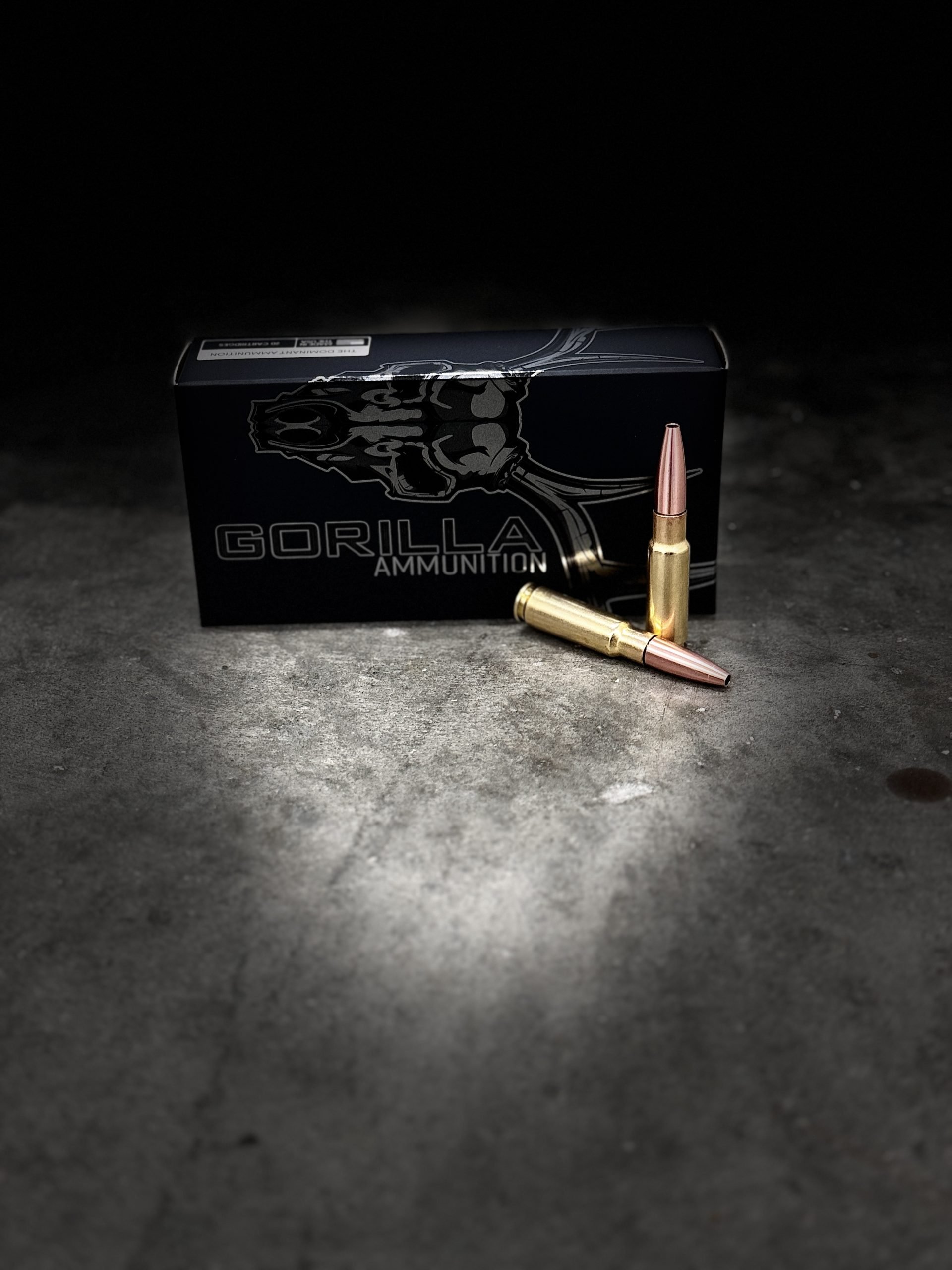
Trajectory is where 8.6 Blackout ballistics surprise newcomers. Heavy subsonic bullets drop fast — physics doesn’t negotiate. Inside about 100–150 yards a subsonic 8.6 load is very capable and easy to connect with; past that, drop becomes steep and you’ll need to dial or hold accordingly. Supersonic loads shoot flatter and extend your practical range. If you’re picturing a 400-yard tack-driver, that isn’t this cartridge — 8.6 Blackout ballistics describe a close-to-mid-range hammer, and an exceptional one inside that window.
Effective range
Effective range follows directly from 8.6 Blackout ballistics. Realistically, treat subsonic 8.6 as a sub-150-yard proposition for hunting, where its heavy bullet and deep penetration shine. Supersonic loads stretch usable range further — out to roughly 200–300 yards with proper holds — but the cartridge’s heart is close, quiet, hard-hitting work. Know your zero and confirm holdovers before you rely on it in the field.
Why the 1:3 twist rate shapes the ballistics
8.6 barrels use a very fast twist — commonly around 1:3, far faster than a typical .30-caliber barrel. That aggressive twist is what stabilizes long, heavy subsonic bullets at low velocity, and it’s a core driver of the cartridge’s terminal behavior: a fast-spinning heavy bullet built to expand or fracture transfers energy violently on impact. If you want the full picture, see our 8.6 Blackout twist rate and barrel guide.
How barrel length affects 8.6 Blackout ballistics
Barrel length mainly changes velocity, especially for supersonic loads. Short 8–10″ barrels reach subsonic design velocities easily and stay compact and suppressible; 12″ is a popular balance; 16″ squeezes the most from supersonic loads at the cost of handiness. Subsonic ballistics stay relatively consistent across these lengths because the load is already velocity-limited by design — the bullet just needs the fast twist to stabilize.
Terminal performance: what 8.6 does on impact
Terminal effect is the payoff of 8.6 Blackout ballistics. Where 8.6 earns its reputation is terminal effect. Heavy .338 bullets driven by that fast twist penetrate deeply and, with expanding or fracturing projectiles, dump energy hard. That combination — deep penetration plus violent energy transfer at subsonic speed — is exactly what makes 8.6 Blackout a standout for suppressed hog and deer hunting, where a quiet shot still needs to anchor the animal. For load-by-load picks, read our guide to the best 8.6 Blackout subsonic ammo for hunting.
8.6 Blackout ballistics by bullet weight
Bullet weight is the biggest lever on 8.6 Blackout ballistics, so it helps to think in terms of the common offerings. A ~210gr supersonic bullet is the speed-and-reach option: it leaves the muzzle fast, shoots flatter, and carries the most downrange energy, making it the pick when you want to stretch the cartridge. A 285gr subsonic load is the balanced all-rounder — enough weight to penetrate deeply while keeping recoil and drop reasonable for suppressed hunting. A 300gr subsonic bullet leans further into penetration and momentum, ideal for larger-bodied hogs. At the top, a 342gr subsonic load is the heaviest hammer the cartridge swings: maximum mass, deepest penetration, steepest drop, and best kept to close shots. Matching bullet weight to your quarry and range is most of the battle.
Ballistic coefficient and bullet design
The .338 bullets 8.6 was designed around tend to have high ballistic coefficients (BC) for their class — long, sleek projectiles that retain velocity and resist wind better than a stubby pistol-caliber bullet would. At subsonic speeds, BC matters less for trajectory (everything drops fast under ~1,050 FPS) but more for stability and consistency, which is exactly why the fast twist exists. For supersonic loads, a higher-BC bullet noticeably helps retained energy and wind drift at the cartridge’s longer practical distances. When you read a load’s spec sheet, the bullet’s weight and construction tell you far more about real-world 8.6 Blackout ballistics than headline velocity alone.
8.6 Blackout vs other subsonic cartridges
Plenty of cartridges can be loaded subsonic, but few were engineered for it from the ground up. Subsonic 300 Blackout (220gr, ~500 ft-lbs) is the popular benchmark, and 8.6 simply delivers more — bigger bore, heavier bullet, and ~30–45% more muzzle energy at the same quiet velocity. Compared with something like .338 Federal, 8.6 was purpose-built to feed from AR-10 magazines and run reliably in gas guns at low subsonic pressures. The takeaway: 8.6 Blackout isn’t trying to be a long-range cartridge — it’s trying to be the hardest-hitting quiet one, and on that score the ballistics back it up.
Sighting in and practical accuracy
Putting 8.6 Blackout ballistics to work starts at the bench. Because of the steep subsonic drop, your zero distance matters. Many 8.6 shooters zero around 50–100 yards for subsonic work and learn their holds beyond that. Confirm groups with the specific load you intend to hunt with — barrel-to-load harmony is real, and the heavy-bullet, fast-twist combination is generally very accurate when matched correctly. A quality optic with a holdover-friendly reticle or a dialable turret makes the cartridge’s trajectory easy to manage in the field.
8.6 Blackout vs 300 Blackout ballistics
The short version: at the same subsonic speed, 8.6 Blackout carries more bullet and meaningfully more energy than 300 Blackout, while 300 BLK offers lighter recoil, a smaller platform and far cheaper feeding. For the full breakdown, see our dedicated 8.6 Blackout vs 300 Blackout comparison. You can also compare components and related gear at our sister store, blackoutammo.shop.
How to use these numbers
Treat 8.6 Blackout ballistics as a guide, not a guarantee. Treat every figure here as a typical range, not a guarantee. Real-world 8.6 Blackout ballistics depend on your exact load and barrel, so chronograph if you can, confirm your zero, and verify groups before hunting. The cartridge rewards shooters who understand its close-range, heavy-subsonic strengths and build around them. Find current in-stock loads in our 8.6 Blackout ammo lineup, and check our shipping & delivery details before you order.
Penetration and momentum: why heavy and slow works
The most counterintuitive part of 8.6 Blackout ballistics is how a slow bullet hits so hard. It can seem counterintuitive that a bullet moving at ~1,000 FPS — barely faster than many pistol rounds — can be such an effective hunting projectile. The answer is momentum. Momentum scales directly with mass, and a 300gr .338 bullet has a great deal of it. Where a light, fast bullet relies on velocity-driven expansion and energy dump (and loses that quickly as it slows), a heavy subsonic bullet keeps driving forward, pushing through hide, muscle and bone to reach vital organs. Pair that deep-driving momentum with a projectile engineered to expand or fracture, and you get the best of both worlds: penetration to reach the vitals and energy transfer to do damage along the way. This is the entire ballistic argument for 8.6 Blackout — it makes “heavy and slow” hit far above what the modest velocity number suggests, and it’s why hunters who try it suppressed rarely go back.
Putting 8.6 Blackout ballistics into practice
For a working summary: zero for your most-used load, keep subsonic shots inside ~150 yards, lean on bullet weight and construction rather than raw speed, and let the suppressor and fast twist do their jobs. If you need more reach on a given day, switch to a supersonic load and accept the sonic crack. Understand those trade-offs and 8.6 Blackout ballistics stop being abstract numbers and become a predictable, repeatable tool in the field. When you are ready to stock up, our 8.6 Blackout ammo page lists current subsonic and supersonic loads in stock.
8.6 Blackout ballistics FAQ
What is the muzzle velocity of 8.6 Blackout?
Subsonic loads run about 950–1,050 FPS; supersonic loads commonly reach 1,800–2,000+ FPS depending on bullet weight and barrel length.
How much energy does 8.6 Blackout have?
Typical subsonic loads make roughly 600–730 ft-lbs at the muzzle; premium supersonic loads can exceed 1,500 ft-lbs — notably more subsonic energy than 300 Blackout.
What is the effective range of 8.6 Blackout?
Subsonic 8.6 is best inside about 100–150 yards; supersonic loads stretch practical range out to roughly 200–300 yards.
Why does 8.6 Blackout drop so much?
Heavy subsonic bullets at ~1,000 FPS shed velocity and drop quickly — that’s inherent to subsonic shooting, not a flaw. Plan holdovers for shots past ~100 yards.
Is 8.6 Blackout good for hunting?
Yes — within its range, the heavy .338 bullet and strong subsonic energy make it excellent for suppressed hog and deer hunting with a proper expanding or fracturing load.
Does 8.6 Blackout have more energy than 300 Blackout?
Subsonic for subsonic, yes — the heavier .338 bullet gives 8.6 roughly 600–730 ft-lbs versus about 500 ft-lbs for subsonic 300 Blackout.
What barrel length is best for 8.6 Blackout ballistics?
Short barrels (8–12″) reach subsonic design velocities easily and keep the rifle compact; 16″ maximizes supersonic velocity. Subsonic performance stays consistent across these lengths.
Shop 8.6 Blackout ammo
Understanding 8.6 Blackout ballistics is the first step; matching the right load to your rifle is the next. Blackout Ammunition stocks genuine subsonic and supersonic 8.6 Blackout loads — browse the 8.6 Blackout ammo collection, read our FAQ if you have questions, and find suppressors and components at our sister store blackoutammo.shop.
Last updated: June 2026. Ballistics vary by load and barrel length. You must be 21 or older to purchase rifle ammunition; comply with all federal, state and local laws.
These figures assume a rifle built to specification. If you are still choosing one, our guide to 8.6 Blackout rifles covers bolt action, AR-10 and lever platforms, and the barrels page explains why the 1:3 twist decides whether these numbers mean anything at the target.
