.338 Lapua suppressors, in stock. This is the hardest job on the site. .338 Lapua Magnum burns an enormous powder charge at extreme pressure, and it will find the weakness in any suppressor that was not built for it. Ratings here are not a formality, they are the entire specification.
The compensation is that a .338 Lapua rated can is the most capable suppressor you can own. It is built for the worst case, so it will run almost everything else in your safe, including 8.6 Blackout and every .30 caliber cartridge, on a single tax stamp.
See also 8.6 Blackout suppressors, which share the .338 bore, and the wider rifle suppressor range.
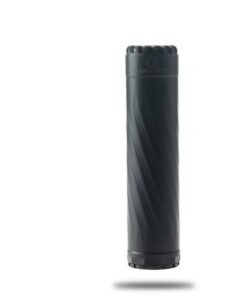
.30 Cal
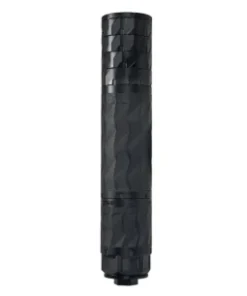
.300 Blackout
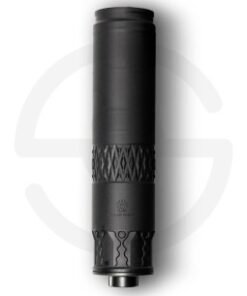
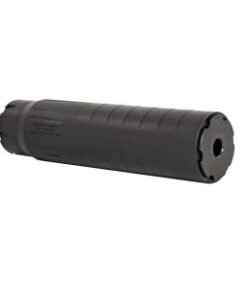
.30 Cal
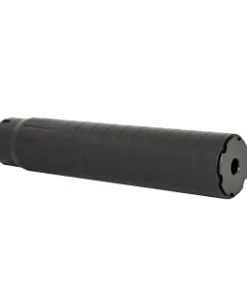
.30 Cal
Why .338 Lapua is the hardest test
Put the numbers side by side and the reason is obvious. .338 Lapua Magnum drives a 250 to 300 grain bullet at roughly 2,700 to 3,000 fps, burning around 90 to 100 grains of powder to do it. A .308 Winchester burns roughly 45. That is more than double the propellant, arriving at the suppressor as hot gas at very high pressure.
What that does to a can is straightforward. Erosion at the blast baffle is faster, heat builds quicker and higher, and the pressure spike on every shot stresses welds and mounts that a .308 would never trouble.
So the specification that matters is the maximum cartridge rating, and it must say .338 Lapua Magnum explicitly. A can rated for .338 bore but only to .338 Federal or 8.6 Blackout pressure is not the same thing. Bore size and pressure rating are two separate questions and both have to be satisfied.
What else a Lapua rated can will run
This is where the purchase starts to make sense financially. A suppressor built for the worst case handles everything below it.
| Cartridge | Bullet | Runs on a .338 Lapua can? |
|---|---|---|
| .338 Lapua Magnum | .338 | yes, the design case |
| 8.6 Blackout | .338 | yes, check minimum barrel length |
| 338 ARC | .338 | yes, check minimum barrel length |
| 300 Win Mag | .308 | yes |
| .308 and .30-06 | .308 | yes |
| 300 Blackout | .308 | yes |
| 6.5 Creedmoor | .264 | yes |
| .223 and 5.56 | .224 | yes |
The one thing to check when going small is minimum barrel length. Magnum rated cans are often specified around long barrels, and a 12 inch 8.6 Blackout or a 10.5 inch 5.56 may fall outside what the manufacturer approves even though the bore is more than large enough.
You will also lose a few decibels on the smaller calibers, because a .338 bore lets more gas past a .224 bullet. That is the standard cost of buying oversized, and on this can it is a fair price for the capability.
Weight, and why nobody pretends otherwise
A .338 Lapua rated suppressor is a large object. The tube has to be sized around a .338 bore, the baffle stack has to survive magnum blast, and the materials that survive it are dense. Expect a substantial can, and expect it to sit at the end of an already long barrel on a rifle that was not light to start with.
Titanium exists in this class and saves real weight, at a price and with a lower tolerance for sustained fire. Stainless and Inconel are heavier and take the punishment better. For a .338 Lapua rifle, which is usually shot from a bipod rather than carried far, most owners take the durability.
Suppressor or muzzle brake
.338 Lapua recoils hard, so almost every rifle chambered for it wears a large brake, and brakes are ferociously loud to the sides. Anyone standing near a braked .338 Lapua remembers it.
A suppressor is the civilised alternative. It reduces recoil less than an aggressive brake but it reduces it meaningfully, roughly 20 to 30 percent, while removing most of the blast instead of redirecting it at bystanders. On a rifle shot from a bench next to other people, that is a large quality of life improvement.
Many quick detach systems mount over a brake, so you can keep the brake for matches that require it and add the can otherwise. That setup is louder than a direct thread can and is the usual compromise.
Heat is the thing that kills them
A .338 Lapua can goes from ambient to untouchable in a handful of rounds, and repeated heat cycling near the material limit is what ends a suppressor's life early.
Let it cool between strings. Do not run rapid strings through a lightweight titanium can on this cartridge. Never case a hot suppressor with the rifle. And expect heavy mirage through the scope after a few rounds on a warm day, which is its own reason to slow down between shots.
Sound, and honest expectations
A suppressed .338 Lapua is hearing safe and dramatically less punishing. It is not quiet, and nothing will make it quiet. The bullet leaves at close to 3,000 fps and cracks the whole way to the target, which is noise generated far beyond anything a muzzle device can influence.
If you want genuinely quiet .338 performance, that is a different cartridge entirely: 8.6 Blackout throws a heavy .338 bullet subsonically at roughly 1,050 fps, with no crack at all, and your Lapua rated can will run it. Full details are in our subsonic ammunition and suppressor range.
Frequently asked questions about .338 Lapua suppressors
Will a .338 Lapua suppressor run 8.6 Blackout?
Yes, the bore is correct and the pressure rating is far above what 8.6 produces. Check the minimum barrel length, since 8.6 rifles are often 12 to 16 inches and magnum rated cans sometimes specify longer.
Can I use a .30 caliber can on .338 Lapua?
No. The bullet is .338 inch, larger than a .30 caliber bore. It will strike the baffles. .338 Lapua needs a .338 bore rated for magnum pressure.
Is a .338 rated can automatically approved for Lapua?
No, and this is the mistake worth avoiding. Bore size and pressure rating are separate. A can sized for .338 but rated only to 8.6 Blackout or .338 Federal pressure is not approved for Lapua. The specification must name .338 Lapua Magnum.
How quiet is a suppressed .338 Lapua?
Hearing safe and far more comfortable, but not quiet. The bullet is supersonic by a wide margin and cracks all the way downrange, which no suppressor can address.
Suppressor or muzzle brake for .338 Lapua?
A brake reduces recoil more and is punishing for anyone nearby. A suppressor reduces recoil meaningfully and removes the blast rather than redirecting it. Many shooters run a quick detach can over a brake and use whichever the situation calls for.
Titanium or stainless?
Stainless or Inconel for most .338 Lapua use, because heat and blast are the real enemies and the rifle is rarely carried far. Titanium if weight genuinely matters, accepting a lower sustained fire tolerance.
How hot does it get?
Untouchable within a handful of rounds. Let it cool between strings, never bag it hot, and expect scope mirage on a warm day after several shots.
Will it fit my smaller rifles?
Yes, on bore size, from .224 upward. Confirm the minimum barrel length for each host, and accept a few decibels lost on the small calibers because of the oversized bore.