
Glock slides. A slide is the cheapest way to change what a Glock is. Swapping it lets you add an optic cut, change the barrel and sights, or build a second configuration on a frame you already own, all without touching the serialised part.
For anyone building a suppressed pistol this matters more than it looks. A suppressor blocks standard sights and needs a threaded barrel, and both of those problems are solved at the slide rather than the frame.
See also pistol suppressors, firearm parts and complete firearms.
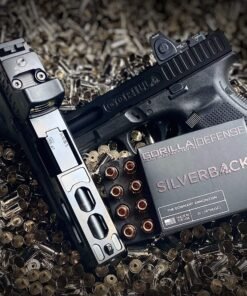
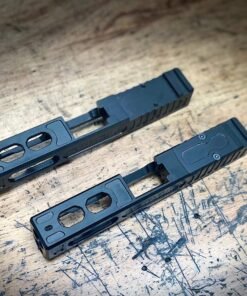
Firearm Parts
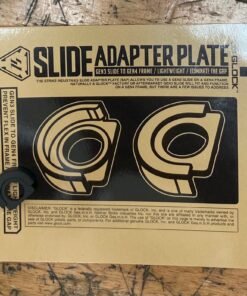
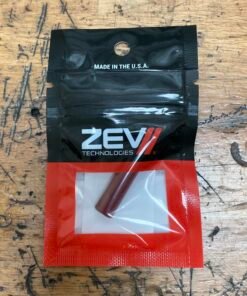
Firearm Parts
Generation and model have to match
Glock slides are not universal, and this is where most orders go wrong. Check three things before buying.
Frame size. A slide is cut for a specific model footprint: full size, compact, subcompact or the long slide variants. A compact slide will not run on a full size frame.
Generation. Recoil spring assemblies and slide rail dimensions changed across generations, most notably from Gen 3 to Gen 4 where the guide rod system changed. A Gen 3 slide and a Gen 4 frame are not a straightforward pairing.
Caliber. The breech face and extractor are cut for a specific cartridge. A 9mm slide will not run .40, and .45 uses a different frame size entirely.
Get all three right and installation is a two minute job with no tools. Get one wrong and the parts will not go together, or worse, will go together and not function safely.
Optic cuts, and why suppressor owners want one
This is the single most common reason to change a slide, and it is directly relevant to suppressed shooting.
A pistol suppressor is roughly one and a quarter inches in diameter and sits directly in front of the sights. On a standard Glock it blocks the sight picture completely. There are two fixes: taller suppressor height iron sights, or a red dot mounted above the bore where the can cannot interfere.
A red dot is the cleaner answer, and it needs a slide cut for the optic footprint. Cutting an existing slide is a machining job. Buying a slide that already has the cut is usually simpler and often cheaper.
Check the footprint standard the slide uses, since optic mounting patterns are not interchangeable and adapter plates add height you may not want. Whichever route you take, fit suppressor height irons as backup: they co witness through most red dots and they still work if the optic fails.
Threaded barrels
A suppressor needs a threaded muzzle, and Glocks are not sold that way. The barrel is not serialised, so replacing it is straightforward.
The standard thread pitch for 9mm in the United States is 1/2x28, and .45 hosts use .578x28. Confirm which your suppressor's piston is cut for, and remember that most pistol cans ship with pistons in several pitches so one suppressor can serve several pistols.
Barrel length matters less than people think for sound. What matters more is that the barrel is cut with enough thread engagement and that the crown is square, since a suppressor that sits crooked is how baffle strikes happen.
What a slide swap does not change
Worth being clear, because it affects what you should expect.
The frame, trigger and magazine are unaffected, so the gun still feels like the same pistol to shoot. A slide swap will not fix a trigger you dislike.
It also will not solve the cycling problem that comes with hanging a suppressor on a tilting barrel pistol. That is what the booster in the suppressor is for, covered on our 9mm suppressor page. No slide, coating or barrel removes the need for one on a locked breech Glock.
And your zero moves. A new slide means new sights and usually a new barrel, so treat it as a fresh setup and confirm on paper.
Building a second configuration
The practical appeal of a spare slide is having two pistols in one case.
A carry configuration with standard sights and a standard barrel, and a suppressed range configuration with an optic cut and a threaded barrel, both running on the same frame. Swapping takes under a minute and requires no tools, and only one serialised part exists.
Pair the suppressed configuration with heavy subsonic ammunition. In 9mm that means 147 grain, which is reliably under the sound barrier where 115 grain is not. Our 9mm ammunition page covers why that single choice decides whether a suppressed pistol is quiet.
Frequently asked questions about Glock slides
Will any Glock slide fit my frame?
No. Frame size, generation and caliber all have to match. Gen 3 and Gen 4 differ in the recoil spring system, and a compact slide will not run on a full size frame.
Do I need an optic cut for a suppressor?
Not strictly, but you need a way to see past the can. Either suppressor height iron sights or a red dot on an optic cut slide. A red dot is the cleaner solution and most people end up there.
Is a slide a serialised part?
No, the frame is the serialised component on a Glock. That is what makes slide and barrel swaps straightforward.
What thread pitch do I need on the barrel?
1/2x28 for 9mm in the United States, .578x28 for .45. Match it to the piston in your suppressor, and note that most pistol cans ship with pistons in several pitches.
Will a new slide fix my cycling problem with a suppressor?
No. A tilting barrel Glock needs a booster in the suppressor to unlock properly against the added weight. That is a suppressor component, not a slide issue.
Do I need to re zero after a slide swap?
Yes. New sights and usually a new barrel mean a new zero. Confirm on paper before relying on it.
Can I use suppressor height sights with a red dot?
Usually yes, and it is the recommended setup. They co witness through most optics and give you working sights if the red dot fails.
Does a threaded barrel affect accuracy?
A quality one does not. What matters is a square crown and proper thread concentricity, since a suppressor that sits crooked is the main cause of baffle strikes.