.300 Blackout
.30 Cal
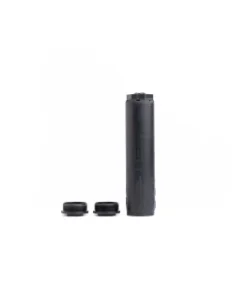
.30 Cal
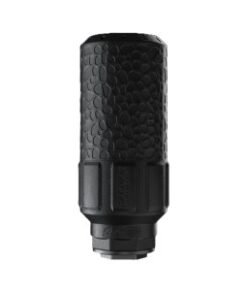
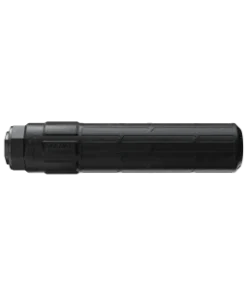
.30 Cal
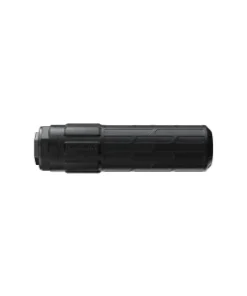
.30 Cal
.30 Cal
.30 Cal
.30 Cal
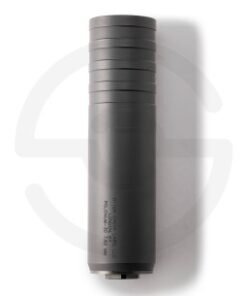
Dedicated 6.5 bore or a .30 caliber can?
This is the only real decision on this page, and it is worth getting right because a suppressor is a long term purchase.
A dedicated 6.5 suppressor has a bore sized close to the .264 bullet, so less gas escapes past the projectile on the way out. That buys you a few decibels and, in most designs, a slightly smaller and lighter can for the same internal volume. If this rifle is your precision rifle and it will wear this suppressor permanently, the dedicated bore is the better tool.
A .30 caliber suppressor gives up those few decibels and buys back enormous flexibility. It covers 6.5 Creedmoor, .308, .30-06, 300 Blackout, 6mm ARC, .223 and 5.56 from one purchase and one tax stamp. If you own several rifles, this is almost always the correct answer, and it is why the .30 caliber shelf is the largest one we stock.
| Dedicated 6.5 bore | .30 caliber can | |
|---|---|---|
| Sound on 6.5 Creedmoor | slightly quieter | a few decibels behind |
| Weight for the same volume | usually lighter | usually heavier |
| Other calibers covered | .264 and smaller only | everything up to .308 |
| Tax stamps needed | one per caliber group | one, covers the safe |
| Best for | a dedicated precision rifle | a mixed safe |
Neither will handle 8.6 Blackout. That cartridge fires a .338 bullet, larger than a .30 bore, and needs its own .338 rated suppressor.
Why repeatability beats decibels on a precision rifle
On a hunting rifle at 100 yards, a suppressor that shifts your zero half an inch is a curiosity. On a 6.5 Creedmoor at 800 yards, the same angular error is roughly four inches, and it is the difference between a hit and a clean miss.
Every suppressor moves point of impact. It adds weight at the muzzle and changes how the barrel vibrates, and that is unavoidable physics. What separates a good suppressor from a poor one is whether the shift is the same every time. A quality mount indexes to the same position on every install, so the shift becomes a constant you measure once and write down. A sloppy mount produces a different shift each time it is fitted, which is functionally identical to having no zero.
For a precision rifle, read the mount specification before the sound specification. Then zero suppressed, record the unsuppressed offset, and reconfirm after any strip and clean. Our ballistics calculator will rebuild your drop table once you have chronographed the suppressed load.
Suppressed velocity and what it does to your dope
A suppressor acts as a short extension of the barrel, holding gas pressure behind the bullet marginally longer. On 6.5 Creedmoor this typically adds 15 to 40 fps at the muzzle.
That sounds trivial and it is, at 300 yards. At 1,000 yards, 30 fps is worth roughly half a minute of elevation, which is a full target height on some steel. If you shoot at distance, chronograph suppressed and build your dope from those numbers rather than adjusting the manufacturer's figures in your head.
Heat, barrel life and sustained fire
6.5 Creedmoor is already known for eating throats faster than .308, because it runs a smaller bore at similar case capacity. Adding a suppressor traps heat at the muzzle and slows how quickly the barrel sheds it.
In practice this matters for high volume shooters and not for hunters. If you are shooting strings of twenty in a match, a stainless or Inconel can handles the heat cycling better than titanium, at a weight penalty. If you shoot five rounds and walk, titanium is the better buy and the heat question never arises.
Watch the manufacturer's sustained fire rating rather than assuming. Ratings on precision cans are often written around bolt gun use, not rapid strings.
Suppressor or muzzle brake, and why not both
Precision shooters usually arrive at a suppressor from a muzzle brake, and the comparison is worth stating plainly.
A brake reduces recoil hard and makes the rifle dramatically louder for everyone standing near it, particularly to the sides. A suppressor reduces recoil less, and reduces sound. On a 6.5 Creedmoor, which is not a punishing cartridge to begin with, most shooters find a suppressor gives them enough recoil reduction to spot their own impacts through the scope, which was the real reason for the brake in the first place.
Many quick detach systems mount onto a brake, so you can keep the brake for matches that require it and add the can for everything else. That combination is louder than a direct thread suppressor and is the standard compromise.
Threads and barrel length
Most 6.5 Creedmoor barrels use 5/8x24 threading, the same as .308, which is convenient if you are moving one can between the two. Confirm before ordering, because some lighter hunting barrels use 1/2x28.
Barrel length is less critical here than with subsonic cartridges, since 6.5 Creedmoor is a supersonic round and you are buying velocity by the inch. A 22 to 26 inch barrel is normal for the cartridge, and adding a 6 to 8 inch suppressor makes for a long rifle. Precision shooters generally accept that. Hunters walking in cover often choose a shorter barrel and a compact can instead, accepting perhaps 80 fps less muzzle velocity for a rifle they can carry.
Realistic expectations on sound
A suppressed 6.5 Creedmoor firing standard match ammunition is hearing safe and far more comfortable, typically dropping from around 165 decibels to the low 130s at the shooter's ear. It is not quiet. The bullet is supersonic, so it produces a sonic crack all the way downrange, and no suppressor can reach that.
If genuine silence is the goal rather than comfort, 6.5 Creedmoor is the wrong cartridge and no can will fix it. That job belongs to a purpose built subsonic round: 300 Blackout from an AR-15, or 8.6 Blackout when you need real terminal effect per quiet shot. Our subsonic ammunition and suppressor range covers that side.
Frequently asked questions about 6.5 Creedmoor suppressors
Can I use a .308 suppressor on 6.5 Creedmoor?
Yes, and most people do. 6.5 Creedmoor fires a .264 bullet, comfortably smaller than a .30 caliber bore, so it is safe. You lose a small amount of sound performance and gain the ability to run the same can on every .30 caliber rifle you own.
Is a dedicated 6.5 suppressor worth it?
Only if this rifle keeps the can permanently. The gain is a few decibels and a little weight. If the suppressor will move between rifles, a .30 caliber can is the better purchase by a wide margin.
How much does a suppressor shift point of impact on 6.5 Creedmoor?
Commonly half to one and a half minutes of angle, varying by rifle, mount and barrel contour. The size of the shift matters far less than whether it repeats. Measure it once on a good mount and treat it as a known offset.
Will a suppressor improve my accuracy?
Often slightly, by damping barrel whip and removing muzzle blast disturbance at the crown. The larger practical gain is that a quieter, softer shooting rifle makes it easier to spot your own impacts and stay behind the scope.
How much velocity does a suppressor add to 6.5 Creedmoor?
Typically 15 to 40 fps. Small, but at 1,000 yards it is worth about half a minute of elevation, so chronograph suppressed and build your dope from real numbers.
Does suppressing wear out a 6.5 Creedmoor barrel faster?
It can, marginally, by trapping heat at the muzzle during high volume shooting. For hunting and normal range use the effect is not measurable. For match shooters running long strings it is one more reason to let the barrel cool between stages.
Titanium or stainless for a precision 6.5?
Titanium for a rifle you carry, since the weight saving at the muzzle is significant. Stainless or Inconel for high round count competition, where sustained heat matters more than the ounces.
Can I suppress 6.5 Creedmoor for hunting?
Yes, and it is one of the best uses for it. A compact can on a 20 inch barrel keeps the rifle manageable, removes most of the muzzle blast, and spares both your hearing and everyone else's on the property.