5.56 and .223 suppressors, in stock. This is the caliber that gets shot the most and treated the worst. A 5.56 can lives on short barrels, sees high round counts, gets hot and rarely gets cleaned, so the specifications that matter here are the durability ones: full auto rating, minimum barrel length and how the can handles sustained fire.
5.56 NATO and .223 Remington both fire a .224 inch bullet, so a dedicated 5.56 can and any larger bore suppressor will run them. The guide below covers the real trade between the two, plus first round pop, short barrel blast and what high volume shooting does to a suppressor.
Pair it with our .223 and 5.56 ammunition, including 150 round buckets, or browse the full caliber index.
.30 Cal
.30 Cal
.30 Cal
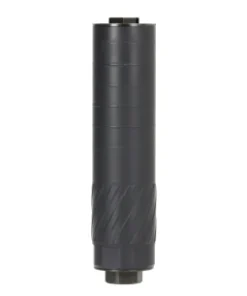
.30 Cal
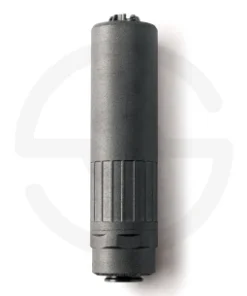
.30 Cal
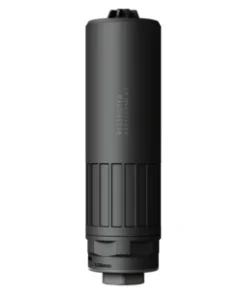
.300 Blackout
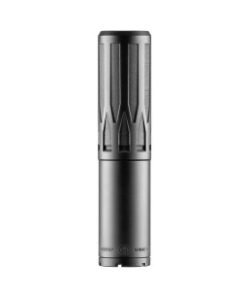
.30 Cal
.30 Cal
.30 Cal
.30 Cal
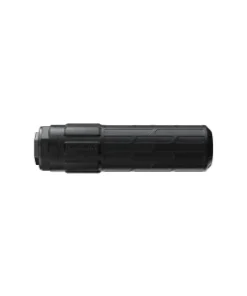
Dedicated 5.56 can or a .30 caliber can?
Almost everyone buying their first suppressor faces this, and for 5.56 the answer leans differently than it does for larger calibers.
A dedicated 5.56 suppressor has a bore just over the bullet, so very little gas slips past. That is worth several decibels on this cartridge, more than the equivalent gain on .308, because 5.56 is a small, fast, high pressure round where escaping gas costs you a lot. Dedicated 5.56 cans are also lighter and shorter, which matters on a carbine.
A .30 caliber suppressor is safe on 5.56 and covers your .308, 6.5 Creedmoor, 300 Blackout and everything else on one stamp. You give up more sound performance here than on any other caliber, and you hang a heavier can on your lightest rifle.
| Dedicated 5.56 | .30 caliber can | |
|---|---|---|
| Sound on 5.56 | notably quieter | several decibels behind |
| Weight on a carbine | light, balanced | noticeably muzzle heavy |
| Other calibers | .224 and smaller | everything up to .308 |
| Best for | a dedicated carbine | a first and only suppressor |
The practical rule: if this is your only suppressor and you own several calibers, buy .30 caliber. If you already own a .30 can, or this carbine is the rifle you actually shoot, a dedicated 5.56 is a genuinely better tool. Neither will run 8.6 Blackout, which fires a .338 bullet and needs its own .338 rated suppressor.
Ratings that actually matter on 5.56
5.56 is the caliber most likely to be shot hard, so the durability specifications carry more weight here than the sound figure.
Full auto rating. Even for semi automatic shooters this is a useful proxy for build quality, because a can built to survive automatic fire will shrug off fast semi automatic strings without complaint. Stellite, Inconel and stainless blast baffles live in this category. Lightweight titanium 5.56 cans usually are not full auto rated, and that is a deliberate trade rather than a defect.
Minimum barrel length. This is the one people ignore and should not. A 10.5 inch 5.56 barrel has not finished burning its powder when the bullet exits, so muzzle pressure and temperature are dramatically higher than on a 16 inch barrel. Many suppressors are rated to 10.5 or 11.5 inches, some only to 14.5, and running a short barrel through an unrated can is the fastest way to erode a blast baffle.
Sustained fire rating. Check how many rounds the maker allows before a cooling period. If you shoot classes or courses of fire, this number matters more than three decibels.
First round pop, and why it happens
Your first shot through a cold suppressor is often noticeably louder than the ones that follow. This is first round pop and it is most obvious on 5.56.
The cause is oxygen. A cold can is full of air, and the fuel rich gas leaving the muzzle ignites that oxygen inside the suppressor, adding a small combustion event to the report. Once the first shot has burned the oxygen out and filled the can with inert gas, subsequent shots are quieter until it cools and refills.
Nothing eliminates it entirely. Some designs reduce it, and it is worth knowing about rather than worrying about, unless your first shot is the one that counts. Hunters should factor it in. Range shooters will forget it exists after the first magazine.
Gas in the face, and how to fix it
Suppressing an AR-15 raises back pressure, which pushes gas back down the gas tube and out of the ejection port and charging handle. On a short barrelled 5.56 this is at its worst, because the rifle is already over gassed by design to guarantee reliability.
The fixes are the same three as on any gas gun, and they work in this order. An adjustable gas block meters gas at the source and is the proper solution. A heavier buffer, H2 or H3, slows the carrier and takes the edge off for very little money. A low back pressure suppressor, sometimes called flow through, vents gas forward instead of stacking it behind the bullet, trading a few decibels for a dramatically cleaner shooting experience. On a 5.56 carbine that trade is usually worth making.
Cleaning, or rather not cleaning
5.56 fouls a suppressor faster than larger calibers, because it burns a lot of powder for a small bullet and most 5.56 cans are sealed welded units that cannot be taken apart.
That is normal and it is not a problem. Centerfire rifle suppressors are self cleaning in the sense that the carbon reaches an equilibrium and stops accumulating meaningfully. What you should not do is run large volumes of .22 LR through a 5.56 can, because rimfire fouling is soft, heavy and does keep building. If you shoot much rimfire, buy a dedicated rimfire suppressor that comes apart.
The one maintenance job that matters is the mount. Check the muzzle device and the can are tight before each session, since a suppressor that unthreads under fire will end up struck by a bullet.
What to expect on sound
A suppressed 16 inch 5.56 with a good dedicated can typically runs in the low 130s in decibels at the ear, from roughly 165 unsuppressed. Hearing safe, and civilised enough to shoot without plugs on private land, though we would still wear them.
A 10.5 inch barrel with the same can will be several decibels louder, because far more unburnt powder is still burning at the muzzle. Barrel length changes suppressed sound on 5.56 more than most shooters expect.
Either way, the bullet is supersonic, so there is a crack downrange that no suppressor touches. Subsonic 5.56 exists but it is a poor solution, since the light .224 bullet carries almost no energy at 1,050 fps and will not cycle a rifle. If quiet is the actual goal, the honest answer is a cartridge designed for it: 300 Blackout uses the same AR-15 lower and magazines and carries roughly 500 ft lbs subsonic, and 8.6 Blackout carries 700 to 840 ft lbs when you need more. Our subsonic ammunition and suppressor range covers both.
Frequently asked questions about 5.56 and .223 suppressors
Is a 5.56 suppressor the same as a .223 suppressor?
Yes, for buying purposes. Both cartridges fire a .224 inch bullet, and manufacturers use the names interchangeably in suppressor listings. Buy the one rated for 5.56, since it is the higher pressure of the two.
Can I use a .30 caliber can on 5.56?
Yes, safely. You give up more sound performance here than on any other caliber, because the oversized bore lets a lot of gas past a small bullet, and you add weight to your lightest rifle. Many people accept both trades to cover the whole safe with one purchase.
What is first round pop?
The first shot through a cold suppressor is louder because the oxygen inside the can ignites along with the muzzle gas. Once that oxygen is burned out, following shots are quieter. It affects 5.56 more than most calibers and no design removes it completely.
Do I need a full auto rated suppressor for semi automatic shooting?
Not strictly, but it is a useful durability indicator. A full auto rated can handles fast semi automatic strings and hot ranges without stress. A light titanium can is a better carry choice and a worse choice for volume.
Can I run a suppressor on a 10.5 inch 5.56 barrel?
Only if the manufacturer rates it for that length. Short barrels produce much higher muzzle pressure and temperature, which is what destroys blast baffles. Check the minimum barrel length in the specification before buying, not after.
Why is my rifle gassing me in the face?
Back pressure from the suppressor pushes gas back through the action, and short 5.56 barrels are the worst case because the rifle is already over gassed. Fit an adjustable gas block, run a heavier buffer, or choose a low back pressure suppressor design.
How do I clean a 5.56 suppressor?
Mostly you do not. Centerfire rifle cans are usually sealed and reach a carbon equilibrium on their own. Keep .22 LR out of it, since rimfire fouling keeps accumulating, and check the mount is tight before every session.
Is subsonic 5.56 worth trying?
Not really. The .224 bullet is too light to carry useful energy at subsonic speed and will not reliably cycle a semi automatic rifle. If you want quiet from an AR-15, 300 Blackout does the job properly using the same lower and magazines.