9mm suppressors, in stock. Suppressing a pistol is a different engineering problem from suppressing a rifle, and it comes down to one component most buyers have never heard of: the booster. A tilting barrel pistol will not cycle with a suppressor hanging off it unless the can contains a spring loaded piston to let the barrel move. Rifle cans do not have one, and that is the first thing to check on this page.
The good news is that 9mm is one of the most rewarding calibers to suppress. Standard 147 grain loads are already subsonic or very close to it, so unlike a rifle you do not have to buy special ammunition to get the quiet you were expecting.
Browse our 9mm ammunition or the wider pistol suppressor range.
.300 Blackout
.30 Cal
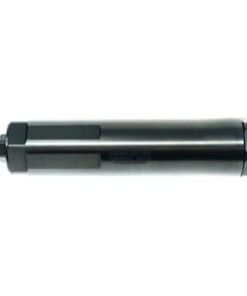
.30 Cal
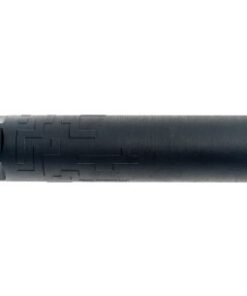
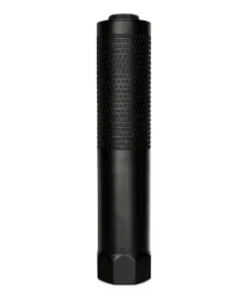
.30 Cal
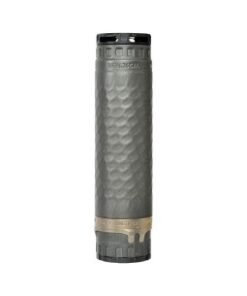
.30 Cal
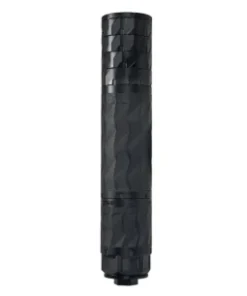
.300 Blackout
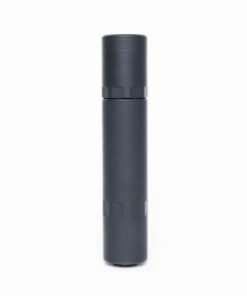
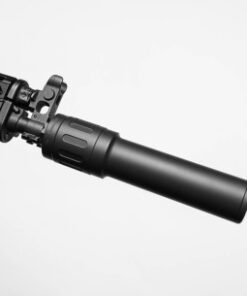
.300 Blackout
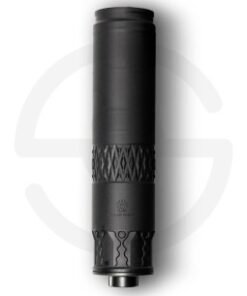
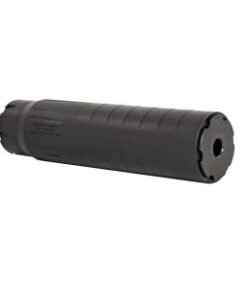
.30 Cal
The booster, and why a pistol needs one
Almost every modern 9mm pistol uses a tilting barrel locking system. On firing, the barrel and slide travel back together for a short distance, then the barrel tilts down and stops while the slide continues. That movement is what unlocks the action.
Thread a suppressor onto that barrel and you have added ten to fourteen ounces to a part that needs to move freely. The extra mass stops the barrel unlocking properly and the pistol short strokes, failing to eject or failing to feed. This is not a fault with the pistol or the can, it is the physics of hanging weight on a moving part.
The fix is a booster, also called a Nielsen device or a linear inertial decoupler. It is a spring loaded piston in the rear of the suppressor that lets the barrel move independently of the suppressor's mass for the fraction of an inch it needs. The suppressor effectively decouples itself from the barrel at the moment of unlocking.
| Host | Booster needed? | Why |
|---|---|---|
| Tilting barrel pistol (Glock, SIG, CZ) | yes | barrel must tilt to unlock |
| Fixed barrel pistol | no | nothing moves, use a fixed spacer |
| 9mm carbine or PCC | no | blowback, barrel is fixed |
| Roller delayed pistol | no | fixed barrel |
If you plan to run the same can on both a pistol and a 9mm carbine, most boosters accept a fixed spacer that swaps in for the piston. That takes a minute with a wrench and is worth understanding before you buy, because a booster left in place on a fixed barrel host is unnecessary movement for no benefit.
9mm is already quiet, which changes the maths
Rifle shooters have to buy special subsonic ammunition to get real quiet. 9mm shooters mostly do not, and this is the caliber's great advantage.
Standard 147 grain 9mm runs around 950 to 1,000 fps, comfortably subsonic. 124 grain sits closer to 1,100 to 1,150 fps, which is right at the sound barrier and will crack on a warm day and not on a cold one. 115 grain is usually supersonic and will crack.
So the recipe for a genuinely quiet 9mm is simply: fit a can and load 147 grain. No specialist ammunition, no cartridge change, no gas tuning. It is the cheapest route to a properly quiet firearm that exists, and it is why 9mm is so often somebody's first suppressor.
Watch for the marginal loads. A 124 grain round that is subsonic in January and supersonic in July is the most annoying possible outcome, because you cannot predict which you will get. If quiet matters, stay at 147 grain and above.
Thread pitches and the piston question
The standard 9mm pistol thread in the United States is 1/2x28. You will also meet 13.5x1 LH on some European and imported pistols, and .578x28 on .45 hosts.
Because the booster piston is a separate part, most manufacturers sell pistons in every common thread pitch. That is genuinely useful: one suppressor can serve a 1/2x28 Glock, a 13.5x1 LH host and a .45 pistol simply by swapping the piston. If you own several threaded pistols, check which pistons are available for the can before you buy it, since that is what determines how many hosts it will actually serve.
Sights, and the thing nobody mentions
A 9mm suppressor is roughly one and a quarter inches in diameter and sits directly in front of your sights. On a standard pistol it blocks your sight picture completely.
There are three answers. Suppressor height sights are taller irons that see over the can, and they are the cheap and reliable fix. A red dot sidesteps the problem entirely, which is why suppressed pistols and optics go together so often. Or you simply accept it, which is fine for a can that lives on a home rifle and not on a carry gun.
Factor this into the budget. A suppressor plus sights is a meaningfully different number from a suppressor alone, and discovering it after the paperwork is irritating.
Cleaning, and why 9mm cans come apart
Here is where pistol suppressors differ from rifle cans in a way that works in your favour. Rifle suppressors are usually sealed welded units that cannot be disassembled, and they do not need to be, since centerfire rifle fouling reaches an equilibrium.
Pistol suppressors are almost always user serviceable, with a baffle stack you can strip, because 9mm burns dirty at low pressure and lead and carbon genuinely accumulate. They need cleaning periodically and they are designed for it.
Two practical notes. First, keep .22 LR out of a 9mm can unless it is explicitly rated for rimfire, because rimfire fouling is far worse again. Second, some shooters run a small amount of water or gel in the can to increase suppression, which is legal and effective and also accelerates corrosion, so strip and dry it afterwards.
Pistol or carbine?
The same 9mm can will serve both, and the carbine is the quieter of the two. A 16 inch pistol caliber carbine gives the powder far more time to burn, so less unburnt propellant reaches the suppressor, and there is no action venting gas back at your face the way a pistol does. A suppressed 9mm carbine with 147 grain ammunition is one of the quietest firearms most people will ever shoot.
Remember to swap the booster piston for a fixed spacer when moving to the carbine, since the barrel does not tilt and the piston is doing nothing useful.
Frequently asked questions about 9mm suppressors
Do I need a booster for my 9mm suppressor?
If the host is a tilting barrel pistol, which covers Glock, SIG, CZ and most modern handguns, yes. Without one the added mass prevents the barrel unlocking correctly and the pistol will short stroke. Fixed barrel pistols and 9mm carbines do not need one.
Can I use a rifle suppressor on a 9mm pistol?
Only if it is rated for 9mm and can accept a booster. A .30 caliber rifle can has the bore size to clear a 9mm bullet but no piston, so a tilting barrel pistol will not cycle with it fitted. Check the manufacturer's rating, since not all rifle cans are approved for pistol pressures and bullet types.
Is 9mm subsonic out of the box?
147 grain loads generally are, at roughly 950 to 1,000 fps. 124 grain sits right at the sound barrier and can go either way with temperature. 115 grain is usually supersonic. For quiet shooting, use 147 grain or heavier.
Will my sights still work with a suppressor fitted?
Usually not. A 9mm can typically blocks standard pistol sights entirely. Fit suppressor height sights or a red dot optic, and budget for that alongside the suppressor.
How quiet is a suppressed 9mm?
With 147 grain subsonic ammunition, very. It is one of the quietest common setups available, and on a carbine it is quieter still. Because standard heavy 9mm is already subsonic, you get the full benefit without buying specialist ammunition.
Can I run the same can on a pistol and a 9mm carbine?
Yes, and it is a popular combination. Swap the booster piston for a fixed spacer on the carbine, since a fixed barrel does not need the piston to move.
How often should I clean a 9mm suppressor?
Far more often than a rifle can. 9mm fouls heavily with carbon and lead, which is why pistol suppressors are built to be disassembled. Follow the manufacturer's interval and strip it before the baffles start binding.
Can I shoot .22 LR through a 9mm suppressor?
Only if it is explicitly rated for rimfire. The bore is large enough, but rimfire fouling is soft and heavy and accumulates quickly. For regular rimfire shooting, buy a dedicated rimfire can.