Guides
8.6 Blackout Barrel & Twist Rate: The Essential Guide (2026)
Jun
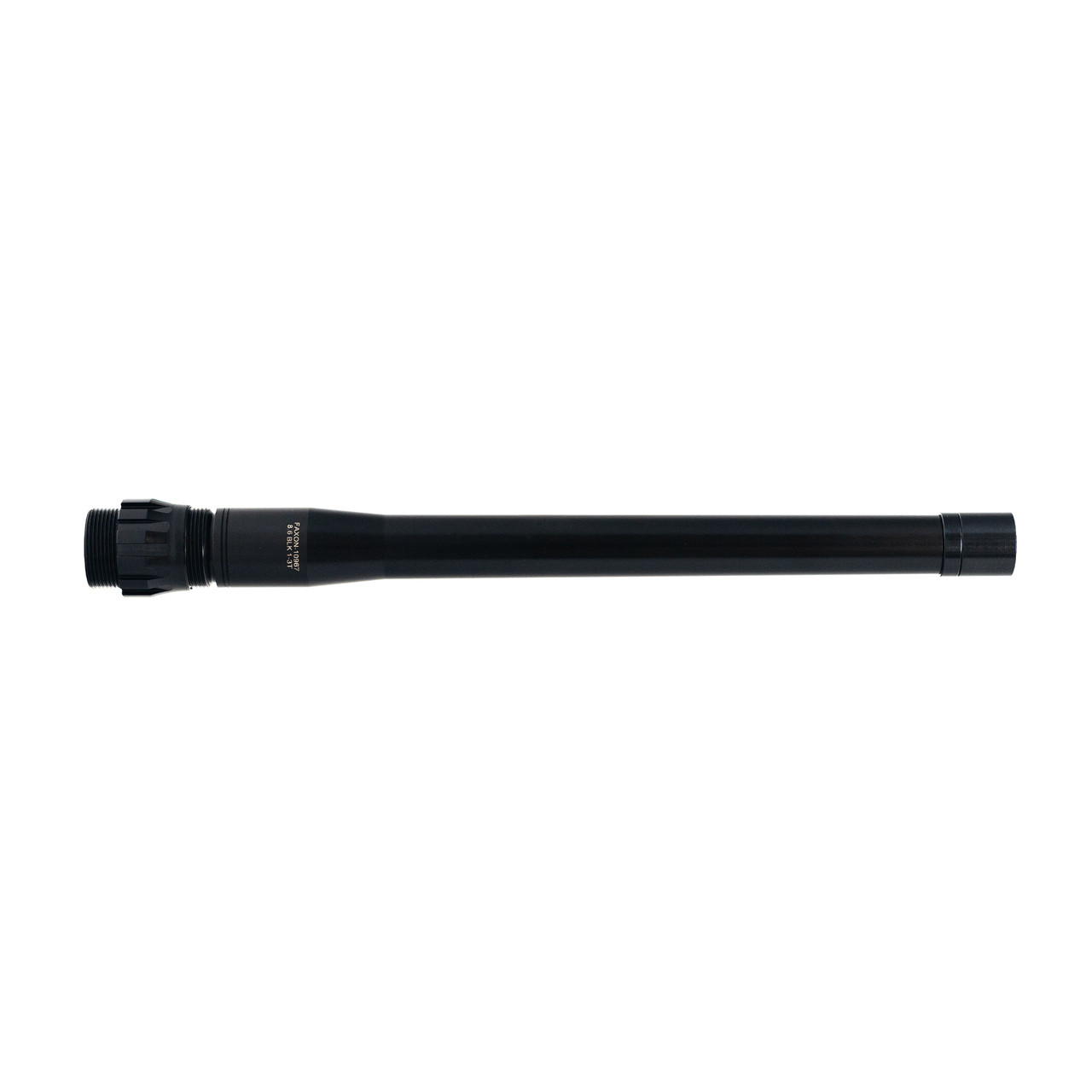
If you’re building an 8.6 Blackout rifle, the 8.6 Blackout barrel is the single most important component to get right — and the spec that defines it is a twist rate far faster than anything you’ve likely worked with before. Choose the right 8.6 Blackout barrel and your rifle stabilizes the heavy subsonic bullets that make the cartridge special; choose wrong and accuracy falls apart. This guide explains why the 8.6 Blackout barrel uses a 1:3 twist, how barrel length changes performance, and exactly what to look for when you buy one for a subsonic or supersonic build.
Why an 8.6 Blackout barrel uses a 1:3 twist
Twist rate is how far a bullet travels down the bore for one full rotation. A 1:3 twist spins the bullet once every 3 inches — extraordinarily fast. A typical .30-caliber barrel might be 1:8 or 1:10. So why does an 8.6 Blackout barrel spin its bullets two to three times faster? Two reasons, both rooted in the cartridge’s subsonic mission:
- Heavy, long bullets need more spin to stabilize. The 285–342gr .338 bullets 8.6 was built around are long, and long bullets require a faster twist to stay point-forward in flight. At subsonic velocity there’s even less to work with, so the 8.6 Blackout barrel’s twist has to make up for it.
- Terminal performance. That aggressive rotational speed contributes to how violently expanding and fracturing bullets come apart on impact — part of why 8.6 hits so hard for a quiet round.
In short: the fast twist of an 8.6 Blackout barrel is what lets the cartridge fire heavy subsonic bullets accurately and makes them devastating on target. It’s the defining feature, not a quirk. For the downrange numbers it produces, see our 8.6 Blackout ballistics guide.
8.6 Blackout barrel length: short is the point
The 8.6 Blackout barrel was designed for short, suppressed use. Common lengths run roughly 8″ to 16″, and each has a place:
| Barrel length | Best for | Trade-off |
|---|---|---|
| 8″–10″ | Ultra-compact, suppressor-friendly subsonic builds | Gives up some supersonic velocity |
| 12″ | Balanced — compact and suppressible, strong across subsonic and supersonic | The popular all-rounder |
| 16″ | Maximizes supersonic velocity and reach | Less handy, heavier |
Because the cartridge reaches its design velocities from a short tube, you don’t need a long 8.6 Blackout barrel to get what it offers — which is exactly why it pairs so naturally with a suppressor.
Does barrel length change which ammo I should shoot?
Your twist rate — the fast 1:3-class twist of any proper 8.6 Blackout barrel — is what stabilizes heavy subsonic bullets at any of these lengths, so all of them can run subsonic. Barrel length mainly affects velocity: longer barrels squeeze more speed out of supersonic loads. If your build is short and suppressed, you’ll likely live mostly in subsonic loads; a longer 8.6 Blackout barrel makes supersonic loads more worthwhile. Either way, match your load to your barrel and confirm it at the range. Browse subsonic and supersonic options in our 8.6 Blackout ammo collection.
What to look for in an 8.6 Blackout barrel
When you shop for an 8.6 Blackout barrel, these are the specs that matter most:
- Correct fast twist (around 1:3). Non-negotiable for stabilizing heavy subsonic bullets. This is the first thing to confirm on any 8.6 Blackout barrel.
- Quality steel and proper chambering. Look for 4150 chrome-moly vanadium or 416R stainless, correctly chambered for 8.6×43mm.
- Threaded muzzle. A 5/8×24 threaded muzzle rated for your suppressor or muzzle device.
- The right gas setup (for semi-autos). A gas system that will cycle your chosen subsonic or supersonic loads reliably — an adjustable gas block helps if you shoot both.
- Platform fit. Confirm whether the barrel is for an AR-10 upper or a specific bolt action (Savage 110, Remington 700, etc.).
Barrel material: stainless vs chrome-moly
Most 8.6 Blackout barrels are made from either 416R stainless steel or 4150 chrome-moly vanadium (CMV). Stainless tends to offer excellent accuracy and corrosion resistance and is popular for precision and bolt-action builds. Chrome-moly with a nitride or QPQ finish is tough, affordable and well suited to hard-use semi-auto rifles. Both make excellent 8.6 Blackout barrels — choose based on your priorities of accuracy, durability and budget rather than worrying that one is universally “better.”
AR-10 vs bolt-action 8.6 Blackout barrels
An 8.6 Blackout barrel comes in two broad flavors. AR-10 barrels drop into a standard SR-25/DPMS-pattern upper and let you run the cartridge semi-auto, which is popular for hunting and fast follow-ups. Bolt-action barrels (prefit barrels for Savage 110, Remington 700 and similar actions) suit shooters who want maximum simplicity, reliability and precision, and who don’t need semi-auto fire. Both use the same fast twist; the choice comes down to the rifle you want to build. If you’re still weighing platforms entirely, our 8.6 Blackout vs 300 Blackout guide helps.
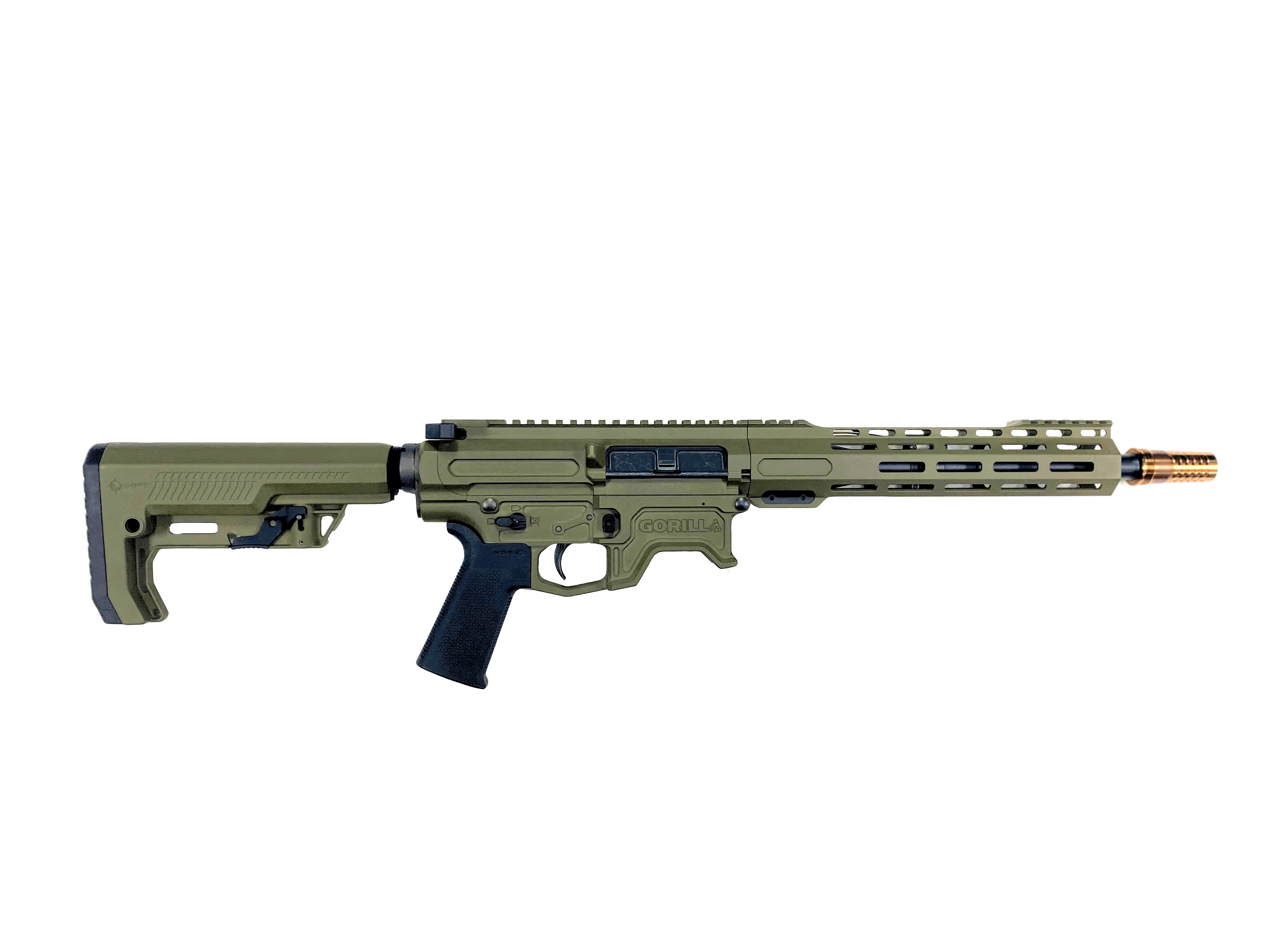
Pairing your 8.6 Blackout barrel with a suppressor
The whole point of an 8.6 Blackout barrel is suppressed, subsonic shooting, so plan for a can from the start. Make sure the muzzle threads (typically 5/8×24) match your suppressor’s mount, and that the suppressor is rated for .338. A quality .338 can not only quiets the rifle but adds back-pressure that helps a gas gun cycle low-pressure subsonic loads. You can source suppressors and mounting hardware from our sister store, blackoutammo.shop.
Gas systems and cycling
For semi-auto builds, cycling is where many 8.6 Blackout barrel setups succeed or struggle. Subsonic loads make less gas, so a barrel/gas combination tuned only for supersonic may short-stroke on subsonic — especially unsuppressed. The clean fix is an adjustable gas block, which lets you tune for both. If you’ll run a single subsonic load, set the rifle up around it and leave it. Confirm reliable feeding, firing and ejection before you trust any build in the field.
Common 8.6 Blackout barrel mistakes to avoid
A few pitfalls trip up first-time builders. Don’t assume a standard .338 barrel will work — only a proper fast-twist 8.6 Blackout barrel stabilizes the heavy subsonic bullets. Don’t over-barrel the build if your goal is a compact suppressed rifle; a 16″ tube fights the cartridge’s short-and-quiet strengths. And don’t skip load testing — even the best 8.6 Blackout barrel needs to be matched to a load it shoots well. Get those right and the cartridge rewards you.
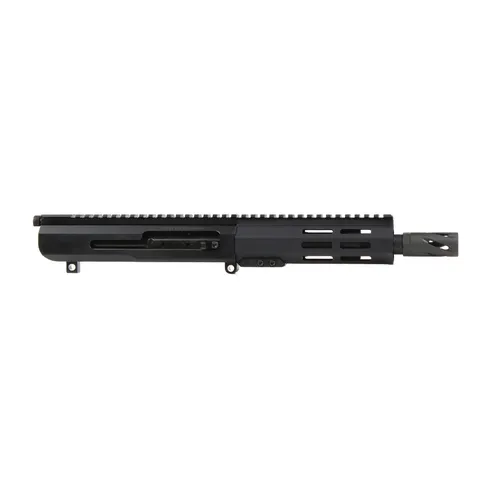
Building a complete 8.6 Blackout upper
A bare barrel is only the start. To turn it into a working rifle you’ll pair it with an SR-25/DPMS-pattern upper receiver, a correctly sized handguard, a gas block and tube (for semi-autos), and a bolt carrier group rated for the cartridge’s pressures. Many builders prefer to start with a complete upper to guarantee everything is correctly headspaced and gas-tuned out of the box, then simply drop it onto a standard AR-10 lower. Whether you assemble piece by piece or buy a complete upper, the same rule applies: the heavy subsonic bullets demand a properly chambered, fast-twist tube and a gas system matched to your intended loads. Get those two right and the rest of the build is conventional AR-10 work.
Headspace, chambering and quality control
Because the cartridge runs heavy bullets and a fast twist, precise chambering and correct headspace matter more than on a casual plinker. Reputable makers cut the chamber to spec, verify headspace, and test-fire or gauge their barrels before they ship. When you buy, favor a maker with a track record in the cartridge rather than the cheapest option you can find — a few dollars saved on an out-of-spec tube is a poor trade against accuracy and reliability. If you’re assembling components yourself and you’re not equipped to check headspace, have a competent gunsmith confirm it before live fire.
How it compares to a 300 Blackout barrel
It’s a useful contrast: a 300 Blackout barrel drops onto an AR-15, uses a 1:7 or 1:8 twist, and stabilizes .308 bullets up to about 220gr. The 8.6 build steps everything up — a larger .338 bore, a dramatically faster 1:3 twist, and heavier ~300gr subsonic bullets — all on the bigger AR-10 platform. Neither approach is universally better; they serve different goals. If your aim is an affordable, do-everything suppressed AR-15, 300 Blackout is the easy path. If you want the heaviest quiet hammer and you’re building a dedicated rifle, the 8.6 route is worth the extra cost and size. Our full 8.6 Blackout vs 300 Blackout comparison covers the decision in depth.
Maintenance and barrel life
Subsonic, low-pressure shooting is comparatively easy on steel, so a quality barrel chambered for this cartridge should offer a long, useful life with normal care. Clean the bore as you would any precision rifle, keep the threads and muzzle device clean for consistent suppressor mounting, and watch for copper or carbon fouling that can open up groups over time. As with any barrel, accuracy that suddenly falls off is your cue to clean thoroughly and re-confirm zero before assuming anything is wrong with the load.
Frequently asked questions
What twist rate does an 8.6 Blackout barrel use?
Around 1:3 — one full bullet rotation every three inches. This very fast twist is essential to stabilize 8.6’s heavy subsonic .338 bullets, and it defines the cartridge.
What is the best barrel length for 8.6 Blackout?
8–10″ for ultra-compact suppressed subsonic builds, 12″ for a balanced all-rounder, and 16″ to maximize supersonic velocity. Most suppressed shooters favor 8–12″.
Can I put an 8.6 Blackout barrel on my AR-10?
Yes — AR-10-pattern 8.6 Blackout barrels drop into a standard SR-25/DPMS upper and run from .308 magazines. Bolt-action prefit barrels are also available for Savage 110 and Remington 700 actions.
What material is best for an 8.6 Blackout barrel?
Both 416R stainless and 4150 chrome-moly vanadium make excellent 8.6 Blackout barrels. Stainless leans toward accuracy and corrosion resistance; chrome-moly toward hard-use durability and value.
Do I need a suppressor for an 8.6 Blackout barrel?
Not required, but the cartridge and barrel were designed for suppressed subsonic use and are at their best with a .338-rated can. Suppressor laws vary by state.
Is a 1:3 twist too fast for supersonic loads?
No. The fast twist is optimized for heavy subsonic bullets but still shoots lighter supersonic loads accurately, which is why a single fast-twist barrel handles both roles.
What muzzle thread does 8.6 Blackout use?
Most barrels use a 5/8×24 threaded muzzle, the common .30-cal/.338 standard, so it accepts a wide range of suppressors and muzzle devices. Always confirm the spec on the specific barrel you buy.
Final word: your 8.6 Blackout barrel is the foundation
Everything that makes the cartridge special flows from the 8.6 Blackout barrel. The fast 1:3 twist is what stabilizes the heavy subsonic bullets; the short length is what keeps the rifle compact and suppressible; the chambering and steel quality are what deliver accuracy and life. Get the 8.6 Blackout barrel right and the rest of the build is conventional AR-10 or bolt-action work. Decide your priorities first — ultra-compact suppressed subsonic, balanced 12″ all-rounder, or 16″ for maximum supersonic reach — then choose a barrel from a maker with a real track record in the cartridge. Pair it with quality ammo and a .338-rated suppressor, confirm your load at the range, and you’ll have a rifle that does exactly what 8.6 Blackout was built to do: hit hard and stay quiet.
Shop 8.6 Blackout components and ammo
The right 8.6 Blackout barrel is the foundation of a great build — pair it with quality ammo and a suppressor and the cartridge delivers. Browse current loads in our 8.6 Blackout ammo collection, read our best 8.6 Blackout subsonic ammo guide, check shipping & delivery, or find barrels, uppers and suppressors at our sister store blackoutammo.shop. Questions? See our FAQ.
Last updated: June 2026. Not a complete firearm. You must comply with all federal, state and local laws regarding firearms, barrels and suppressors.
For the buying side rather than the engineering, see our 8.6 Blackout barrels page, which covers length, contour, thread pitch and what to verify before ordering. If you would rather skip the gunsmithing, complete 8.6 Blackout uppers arrive headspaced with the gas system already matched.
