8.6 Blackout Rifles: Bolt Action, AR-10 and Lever
An 8.6 Blackout rifle is a .338 calibre platform built around a shortened 6.5 Creedmoor case and a 1:3 twist barrel. That twist rate is the defining specification, and it is the reason you cannot simply put an 8.6 barrel on any action and expect the cartridge to perform. This page covers the platforms available, what separates them, and what to verify before you spend money.
The one specification that decides everything
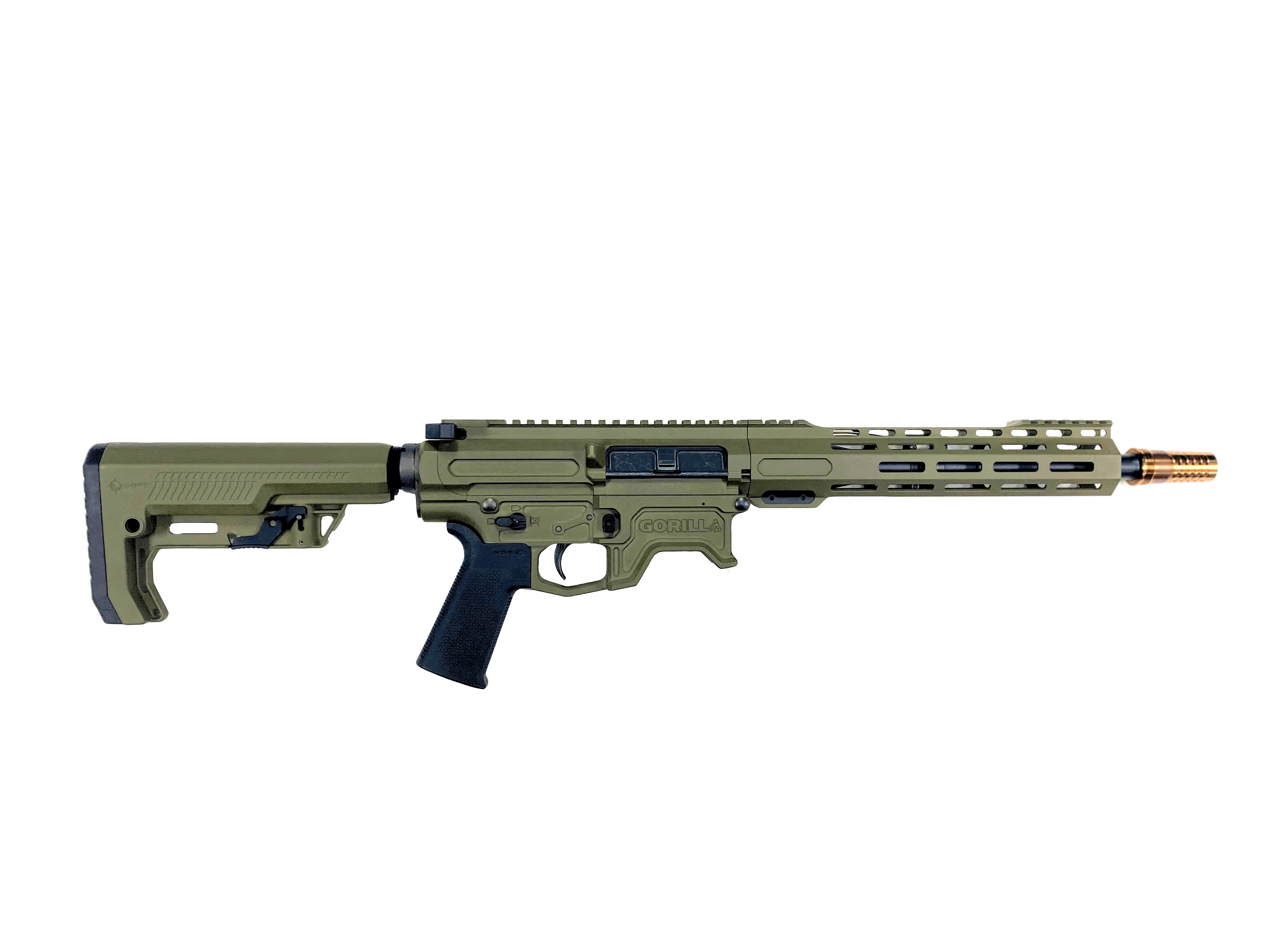
Every rifle properly chambered for 8.6 Blackout should have a 1:3 twist barrel. This is not a preference or a marketing number. At subsonic velocity, around 1,050 fps, conventional expanding bullets do not open reliably because there is not enough impact energy to drive expansion. The 1:3 twist spins a 342 grain .338 bullet past roughly 250,000 rpm, and that rotational energy tears expanding designs open where velocity cannot.
A slower twist barrel will stabilise the bullet on paper and give you a rifle that groups. It will not give you the terminal performance the cartridge exists for. If a rifle or barrel does not state 1:3, ask before buying. Our twist rate guide covers the engineering, and the main 8.6 Blackout guide covers the cartridge itself.
Why 8.6 Blackout will not fit an AR-15
The case head diameter comes from 6.5 Creedmoor, which shares the .473 inch case head used by .308 Winchester. A standard AR-15 bolt is cut for the much smaller .378 inch head used by 5.56 and 300 Blackout. The two are not interchangeable, and no barrel swap changes that.
So an 8.6 Blackout rifle is either an AR-10 pattern semi automatic or a bolt action. That constraint is the main practical cost of the cartridge against 300 Blackout, and it is worth understanding before you commit. If you want .338 subsonic mass inside an AR-15 sized rifle, 338 ARC is the cartridge designed for that, and we compare them in 8.6 Blackout vs 338 ARC.
Bolt action
A bolt gun is the simplest and usually the quietest 8.6 Blackout rifle you can own. With no gas system there is no action noise, nothing venting at the receiver, and nothing to tune between subsonic and supersonic loads. For a dedicated suppressed hunting rifle running heavy subsonics, this is frequently the right answer.
Bolt actions also tend to be more accurate, lighter and shorter for a given barrel length, which matters once a .338 rated suppressor adds several inches to the muzzle. The trade is obvious: follow up shots are slower, which is a real consideration when working a group of hogs.
Short action bolt rifles suit the cartridge well because the case is short. Confirm magazine compatibility, since the fat .338 bullet on a short case does not always feed from magazines designed for slimmer cartridges.
AR-10 pattern semi automatic
An AR-10 pattern rifle gives fast, accurate follow up shots and the familiar controls most shooters already own. It is the natural choice if you hunt hogs in numbers or want a defensive rifle that happens to be quiet.
The complication is gas. Subsonic and supersonic 8.6 loads generate very different pressures, and a rifle tuned to cycle heavy subsonics reliably will usually be over gassed with supersonics. An adjustable gas block is close to essential rather than a nice extra, and if you intend to run suppressed with both load types it becomes mandatory in practice.
Note also that AR-10 pattern is not a standardised specification the way AR-15 is. Receiver dimensions, barrel extensions and handguard interfaces vary between manufacturers, so parts compatibility needs checking rather than assuming. Browse complete 8.6 Blackout uppers if you already own a compatible lower.
Lever action
Lever guns chambered in 8.6 Blackout have become a genuine third option, and the combination makes more sense than it first appears. A lever action is fast handling, legal in places where semi automatics are restricted, and carries beautifully in thick woods. Pair that with a quiet, heavy, hard hitting subsonic and you have an unusually good short range hunting rifle.
We cover this in depth in our 8.6 Blackout lever action guide, including twist rate verification, feeding considerations and how it compares with an AR-10 in the field.
Comparing the platforms
| Bolt action | AR-10 semi auto | Lever action | |
|---|---|---|---|
| Suppressed noise | Quietest, no action noise | Gas system adds noise | Quiet, some action noise |
| Follow up speed | Slowest | Fastest | Fast |
| Typical accuracy | Best | Good | Good |
| Tuning required | None | Adjustable gas block advised | None |
| Weight and length | Lightest | Heaviest | Light and handy |
| Best suited to | Suppressed hunting | Hogs in numbers, defence | Woods hunting, restricted states |
Barrel length on a complete rifle
Barrel length behaves differently on this cartridge than most, and it changes what platform suits you. Because the charge is fully burnt well before the muzzle on any sensible barrel, a compact rifle gives up almost nothing running subsonic. That is why so many 8.6 builds end up short: the handling gain is real and the velocity cost is not. Supersonic shooters are the exception and should go longer. The main 8.6 Blackout guide sets out the figures.
For a dedicated suppressed rifle, short is genuinely better because it keeps overall length manageable once a can is fitted. For a rifle that will shoot supersonic loads at distance, longer earns its keep. See our 8.6 Blackout barrels page for the detail.
What to verify before you buy
Five things, in order of how expensive they are to get wrong:
Twist rate. 1:3, confirmed by the manufacturer, not assumed from a product listing.
Muzzle thread pitch. Check it against any suppressor you already own or intend to buy. Rethreading a barrel is possible but avoidable.
Magazine compatibility. Confirm what the rifle ships with and whether spares are available. Fat bullets on short cases are fussier to feed than most cartridges.
Gas system, on a semi auto. Adjustable or not. If not, budget for one.
Optic mounting. Rail height and comb height interact, and a suppressed subsonic rifle usually wants a slightly higher line of sight than a bare barrel would.
Suppressor pairing
Whatever platform you settle on, the suppressor has to be a .338 rated unit. This trips up buyers coming from a .30 calibre rifle who assume an existing can will carry over; it will not, and forcing the issue risks a baffle strike. Bore matched cans also outperform oversized ones here, so a dedicated .338 beats pressing a .45 into service.
Order the two together rather than in sequence. The rifle transfers through a dealer in days; the can is an NFA regulated purchase measured in months. Buyers who wait until the rifle arrives before starting the paperwork spend a season with a rifle they cannot use as intended. Browse 8.6 Blackout rated suppressors.
Budgeting realistically
A complete 8.6 Blackout setup is rifle, suppressor, tax stamp and ammunition. People who budget for the rifle alone are usually disappointed, because the suppressor is what the cartridge exists for and the ammunition costs several times what common calibres do.
If the total is out of reach, 300 Blackout delivers most of the suppressed experience for considerably less, on an AR-15 platform, with far cheaper ammunition. It gives up roughly half the subsonic energy to do it. We set the two side by side in 8.6 Blackout vs 300 Blackout.
Converting a rifle you already own
If you own a rifle in another chambering and are wondering whether it can become an 8.6 Blackout, the answer depends on bolt face, action length and magazine, not just the barrel. Our 8.6 Blackout conversions guide covers what is genuinely possible and what is not.
Shipping and transfer
Complete firearms cannot ship to your door. Every rifle transfers through a licensed dealer, so you nominate an FFL to receive it and complete the background check there in person. Buyers must meet federal and state age and eligibility requirements, and some states restrict specific features or configurations. See our shipping and delivery page, and browse complete firearms and 8.6 Blackout ammunition.
Cartridge specifications follow published SAAMI standards.
Feeding the rifle
Ammunition choice matters more on 8.6 Blackout than on most cartridges, because the two halves of the cartridge behave so differently. A rifle set up for heavy subsonics is a quiet, close range hunting tool. The same rifle fed 160 grain supersonics becomes a flatter shooting, louder rifle with roughly two and a half times the muzzle energy and none of the suppression benefit.
Most owners end up keeping both on the shelf and choosing by task rather than settling on one. If you do that, mark your magazines clearly. Subsonic and supersonic loads will not share a zero, and the difference can be several inches at only fifty yards, which is enough to lose an animal.
Expanding and fracturing subsonic designs are what the 1:3 twist exists to make work, so a rifle running plain solids is leaving most of the cartridge’s advantage unused. Browse current stock in our 8.6 Blackout ammunition range, and check figures against the ballistics chart.
Optics and sighting
A suppressed subsonic rifle usually wants a slightly higher line of sight than a bare barrel, because a large diameter can sits close under the sight line and can intrude into the bottom of the picture at low magnification. Check clearance before committing to a mount height.
Low magnification suits the cartridge. Subsonic 8.6 is a sub 150 yard proposition, and a variable in the one to six or two to ten range covers everything it can realistically do. High magnification adds weight and narrows field of view for range you cannot use.
Mirage off a hot suppressor obscures the sight picture on warm days, which is why shooters running scopes over cans often fit a mirage band. It is a small thing that matters more than it sounds after a dozen rounds.
Frequently asked questions about 8.6 Blackout rifles
What is the best 8.6 Blackout rifle?
The one with a genuine 1:3 twist barrel, an action rated for the case, and a platform that matches how you hunt. A bolt gun is quietest and lightest, an AR-10 gives fast follow ups, a lever action handles beautifully in thick cover. Twist rate matters more than the badge on the receiver.
Will 8.6 Blackout fit an AR-15?
No. The case head comes from 6.5 Creedmoor at .473 inches, while an AR-15 bolt is cut for .378 inches. No barrel swap changes that. You need an AR-10 pattern rifle or a bolt action.
Is there a factory 8.6 Blackout bolt action rifle?
Yes. Production bolt rifles chambered in 8.6 Blackout are available, and the category has grown steadily as the cartridge matured. Custom and semi custom builds on existing short actions are also common.
Do I need an adjustable gas block?
On a semi automatic, effectively yes if you intend to shoot both subsonic and supersonic. The pressure difference is large enough that a fixed system tuned for one will be poorly tuned for the other.
What barrel length should I choose?
Pick for handling first. Subsonic performance is effectively flat across the usual range of barrel lengths, so a compact rifle is not a compromise. Only supersonic shooters have a real reason to go long.
Is a bolt action quieter than a semi automatic?
Yes. A bolt gun has no gas system, so no action noise and no gas venting at the receiver. On a suppressed subsonic rifle the difference is audible.
Can an 8.6 Blackout rifle ship to my house?
No. Complete firearms transfer through a licensed dealer. You nominate an FFL to receive it and complete the background check in person at collection.
How much does an 8.6 Blackout rifle cost?
More than a comparable 300 Blackout build, and the ammunition costs more too. Budget for the rifle, a .338 rated suppressor, the 200 dollar tax stamp and premium ammunition rather than the rifle alone.
Is 8.6 Blackout worth it over 300 Blackout?
If you hunt suppressed and care about terminal effect, yes. A 342 grain 8.6 subsonic carries roughly 840 ft lbs against roughly 490 for a 220 grain 300 Blackout subsonic. If you shoot high volume or want cheap practice ammunition, 300 Blackout remains the better platform.
What twist rate does an 8.6 Blackout rifle need?
1:3. It is the factory specification and it is what makes expanding subsonic bullets open at roughly 1,050 fps. Anything slower may stabilise the bullet but will not deliver the terminal performance the cartridge was designed around.