300 Blackout Ballistics Chart
Updated July 2026. Figures compiled from published factory load data and industry sources, rounded to typical values. Velocities always vary by rifle, barrel, temperature and lot. Treat every number here as a reference point, then verify with your own chronograph.
300 Blackout ballistics confuse more shooters than any other AR cartridge, because the same rifle produces two completely different sets of numbers depending on which magazine you load. Feed it supersonic ammunition and it behaves like a compact 30 caliber carbine. Feed it subsonic and it becomes one of the quietest centerfire rifles you can legally own. The 300 AAC Blackout cartridge was engineered to do both from a standard AR-15 with nothing changed but the barrel, and to burn its full powder charge in about 9 inches. This page collects the complete 300 Blackout ballistics picture in one place: velocity, energy, barrel length effects and trajectory, for both subsonic and supersonic loads.
300 Blackout ballistics at a glance
- Bullet diameter: .308 inch
- Case: 5.56 case head, shortened and necked up (7.62x35mm)
- Typical subsonic loads: 190gr to 220gr at roughly 1,000 to 1,060 fps
- Typical supersonic loads: 110gr to 150gr at roughly 1,900 to 2,400 fps
- Designed barrel lengths: 7 to 16 inches, full powder burn around 9 inches
- Action compatibility: any AR-15, standard bolt and standard magazines
- Best use cases: suppressed carbines, home defense, hogs and deer inside 250 yards
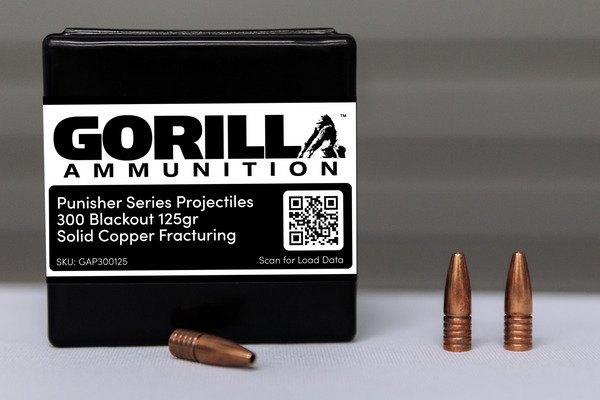
300 Blackout ballistics chart: subsonic loads
Subsonic loads stay under the speed of sound (roughly 1,125 fps at sea level), so a suppressed rifle produces no ballistic crack, only action noise. This is the configuration 300 Blackout was designed around: a heavy 30 caliber bullet at pistol speeds, from a rifle that still cycles and still feeds from a standard magazine.
| Bullet weight | Muzzle velocity | Muzzle energy | Character |
|---|---|---|---|
| 190gr | 1,050 fps | 465 ft lbs | Expanding subsonic hunting designs |
| 200gr | 1,010 fps | 453 ft lbs | Common practice and plinking weight |
| 208gr | 1,020 fps | 481 ft lbs | Heavy match style bullets, very stable |
| 220gr | 1,010 fps | 499 ft lbs | Heaviest common factory weight, quietest character |
Energy computed from listed weight and velocity. Individual factory loads vary; check the box data for the exact load you shoot.
For context, a 45 ACP defensive load carries around 400 ft lbs from a pistol. A 220gr subsonic 300 Blackout carries roughly 500 ft lbs from a rifle you can shoot with both eyes open and no hearing protection when suppressed. If you want more payload at the same speeds, that is exactly the niche the bigger 8.6 Blackout ballistics chart covers, with 285gr to 342gr bullets at the same 1,050 fps.
300 Blackout ballistics chart: supersonic loads
Supersonic loads give up the movie quiet signature and buy velocity, flatter trajectory and roughly triple the energy. This is where 300 Blackout ballistics look like a classic intermediate rifle cartridge, broadly comparable to 7.62×39 with better bullets and better feeding.
| Bullet weight | Muzzle velocity | Muzzle energy | Character |
|---|---|---|---|
| 110gr | 2,375 fps | 1,378 ft lbs | Fastest common load, varmint and defensive designs |
| 125gr | 2,215 fps | 1,362 ft lbs | The all purpose weight, most factory choices |
| 135gr | 2,085 fps | 1,304 ft lbs | Balanced weight and speed |
| 150gr | 1,900 fps | 1,202 ft lbs | Heaviest common supersonic, deep penetrating hunting loads |
Note the energy band: roughly 1,200 to 1,400 ft lbs across the weight range. The cartridge trades speed for mass and keeps its payload close to constant.
Velocity by barrel length
This is the most practical table on the page, because 300 Blackout lives in short barrels. The cartridge burns its full powder charge in roughly 9 inches, which is why it dominates the AR pistol and SBR world. Past 9 or 10 inches, extra barrel adds only modest velocity for supersonic loads and almost nothing for subsonic loads.
| Barrel length | Subsonic 220gr | Supersonic 110gr |
|---|---|---|
| 7 inches | 980 to 1,010 fps | 2,050 to 2,150 fps |
| 9 inches | 990 to 1,020 fps | 2,150 to 2,250 fps |
| 10.5 inches | 1,000 to 1,030 fps | 2,200 to 2,300 fps |
| 16 inches | 1,010 to 1,050 fps | 2,300 to 2,400 fps |
Ranges reflect the spread across published factory data and independent chronograph reports. Subsonic loads are intentionally loaded to stay under roughly 1,080 fps in any barrel so they never break the sound barrier.
The practical takeaway: a 9 inch 300 Blackout gives up roughly 150 fps to a 16 inch gun with supersonics and nearly nothing with subsonics. Add a suppressor to the 9 inch barrel and the whole package is still shorter than a bare 16 inch rifle. That is the entire design brief of the cartridge, executed.
How far does 300 Blackout drop?
Subsonic trajectory is the price of quiet. Subsonic 300 Blackout ballistics turn into a rainbow past 150 yards, and you need to know your holds cold. Supersonic loads behave like a 30-30 Winchester out of a modern platform and stay practical to 250 or 300 yards.
| Range | Subsonic 220gr | Supersonic 125gr |
|---|---|---|
| 100 yards | zero | zero |
| 150 yards | 12 to 15 inches low | 2 to 3 inches low |
| 200 yards | 33 to 40 inches low | 7 to 9 inches low |
| 300 yards | not practical for most shooters | 28 to 35 inches low |
Estimates from standard ballistic modeling of typical published loads at sea level. Run your exact load and conditions through a ballistic calculator before hunting.
One warning that belongs on every 300 Blackout ballistics page: subsonic and supersonic loads do not share a zero. The point of impact can differ by several inches even at 50 yards. Record both zeroes, mark your magazines, and confirm before any serious use. Our full subsonic vs supersonic breakdown covers how to run both from one rifle without surprises.
Want the exact figure for your own rifle instead of a range? Our Blackout ballistics calculator computes velocity, energy and drop for your specific load, barrel length, zero distance and optic height.
One barrel change: why the AR-15 is the whole story
The signature engineering choice in 300 Blackout is not exotic. It is restraint. The cartridge uses the 5.56 case head, so a standard AR-15 bolt grips it without modification, and it fits standard magazines at standard capacity. Converting a rifle is one barrel, nothing else.
That single decision explains the numbers above. The case was sized so that a full powder charge burns in about 9 inches, because the designers assumed short suppressed barrels from the start. And the twist rate, commonly 1:7 or 1:8, was chosen to stabilize everything from a 110gr varmint bullet to a 220gr subsonic, which is why one rifle shoots the entire table on this page. None of the individual numbers in 300 Blackout ballistics are extreme. The combination in one AR-15 magazine is the achievement.
300 Blackout vs 5.56 NATO vs 7.62×39
| Metric | 5.56 NATO | 300 Blackout | 7.62×39 |
|---|---|---|---|
| Bullet diameter | .224 | .308 | .310 |
| Common weights | 55 to 77gr | 110 to 220gr | 122 to 124gr |
| Typical energy | roughly 1,300 ft lbs | roughly 1,350 ft lbs | roughly 1,550 ft lbs |
| Subsonic capable | no practical option | designed for it | no factory support |
| Optimized barrel | 20 inches | 9 inches | 16 inches |
| AR-15 compatibility | native | barrel swap only | needs bolt, mags, tuning |
| Best at | velocity and distance | short barrels and suppressors | cheap steel case volume |
The short version: 5.56 wins past 300 yards, 7.62×39 wins on ammo cost, and 300 Blackout wins everywhere a short barrel or a suppressor is involved. If that decision matters to your next build, our full 300 Blackout vs 5.56 comparison goes deeper, and the 8.6 Blackout vs 300 Blackout piece covers the big brother question.
What these numbers mean in the field
Numbers on a chart only matter when they map to a use case. Here is how 300 Blackout ballistics translate to the real world.
Suppressed range days and pest control: subsonic 300 Blackout through a suppressor is the quietest practical centerfire experience there is. Hearing safe, backyard friendly where legal, and cheap enough to shoot in volume.
Home defense: a short barreled 300 Blackout with supersonic expanding loads delivers rifle energy from a gun the size of a large pistol caliber carbine, with less muzzle blast than a 10.5 inch 5.56. This is one of the most defensible use cases for the cartridge.
Hogs and deer: supersonic 110gr to 150gr hunting loads are a clear yes inside 250 yards. Subsonic hunting works, but only with expanding bullets designed for slow speed and only at woods ranges. Inside 100 yards with the right bullet, it is quiet and decisive.
Long range: wrong tool. Past 300 yards the supers are slowing fast and the subs arrived long ago by parabola. Buying 300 Blackout for distance work is how the cartridge earns unfair bad reviews.
When you are ready to shoot it rather than read about it, our 300 Blackout ammo shelf carries subsonic and supersonic factory loads, and the 8.6 Blackout ammo range covers the heavy hitter.
Frequently asked questions
How fast is 300 Blackout?
Subsonic factory loads run roughly 1,000 to 1,060 fps with 190gr to 220gr bullets. Supersonic loads run roughly 1,900 to 2,400 fps depending on bullet weight and barrel length. The 300 Blackout ballistics tables above break both down in detail.
How much does 300 Blackout drop at 200 yards?
With a 100 yard zero, a typical 125gr supersonic load drops 7 to 9 inches at 200 yards. A 220gr subsonic load drops 33 to 40 inches at the same distance, which is why subsonic shooting stays inside 150 yards in practice.
What barrel length is best for 300 Blackout?
The cartridge reaches nearly full performance around 9 inches of barrel. A 9 to 10.5 inch barrel is the sweet spot: almost all the velocity of a 16 inch gun in a package built for a suppressor.
Is 300 Blackout good for deer and hogs?
Yes, inside its envelope. Supersonic hunting loads are a clear yes to 250 yards. Subsonic loads work at woods ranges with expanding bullets designed for slow speed, kept inside roughly 100 to 150 yards by trajectory and energy.
Does 300 Blackout hit harder than 5.56?
At the muzzle they are close, roughly 1,350 ft lbs for 300 Blackout and 1,300 ft lbs for 5.56. The difference is how they get there: 300 Blackout uses a bullet two to four times heavier at lower speed, keeps its energy better from short barrels, and offers a subsonic option 5.56 simply cannot match.
Will 300 Blackout cycle subsonic ammo without a suppressor?
Often, but not always. Many factory subsonic loads are gassed to cycle a carbine gas system unsuppressed, yet short barrels, adjustable gas blocks and buffer weights all change the equation. Test your combination; adding the suppressor increases back pressure and almost always makes cycling more reliable, not less.
Using this data? This page is free to reference. If you quote these 300 Blackout ballistics tables in a forum thread, article or video description, please credit them with a link so readers can find the full charts:
Source: Blackout Ammunition, 300 Blackout Ballistics Chart. https://blackoutammunition.com/300-blackout-ballistics-chart/
Spotted a figure that new factory data has made stale? Email editorial@blackoutammunition.com and we will verify and update the tables.