8.6 Blackout: The Complete Guide
8.6 Blackout is a .338 calibre cartridge built on a shortened 6.5 Creedmoor case, designed by Kevin Brittingham and the team at Q LLC to do one job properly: drive the heaviest practical .338 bullet quietly out of a short, suppressed barrel and still hit hard enough to kill cleanly. This guide covers what the cartridge is, what it does, what it needs, and where it fits against everything else you might be considering.
What 8.6 Blackout is

The cartridge is often written 8.6 BLK or 8.6x43mm, and all three names refer to the same round. It takes a 6.5 Creedmoor case, shortens it and necks it up to accept a .338 diameter bullet. That single change is what separates it from every other suppressed cartridge on the market, because .338 bullets can be made far heavier than the .308 projectiles that 300 Blackout is limited to.
The design brief was narrow and it explains everything about how the round behaves. Q wanted a cartridge that would run subsonic through a short barrel, stay genuinely quiet under a suppressor, and still deliver terminal performance that a .30 calibre subsonic simply cannot match. Everything else about 8.6 Blackout follows from that decision.
The comparison people reach for is 300 Blackout, and the family resemblance is real. Both were designed around suppressed short barrels, both run subsonic and supersonic, and both came from the same designer. The difference is bore diameter and bullet mass. A heavy 300 Blackout subsonic is a 220 grain .308 bullet carrying roughly 490 ft lbs. A heavy 8.6 Blackout subsonic is a 342 grain .338 bullet carrying roughly 840 ft lbs, with substantially more frontal area. That is not a marginal difference and it is why the two rounds are not interchangeable in the field.
The 1:3 twist, and why it matters more than anything else
Factory 8.6 Blackout barrels use a 1:3 twist rate. For context, a typical .308 rifle runs 1:10 and a 300 Blackout runs 1:7 or 1:8. A 1:3 twist is extraordinarily fast for a rifle cartridge, and it is not there for stabilisation alone.
At subsonic velocity, around 1,050 fps, conventional expanding bullets do not reliably open. There is simply not enough impact energy to drive expansion in a design engineered for 2,500 fps. This is the fundamental limitation that has always capped subsonic terminal performance, and it is why most subsonic loads across most cartridges behave like slow solids.
The 1:3 twist spins a 342 grain .338 bullet past roughly 250,000 rpm. That rotational energy does work that velocity cannot. Expanding and fracturing designs open reliably at subsonic speed because the spin tears them open, not the impact. If you take one fact away from this page, make it this one: the twist rate is the cartridge. A slower twist barrel will stabilise the bullet on paper and fail to deliver the terminal performance the round was built around.
Our 8.6 Blackout barrel and twist rate guide covers the engineering in detail, and our 8.6 Blackout barrels page covers what to buy.
Subsonic and supersonic: the two halves of the cartridge
8.6 Blackout is really two cartridges sharing a case, and understanding which one you want is the most important buying decision you will make.
Subsonic 8.6 Blackout runs bullets from 285 to 342 grains at roughly 1,000 to 1,080 fps, staying below the speed of sound so there is no ballistic crack downrange. Under a .338 rated suppressor the result is genuinely quiet. Unlike most subsonic offerings you are not trading away terminal effect to get there, because a 342 grain subsonic still carries around 840 ft lbs behind a wide bullet built to expand.
Supersonic 8.6 Blackout runs 160 to 210 grain bullets at 1,900 to 2,400 fps for roughly 2,000 ft lbs. Suppressed, it still produces a supersonic crack, so the quiet advantage is gone. What you gain is a flatter trajectory and useful extra range for hunting.
| Load type | Bullet weight | Muzzle velocity | Muzzle energy | Best for |
|---|---|---|---|---|
| Supersonic light | 160 to 175gr | 2,300 to 2,400 fps | Approx 2,100 ft lbs | Flattest trajectory, longer hunting shots |
| Supersonic heavy | 185 to 210gr | 1,900 to 2,150 fps | Approx 1,900 to 2,000 ft lbs | General hunting inside 200 yards |
| Subsonic light | 285 to 300gr | 1,000 to 1,080 fps | Approx 700 to 760 ft lbs | Suppressed range work and hunting |
| Subsonic heavy | 320 to 342gr | 1,000 to 1,050 fps | Approx 790 to 840 ft lbs | Maximum quiet terminal effect on hogs and deer |
A practical warning that catches out almost every new owner: subsonic and supersonic loads will not share a zero. The difference can be several inches at only 50 yards. Mark your magazines, record both zeroes, and confirm on paper before you hunt.
Browse current stock in our 8.6 Blackout ammunition range.
Ballistics and effective range
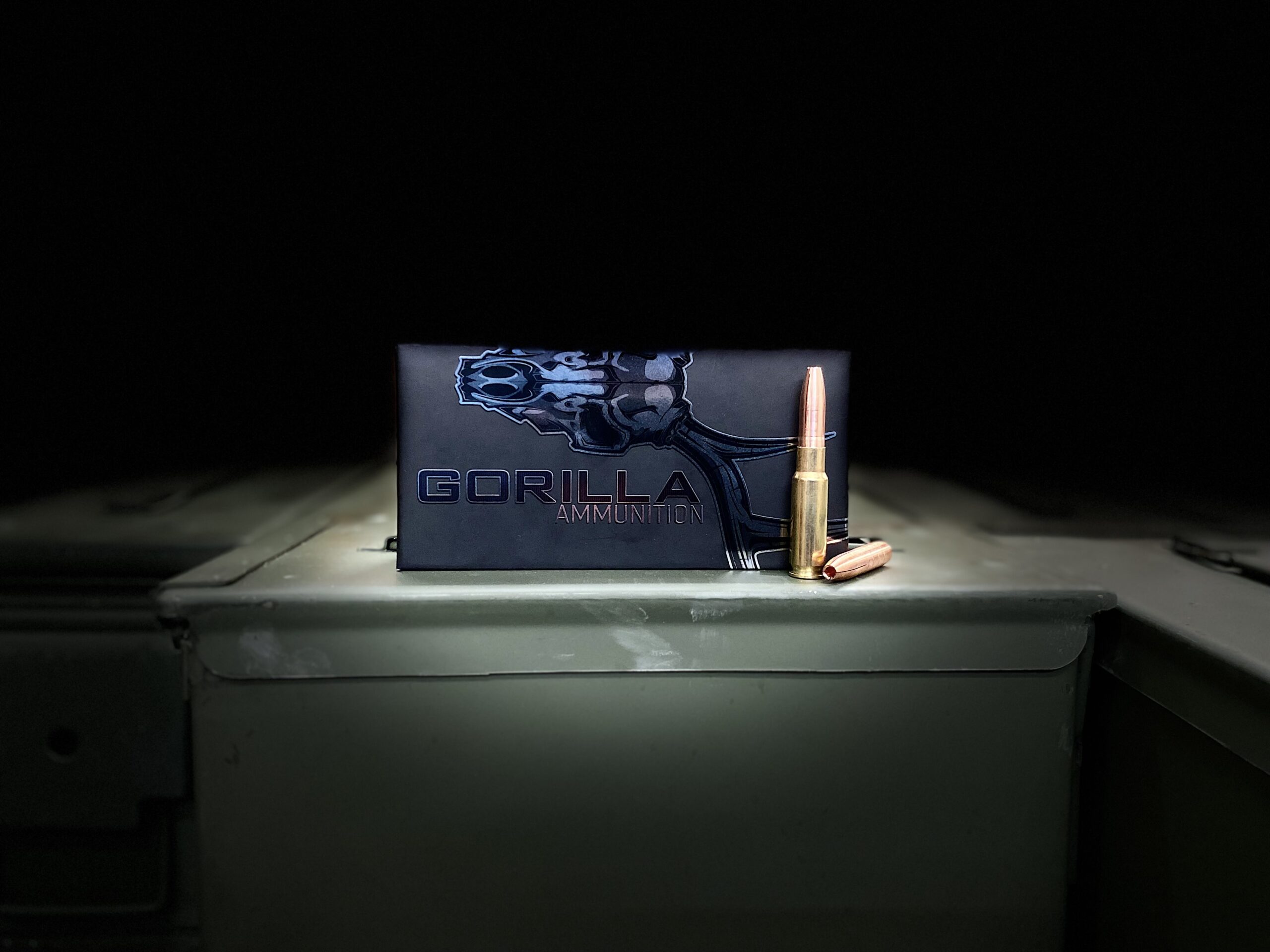
Subsonic 8.6 Blackout is practical to roughly 150 yards. It is not trajectory that limits terminal effect, it is trajectory that limits your ability to hit. A subsonic load drops steeply past 150 yards, so range estimation errors turn into misses quickly. Supersonic loads extend usefully to around 300 yards.
This was never designed as a long range cartridge, and treating it as one is the most common mistake new owners make. It is a close range, heavy hitting, quiet cartridge, and it is exceptional at that job.
For figures by load and barrel length, see the 8.6 Blackout ballistics chart, read the full 8.6 Blackout ballistics guide, or run your exact setup through our ballistics calculator.
Barrel length
8.6 Blackout finishes burning its powder charge at around eight inches, which makes barrel length an easier decision than it looks. Subsonic loads are capped below the sound barrier by design, so they run roughly 1,000 to 1,060 fps whether the barrel is eight inches or sixteen. A short barrel costs you almost nothing on subsonic ammunition.
Supersonic loads do care, gaining roughly 150 to 200 fps between eight and sixteen inches. If supersonic performance matters to you, go longer. If the rifle is a dedicated suppressed subsonic tool, short is genuinely better because it keeps overall length manageable once a can is fitted.
Rifles and platforms
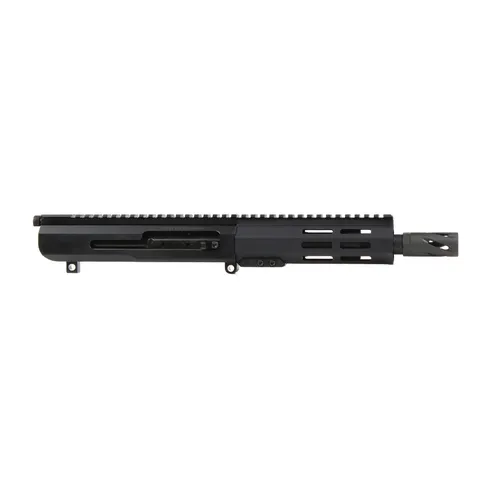
The case head demands an AR-10 sized action or a bolt action. 8.6 Blackout will not work in a standard AR-15 lower. That single constraint is the main practical cost of the cartridge compared with 300 Blackout, and it is worth understanding before you commit money.
Semi automatic AR-10 pattern rifles give fast follow up shots, which matters when working a group of hogs. The trade is gas tuning, because subsonic and supersonic loads generate very different pressures and an adjustable gas block is close to essential. Bolt actions are simpler, quieter and usually more accurate, with no gas system noise at all.
Lever actions have become a genuine third option and one we have written about separately, since the combination of a handy lever gun and a quiet heavy bullet suits woods hunting unusually well. See our 8.6 Blackout lever action guide, our 8.6 Blackout rifles page, and if you already own a rifle in another chambering, our conversions guide covers what can and cannot be rebarrelled.
Suppressors
The suppressor must be rated for .338, not merely able to pass a .338 bullet. A .30 calibre can will not accept the round at all, and running anything under specification risks a baffle strike that destroys the suppressor and can injure the shooter. Dedicated .338 suppressors are generally quieter on this cartridge than oversized .45 calibre cans, because the tighter bore contains gas more effectively.
Suppressors transfer under the National Firearms Act through an ATF regulated process with a Form 4, a 200 dollar tax stamp, fingerprints and a wait. Start that paperwork in parallel with buying the rifle rather than after. Browse 8.6 Blackout rated suppressors.
Hunting with 8.6 Blackout
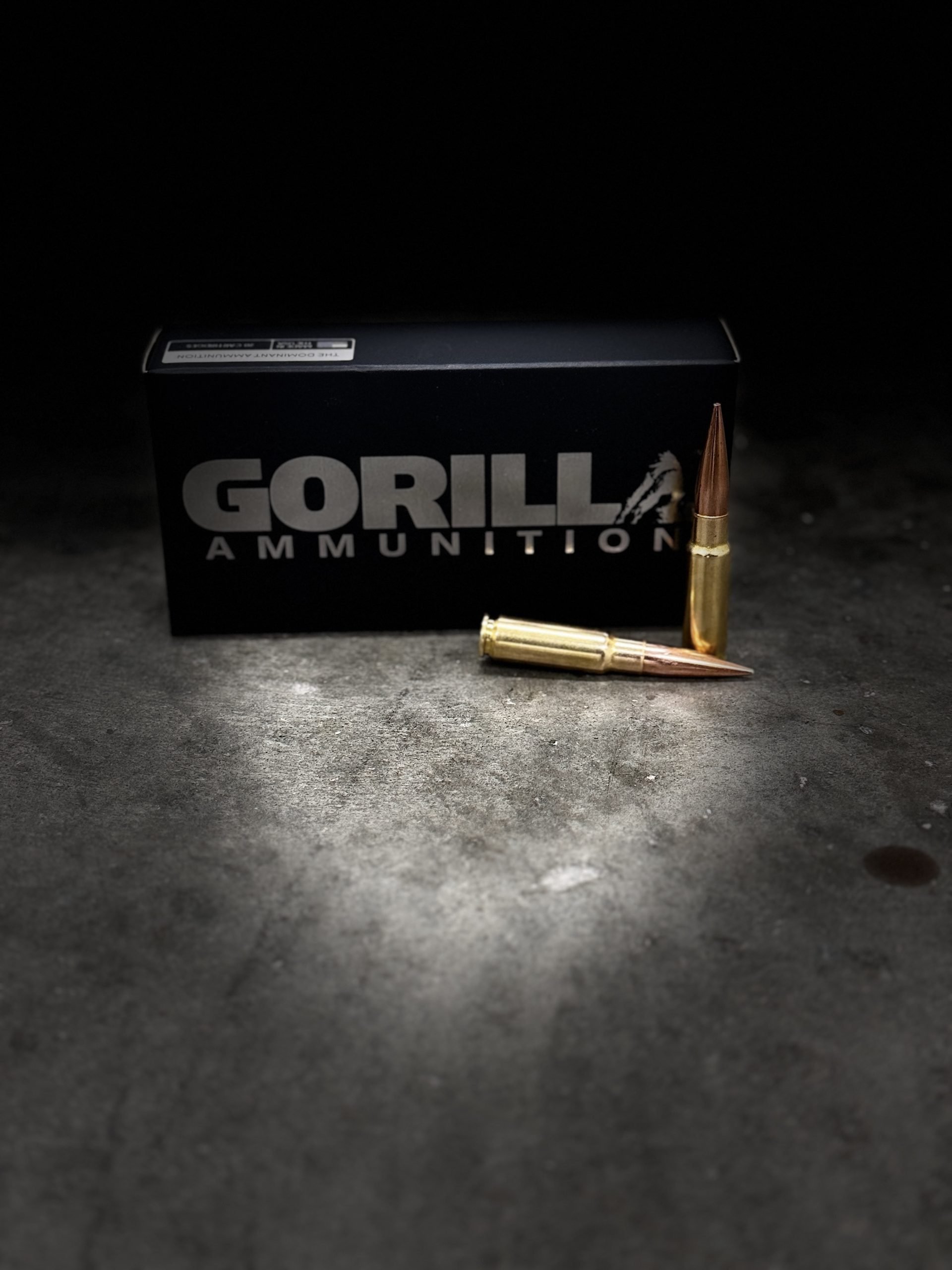
Suppressed subsonic hunting is where this cartridge earns its price. A 342 grain expanding subsonic driven by a 1:3 twist opens reliably at 1,050 fps and delivers roughly 840 ft lbs with a wide wound channel. On hogs and deer inside 150 yards it performs, and the reduced report matters when working a group of animals or hunting near property lines.
Two honest limits. Range discipline is not optional, because subsonic trajectory drops steeply past 150 yards. And legality varies: several states restrict suppressor use for hunting, set minimum calibre or energy requirements, or regulate which species may be taken with a given cartridge. Check your state wildlife agency before you head out, since these rules change more often than most hunters expect.
Our guide to the best 8.6 Blackout subsonic ammo for hunting goes deeper on load selection.
8.6 Blackout against the alternatives
| 8.6 Blackout | 300 Blackout | 338 ARC | .308 Winchester | |
|---|---|---|---|---|
| Bullet diameter | .338 | .308 | .338 | .308 |
| Typical subsonic weight | 285 to 342gr | 190 to 220gr | Approx 300gr | Not a subsonic design |
| Subsonic muzzle energy | Approx 700 to 840 ft lbs | Approx 480 to 500 ft lbs | Approx 650 ft lbs | Limited |
| Platform | AR-10 or bolt | Standard AR-15 | AR-15 sized | AR-10 or bolt |
| Twist rate | 1:3 | 1:7 or 1:8 | 1:5 | 1:10 |
| Ammunition cost | Highest | Lowest | Middle | Low |
| Ammunition availability | Narrowest | Widest | Limited | Very wide |
The honest summary: 8.6 Blackout hits hardest subsonic and is the right choice when suppressed terminal performance is the point. 300 Blackout is cheaper, fits a standard AR-15 and has far more load options, which makes it the better volume shooter. 338 ARC sits between them for people who want .338 subsonic mass in an AR-15 sized rifle. .308 Winchester remains the better general purpose rifle cartridge if suppression is not your priority.
We compare these properly in 8.6 Blackout vs 300 Blackout, 8.6 Blackout vs 338 ARC and 8.6 Blackout vs 45-70.
Cost and availability
8.6 Blackout ammunition is expensive relative to common cartridges, and it will stay that way while volumes remain low. It is a young cartridge with a small number of manufacturers, heavy bullets that use more material, and production runs far below 300 Blackout. Prices ease as more makers come on line, but the gap will not close entirely while the volume gap remains.
Budget for the whole system rather than the rifle alone. A realistic 8.6 Blackout setup means the rifle, a .338 rated suppressor, the tax stamp, and ammunition that costs several times what you are used to paying. People who buy the rifle and stop are usually disappointed, because the suppressor is what the cartridge exists for.
Is 8.6 Blackout right for you?
Buy it if you hunt suppressed, want the hardest hitting quiet cartridge available, and accept an AR-10 or bolt platform and premium ammunition costs.
Do not buy it if you shoot high volume, want cheap practice ammunition, need an AR-15 sized rifle, or expect long range performance. In every one of those cases another cartridge serves you better, and 300 Blackout serves you better in most of them.
Cartridge specifications referenced here follow published SAAMI standards, and 8.6 Blackout was developed by Q LLC.
Frequently asked questions about 8.6 Blackout
What is 8.6 Blackout?
A .338 calibre rifle cartridge built on a shortened 6.5 Creedmoor case, designed by Q LLC to fire heavy subsonic bullets quietly through short suppressed barrels. It is also written 8.6 BLK or 8.6x43mm.
Is 8.6 BLK the same as 8.6 Blackout?
Yes. 8.6 BLK is the shortened way of writing 8.6 Blackout, the same way 300 BLK is used for 300 Blackout. Both appear on boxes and in rifle specifications and refer to the identical cartridge.
Will 8.6 Blackout work in an AR-15?
No. The case is based on a shortened 6.5 Creedmoor and requires an AR-10 sized action or a bolt action. If you want .338 subsonic mass in an AR-15 sized rifle, 338 ARC is the cartridge to look at instead.
What twist rate does 8.6 Blackout need?
1:3. That is the factory specification and it is what makes expanding subsonic bullets open reliably at roughly 1,050 fps. Slower twists may stabilise the bullet but will not deliver the terminal performance the cartridge was designed around.
How far will 8.6 Blackout shoot?
Subsonic loads are practical to roughly 150 yards, with trajectory dropping steeply beyond that. Supersonic loads extend usefully to around 300 yards. It was never designed as a long range cartridge.
Is 8.6 Blackout better than 300 Blackout?
For suppressed subsonic terminal performance, yes, by a wide margin. A 342 grain 8.6 subsonic carries roughly 840 ft lbs against roughly 490 for a 220 grain 300 Blackout subsonic. For cost, ammunition availability and platform flexibility, 300 Blackout wins clearly.
Can I use my .30 calibre suppressor?
No. 8.6 Blackout fires a .338 bullet and requires a suppressor rated for .338. Using an under specification can risks a baffle strike that destroys the suppressor and can injure the shooter.
Why is 8.6 Blackout ammunition so expensive?
It is a young cartridge with few manufacturers, heavy bullets that use more material, and production volumes far below common calibres. Prices ease as more makers enter, but not to 300 Blackout levels while the volume gap remains.
Is 8.6 Blackout legal to hunt with?
In most states the cartridge comfortably exceeds minimum energy requirements for deer and hogs. What varies is suppressor use while hunting and species specific rules. Check your state wildlife agency before you hunt.
What barrel length is best for 8.6 Blackout?
The powder charge is finished by about eight inches, so subsonic velocity barely changes between eight and sixteen inches. Choose longer only if supersonic performance is your priority, where you gain roughly 150 to 200 fps.