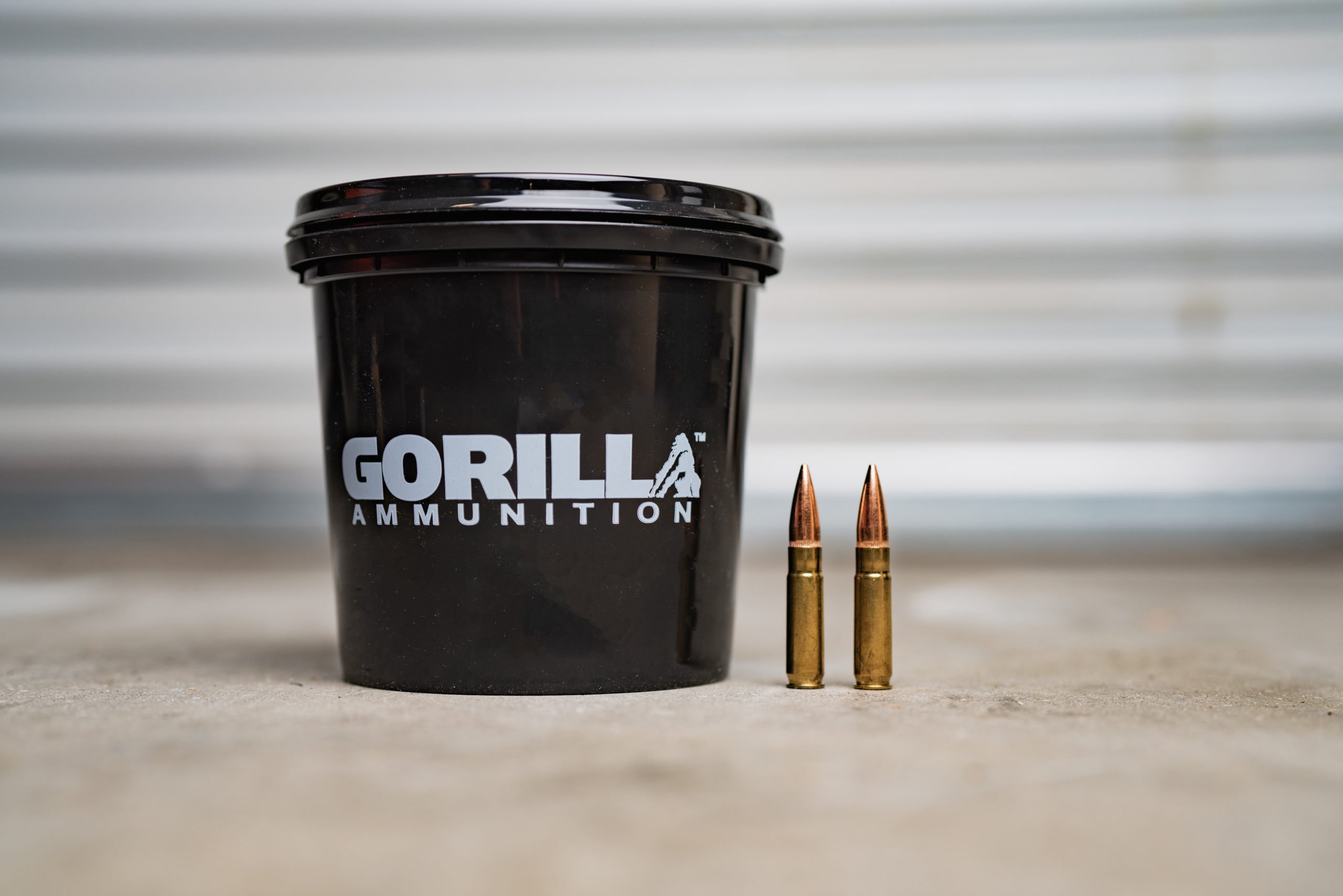
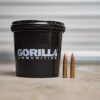
This listing covers the Blackout Ammunition .300 Blackout 147gr FMJ, 160 Round Bucket. Rather than repeat the box copy, the sections below set out what the projectile does and where 300 Blackout fits.
Specifications
| Cartridge | 300 Blackout |
|---|---|
| Bullet weight | 147 grain |
| Projectile | Full Metal Jacket |
| Bullet diameter | .308 |
| Typical muzzle velocity | 1,000 fps subsonic, 2,100 to 2,300 fps supersonic |
| Usual twist rate | 1:7 to 1:8 |
| Platform | AR-15 |
| Rounds per pack | 160 |
| SKU | GA300147FMJB |
| Price | $229.99 |
| Cost per round | $1.437 |
Projectile construction
This is a a training and volume shooting projectile. It does not expand, so it is a poor choice for hunting or defence, and an economical one for practice.
It is worth separating weight from construction when comparing loads. They are independent variables, and construction is the one that decides outcome.
What 300 BLACKOUT is good at
Full powder burn by roughly 9 inches, which is why it dominates short barrel builds.
Muzzle velocity for 300 Blackout typically runs 1,000 fps subsonic, 2,100 to 2,300 fps supersonic, from a AR-15 platform with a 1:7 to 1:8 twist. Published figures are a starting point, not a specification; chronograph your own rifle before you trust a number.
Why this grain weight
At 147 grain this is on the lighter side for 300 Blackout. Lighter bullets leave the muzzle faster and shoot flatter, which helps on smaller targets and at distance, but they bleed velocity sooner and depend more on impact speed to do their job.
Pack size and cost per round
160 rounds at $229.99 works out at $1.437 per round. Bulk packaging like this is how you keep a rifle you shoot regularly fed without the per round cost climbing.
Before you order
Shipping rules for ammunition vary by state and sometimes by city. Some destinations require a licence, an approved recipient, or refuse delivery entirely. Check before you order rather than after. See our shipping and delivery page for the current detail.
Who should buy this
Before buying, be honest about the use case. This is practice and volume ammunition. It does not expand, which makes it economical for training and unsuitable for hunting or defence.
What your barrel does to these numbers
Do not assume box velocity applies to your barrel. Published figures usually come from long test barrels, and real rifles run slower. For 300 Blackout specifically, expect 1,000 fps subsonic, 2,100 to 2,300 fps supersonic as the published band and treat your own chronograph as the authority.
Storing ammunition
Store it dry and cool, rotate oldest stock first, and check case necks for corrosion on anything that has sat a long time.
Related stock
Browse our 300 Blackout ammunition for other weights and projectile types, or run your setup through the ballistics calculator.
Where 300 Blackout sits
Against 5.56 it gives up range and gains suppressed performance and short barrel efficiency. Against 8.6 Blackout it gives up roughly half the subsonic energy and gains an AR-15 platform and far cheaper ammunition.
Cartridge arguments usually come down to people optimising for different things without saying so. Decide what you are optimising for first.
Stock and handling
What ships is sealed factory ammunition, stored indoors and rotated so the oldest stock moves first. Packing is chosen to stop cartridges moving inside the box.
If this is your first purchase in this calibre, buy one box before you buy ten. Rifles are individual, and a load that groups beautifully in one barrel can string in another for no obvious reason.
Frequently asked questions
Which twist rate does 300 Blackout need?
1:7 to 1:8 is standard. Full powder burn by roughly 9 inches, which is why it dominates short barrel builds.
What velocity should I expect from 300 Blackout?
Typically 1,000 fps subsonic, 2,100 to 2,300 fps supersonic. Barrel length, temperature and lot all shift it, so chronograph your own rifle.
Is the full metal jacket projectile suitable for what I am shooting?
It is a a training and volume shooting projectile. It does not expand, so it is a poor choice for hunting or defence, and an economical one for practice. Match that against your intended use before buying.
Why choose 147 grain?
Weight sets the trade between velocity and momentum. 147 grain is one point on that curve; the right pick depends on your barrel, your distance and your target rather than on the number itself.
What is in the pack?
160 rounds at $229.99, which is $1.437 per round.
How quickly does this ship?
It is in stock and ships from the United States. Processing times and carrier detail are on the shipping page.
Do I need a licence to buy this?
In most of the country no, but some states and cities require a licence or an approved recipient for ammunition. The shipping page has the detail.
Do you offer bulk pricing?
Larger pack sizes carry a lower cost per round, which is listed on each product page so you can compare directly rather than doing the arithmetic yourself.
How should I compare loads?
Compare cost per round rather than box price, and compare projectile construction rather than grain weight. Those two habits will steer you right more often than brand loyalty.
Do you sell remanufactured ammunition?
No. Everything listed is sealed factory ammunition.
Related products
8.6 Blackout Ammo
Blackout, 8.6 Blackout, 300gr Sierra MatchKing Subsonic Ammunition, 80 Round Bucket
300 Blackout Ammo
Blackout Ammunition .300 Blackout 196gr Punisher Series, Subsonic Fracturing, 20 Round Box
8.6 Blackout Ammo
8.6 Blackout, 190gr Fracturing Supersonic Hunting Ammunition, Punisher Series, 20 Round Box
8.6 Blackout (ALL)


300 Blackout Ammo
Blackout Ammunition .300 Blackout 110gr Barnes TAC-TX, 160 Round Bucket